

The diagnostic speed of a modern emergency room now rivals the processing power of a mid-sized data center, marking a definitive end to the era of manual medical record sorting. As we navigate the current landscape, it is clear that artificial intelligence has transitioned from a specialized curiosity into the very central nervous system of global health operations. This roundup explores how leading technological shifts and algorithmic breakthroughs are currently redefining the boundaries of what is possible in clinical settings, merging the expertise of top-tier developers with the high-stakes reality of patient care.
The Shift from Experimental Tech to Medical Infrastructure
In the current year, the methodology of healthcare has moved decisively away from reactive “wait and see” models toward a paradigm of data-driven proactive interventions. This evolution is driven by the realization that human practitioners can no longer independently synthesize the trillions of data points generated by genomic sequencing and electronic health records. Consequently, integrated systems now act as the primary filter, identifying risks before they manifest as physical symptoms. The industry has reached a tipping point where ignoring these computational tools is considered an operational risk rather than a conservative choice. Clinical environments now rely on a sophisticated blend of machine learning and high-performance computing to maintain a baseline of safety and efficiency. This shift has not only changed how hospitals function behind the scenes but has fundamentally altered the patient experience, making it more streamlined and significantly less prone to the delays of traditional administrative bureaucracy.
The Pillars of Algorithmic Medicine: Precision, Speed, and Scale
Redefining Diagnostics Through Predictive Imaging and Pathology
The standardization of disease detection has reached a new level of consistency thanks to the widespread adoption of tools from firms like PathAI and Zebra Medical Vision. By training on vast libraries of tissue samples and medical scans, these systems have largely eliminated the subjective variability that once plagued pathology. Specialists now utilize these algorithms to ensure that a diagnosis in a rural clinic is identical in quality to one delivered at a major research university, effectively democratizing high-level expertise.
Furthermore, the implementation of real-time triage in radiology suites has revolutionized how life-threatening abnormalities are handled. Instead of a scan sitting in a queue for hours, platforms like Aidoc scan images instantly to flag internal hemorrhaging or blockages. While some debate remains regarding the level of autonomy these algorithms should possess, the prevailing consensus emphasizes a partnership where the AI performs the initial high-speed screening while the human physician provides the final, nuanced verification.
From Years to Weeks: The Radical Acceleration of Drug Discovery
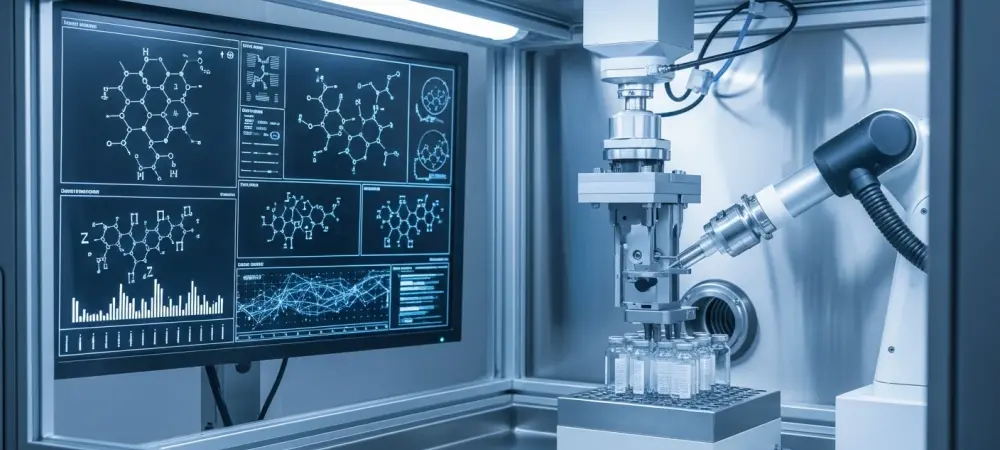
Pharmaceutical development is currently experiencing a collapse in timelines that was once thought impossible. Generative models and platforms developed by Insilico Medicine are now capable of identifying viable chemical compounds in a matter of weeks, bypassing the traditional years of trial and error. This acceleration is not merely a matter of convenience; it represents a massive reduction in research expenditures, allowing for the pursuit of treatments for rare diseases that were previously deemed financially unfeasible.
However, the rapid pace of discovery has introduced new discussions regarding the “black box” nature of early-stage clinical trials. Because these algorithms often find correlations that are not immediately obvious to human researchers, there is an increased demand for transparent validation protocols. The focus has shifted from simply finding a cure to understanding the underlying logic of the AI’s selection, ensuring that safety remains the paramount concern during the transition from digital model to human application.
Decentralizing Care via Portable AI and Global Accessibility
The physical boundaries of the hospital are dissolving as handheld diagnostics become a staple of primary care. Innovations like the Butterfly Network have successfully shrunk the capabilities of a massive ultrasound room into a device that fits in a pocket, powered by AI that guides the user to capture the perfect image. This move toward portability ensures that sophisticated imaging is no longer a luxury of urban centers but a tool available in the most remote regions of the world.
Similarly, firms like Freenome are integrating AI-driven blood screening into routine checkups to catch biological signals of cancer at their earliest, most treatable stages. This shift challenges the long-held assumption that advanced medical technology must be centralized in expensive, specialized facilities. By moving the point of care closer to the patient, the medical community is successfully shifting the focus from treating advanced illness to maintaining long-term wellness through early detection.
Orchestrating the Hospital Ecosystem with Systemic Integration
Efforts by tech giants like Google Health and IBM Watson have focused on the systemic integration of these disparate tools into a cohesive hospital ecosystem. The primary goal is the refinement of electronic health records, transforming them from static digital files into dynamic decision-support systems. These platforms now offer “precision medicine” at scale, where a patient’s unique genetic profile and historical data dictate a customized treatment protocol that is automatically updated as new research emerges.
The management of entire hospital networks is also undergoing a transformation aimed at mitigating the chronic issue of clinician burnout. By automating repetitive administrative tasks and optimizing staff scheduling through predictive modeling, AI allows doctors to return to their core mission of patient interaction. Looking ahead, the focus remains on creating an environment where the technology is invisible but omnipresent, supporting every clinical decision without adding to the practitioner’s cognitive load.
Strategic Frameworks for Implementing AI in Modern Clinical Workflows
Industry leaders have learned that successful technology adoption requires more than just purchasing software; it necessitates a complete rethinking of the clinical workflow. The most effective organizations have focused on creating a seamless bridge between hardware and software, ensuring that AI tools provide insights at the exact moment they are needed. This integration strategy prioritizes the “user experience” of the clinician, making the technology a help rather than a hindrance to the fast-paced medical environment.
To balance innovation with the non-negotiable requirement for patient data privacy, providers are implementing decentralized data processing and rigorous encryption standards. Actionable strategies now include the use of federated learning, where AI models are trained across different institutions without ever needing to move sensitive patient information from its original location. This approach has allowed for rapid collective learning while maintaining the highest levels of individual confidentiality.
The Future of the Human-Algorithm Partnership in Global Health
The current era has proven that the most effective medical outcomes are achieved through a synergy between human intuition and computational power. While AI excels at identifying patterns within massive datasets, the human element remains essential for navigating the complex ethical and emotional landscapes of patient care. This partnership acts as a force multiplier, particularly in managing global health crises and the challenges associated with an aging population, where resources are often stretched to their limits.
In retrospect, the integration of these technologies was the necessary foundation for a fully optimized, predictive medical future. The transition from experimental tools to essential infrastructure has been finalized, proving that the most successful systems are those that treat technology as an extension of the healer’s art. By prioritizing transparency and operational integration, the global healthcare community moved beyond the limitations of the past. The focus then shifted toward refining these partnerships to ensure that the speed of innovation never outpaced the commitment to patient-centered care. High-performance hardware and real-time data analysis eventually became the standard, securing a more resilient and accurate healthcare landscape for all.