

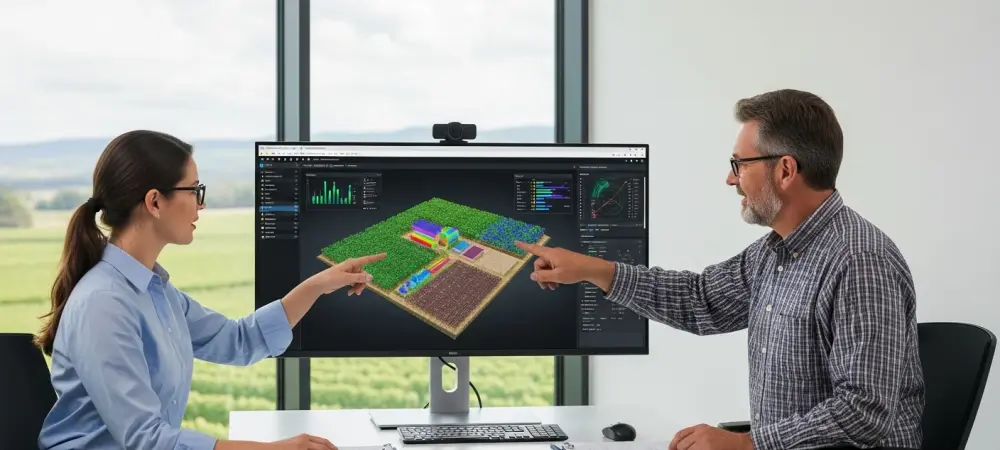
Facing the immense challenge of feeding a rapidly expanding global population under the strain of climate uncertainty, the agricultural sector is undergoing a profound structural transformation powered by Artificial Intelligence. This technological evolution, known as precision farming, is moving the industry away from its long-held reliance on intuition and generational wisdom toward a highly data-driven, technology-centric methodology. By enabling smart crop monitoring on a granular level, AI offers a scalable and sustainable solution, fundamentally reshaping how food is grown and managed. This paradigm shift does not just represent an incremental improvement; it signals a new era in agriculture where every decision is informed by precise, real-time data, optimizing every stage of the cultivation process for maximum efficiency and resilience.
The Mechanics of AI-Powered Farming
From Intuition to Data-Driven Insights
For centuries, farming was an art passed down through generations, a practice heavily dependent on experience and a farmer’s innate understanding of the land. The modern agricultural landscape, however, demands a more scientific approach. AI is at the forefront of this change, replacing generalized field-wide treatments with micro-level management strategies. This transition empowers farmers to address the specific needs of individual plants or small zones within a field, a level of precision that was previously unimaginable. This data-oriented model leverages a suite of advanced technologies, including machine learning, computer vision, and the Internet of Things (IoT), to create a dynamic and comprehensive view of the farm. By synthesizing immense datasets from various sources, AI delivers actionable intelligence directly to the farmer, transforming complex variables into clear, strategic decisions that enhance productivity and sustainability in a way that intuition alone never could.
The core of this revolution lies in the ability of AI to provide insights that were previously unattainable, allowing for a proactive rather than reactive approach to farm management. Historically, a farmer might only notice a problem like disease or nutrient deficiency once it became visually apparent, at which point significant damage may have already occurred. AI systems, in contrast, can detect subtle changes in a plant’s health long before they are visible to the human eye. Machine learning models, trained on vast historical and real-time data, can accurately predict a plant’s growth trajectory, identify its current stress levels, and forecast potential issues. This predictive capability allows for early, targeted interventions that prevent crop loss and optimize resource use. By moving away from guesswork and toward data-backed foresight, AI is not just improving agricultural outcomes; it is fundamentally changing the role of the farmer from a manual laborer to a strategic manager of a complex, data-rich ecosystem.
How AI Gathers and Analyzes Farm Data
The process of smart crop monitoring begins with the systematic aggregation of data from a diverse array of sources deployed across the agricultural environment. A network of IoT sensors is strategically placed throughout the fields to continuously measure and transmit critical soil data, including moisture content, nutrient levels, and pH balance. This ground-level information is complemented by an aerial perspective provided by drones equipped with high-definition cameras and multispectral imaging technology. These unmanned aerial vehicles capture detailed photographs of the crops, allowing AI systems to perform sophisticated analyses. By leveraging computer vision algorithms, the AI can identify minute variations in plant color that may indicate stress, detect uneven growth patterns, and pinpoint specific areas that have been damaged by pests or insects. This rich dataset is further enhanced with satellite imagery for a broader overview of field variability and with real-time information from weather stations to provide essential environmental context.
Once this vast and varied dataset has been collected, the true power of AI is unleashed through the application of advanced machine learning models. These sophisticated algorithms are trained to sift through the data, recognize complex patterns, and make highly accurate predictions about crop health and development. For instance, an AI can build a comprehensive model that not only identifies a plant’s current stress level but also forecasts its future growth based on prevailing conditions. A key advantage of this system is its capacity to issue early warnings for issues like water stress, disease outbreaks, or nutrient deficiencies, enabling farmers to intervene before these problems escalate and impact yields. The final output of this complex analysis is delivered through intuitive and accessible dashboards on mobile or desktop devices, which translate the intricate data into clear, actionable recommendations for specific interventions like irrigation, fertilization, or targeted pest control.
The Impact and Future of Smart Agriculture
Unlocking Benefits and Overcoming Barriers
The implementation of an AI-driven approach in agriculture yields multifaceted benefits that significantly enhance both profitability and environmental stewardship. A primary advantage is the dramatic improvement in resource efficiency. By precisely understanding what a crop needs, where it is needed, and when, farmers can optimize their application of water, fertilizers, and chemical pesticides. This targeted methodology minimizes waste, which directly translates into reduced operational costs and a smaller ecological footprint for the farm. This focus on sustainability is critical, as precision farming helps conserve vital natural resources and mitigates the runoff of excess chemicals into surrounding ecosystems. Furthermore, the early detection of crop stress and disease outbreaks prevents substantial yield losses, bolstering the financial resilience of farming operations. By replacing traditional guesswork with decisions backed by robust data, farmers can consistently improve crop yields and fortify their operations against the unpredictable weather conditions exacerbated by climate change. Despite the compelling advantages, several significant challenges currently limit the widespread adoption of AI technologies in the agricultural sector. The most prominent barrier is the high initial capital investment required to acquire the necessary supporting technologies. The cost of drones, advanced IoT sensors, and sophisticated AI software platforms can be prohibitive, particularly for the smallholder farmers who make up a substantial portion of the global agricultural community. Another major hurdle is the difficulty in obtaining and managing the high-quality, comprehensive data required to effectively train and operate AI systems. Beyond technology and data, a significant knowledge gap exists; many farmers lack the specialized technical training needed to fully leverage these complex tools. Compounding these issues are infrastructural deficiencies, most notably the lack of reliable high-speed internet connectivity in many rural areas, which is an essential prerequisite for the data-intensive operations inherent in precision farming.
The Road Ahead for Agritech
Collaborative efforts involving government agencies, innovative Agritech startups, and academic research institutions are actively working to dismantle the barriers hindering the adoption of precision farming. These partnerships are focused on developing more affordable, scalable, and user-friendly AI solutions that are specifically tailored to the unique needs of small- and medium-sized farms. The goal is to democratize access to these transformative technologies, ensuring that farmers of all scales can benefit from data-driven agriculture. As the cost of AI-based tools and associated hardware like sensors and drones continues to decline and their usability steadily improves, the rate of adoption among farmers is expected to increase significantly. This trend will likely accelerate as more success stories emerge, demonstrating tangible returns on investment and encouraging a broader shift toward technologically advanced farming practices that are both productive and sustainable for the future.
Ultimately, the profound advantages of integrating AI into agriculture were recognized as far outweighing the initial disadvantages. The continued integration of precision farming systems became an essential strategy for sustainably feeding a growing world population while simultaneously safeguarding the planet’s ecological health. The journey saw the resolution of major obstacles, such as cost and accessibility, through concerted innovation and policy support. This technological evolution redefined the very nature of farming, transforming it into a sophisticated, high-tech industry. The farmer’s role shifted from one of manual labor and intuition to that of a data analyst and ecosystem manager, using advanced tools to make highly informed decisions that enhanced food security, protected natural resources, and boosted economic viability for agricultural communities worldwide.