

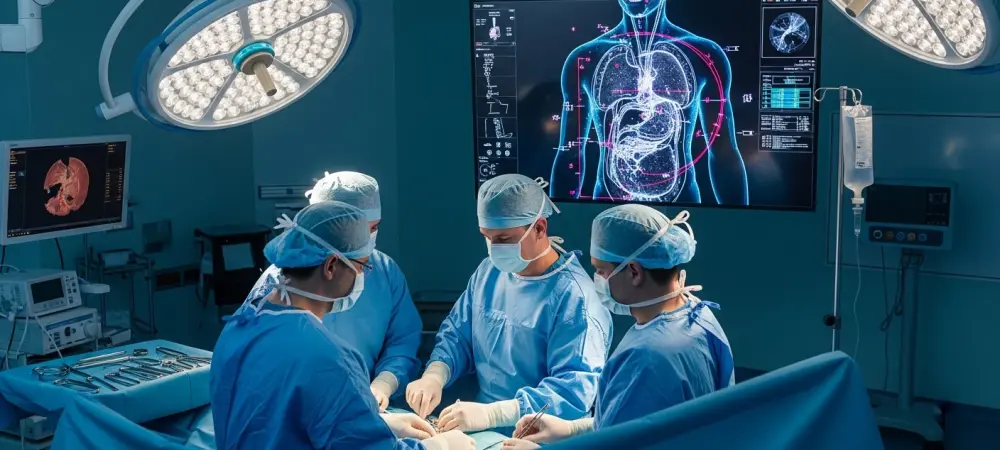
The landscape of the modern operating room is undergoing a radical transformation as artificial intelligence evolves from a speculative tool into a foundational cognitive partner for the world’s most skilled surgeons. This shift is not about replacing the steady hand of a medical professional with a cold machine, but rather about augmenting human intuition with an unprecedented level of data-driven insight. By acting as a sophisticated co-pilot, these intelligent systems are effectively minimizing the margin for human error, which has historically been an unavoidable variable in complex procedures. Today, benchmarks like the da Vinci robotic system illustrate how the fusion of human experience and algorithmic precision creates a new standard of care. This synergy allows for a level of technical accuracy that was previously unattainable, ensuring that patient safety remains the primary focus while surgical outcomes reach new heights of reliability and consistency in clinical environments.
Advanced Preparation and Real-Time Decision Support
Refining Strategy and Execution Through Data
The profound impact of artificial intelligence begins long before the first incision is made, as it facilitates a move toward highly personalized medicine tailored to individual biological signatures. Sophisticated platforms like IBM Watson now analyze massive datasets, ranging from genetic markers to complex lab results, to identify subtle anatomical patterns that might elude even the most seasoned specialist. By synthesizing this information, the technology generates intricate 3D maps of a patient’s internal structures, highlighting the exact positioning of blood vessels and organs. This preparatory phase allows surgical teams to move away from standardized protocols and instead develop a customized roadmap for every case. Consequently, doctors can select the most conservative intervention strategies, such as specialized minimally invasive scopes, which have been statistically shown to reduce the risk of post-operative infections by nearly half.
Beyond simple mapping, this data-driven strategy enables a level of predictive planning that serves as a mental rehearsal for the entire medical team. When a surgeon can visualize the specific physical nuances of a patient in a high-fidelity digital space, they are better prepared to navigate potential obstacles that would otherwise be discovered only during the operation. This forward-looking approach ensures that the chosen surgical path is the most efficient and least traumatic for the patient’s body. By comparing a current patient’s profile against thousands of successful global outcomes, the AI provides a recommendation engine that refines the surgeon’s judgment. This transition from reactive to proactive medicine means that every decision is backed by a vast library of historical data, transforming the pre-operative phase into a rigorous exercise in precision and individualized care that maximizes the probability of a successful recovery.
Real-Time Guidance and Environmental Monitoring
During the heat of a procedure, artificial intelligence functions as a vigilant assistant that maintains a constant watch over the surgical field through digital screens and smart glasses. These high-tech interfaces utilize computer vision to differentiate between various tissue types, clearly marking the boundaries between malignant tumors and delicate nerve endings that must remain untouched. By projecting 3D navigational overlays directly into the surgeon’s line of sight, these systems provide a form of “X-ray vision” that guides the movement of instruments with sub-millimeter accuracy. This real-time visual enhancement is critical for avoiding accidental damage to vital structures, particularly in areas of the body where the anatomy is densely packed or distorted by disease. The result is a more controlled environment where the physical execution of the surgery aligns perfectly with the digital plan.
Furthermore, these intelligent systems serve as an extra set of eyes that monitor the patient’s physiological status without the surgeon needing to glance away from the task at hand. Platforms like Caresyntax integrate directly with operating room hardware to track vital signs such as oxygen saturation and blood pressure, using predictive algorithms to identify early warning signs of complications like sepsis. By detecting these subtle shifts up to twenty minutes before they manifest as a clinical crisis, the AI allows the surgical team to intervene early, potentially saving lives in high-pressure moments. This automation of routine monitoring significantly reduces the cognitive load on the lead doctor, allowing them to remain calm and focused on the intricate physical maneuvers required. This collaborative environment ensures that the surgeon’s mental energy is preserved for high-level problem-solving rather than being drained by the constant noise of raw data.
Boosting Human Capability and Training
Improving Performance Through Cognitive Support
A major advantage of integrating advanced intelligence into the clinical workflow is the concept of “cognitive offloading,” which preserves the mental acuity of the surgical team. By automating the more repetitive and data-heavy aspects of a procedure, such as reading complex intraoperative images or tracking minor fluctuations in patient vitals, the AI prevents the onset of mental fatigue. This is particularly vital during long, grueling surgeries where a split-second lapse in concentration can have significant consequences. When a surgeon is freed from the burden of processing an overwhelming stream of raw information, they can maintain a much higher level of sharp, focused attention on the most critical parts of the operation. This partnership provides a stable foundation of data that encourages a more composed and deliberate approach to surgery, which is essential for maintaining precision over several hours.
This mental preservation also paves the way for greater surgical creativity when unexpected challenges arise during a procedure. If a surgeon encounters a sudden hemorrhage or discovers an atypical tumor growth that was not visible on initial scans, their ability to innovate a solution is directly tied to their remaining cognitive energy. With the AI handling the baseline monitoring and data synthesis, the doctor is better equipped to apply life-saving techniques that have historically improved survival rates in complex cases by as much as 20 percent. The technology does not dictate the surgeon’s actions; rather, it acts as a reliable support system that ensures the human expert has the best possible information to make creative, informed decisions under pressure. This dynamic ensures that the surgeon’s talent is not stifled by routine, but is instead amplified by a machine that manages the technical “background noise.”
Simulation and the Acceleration of Expertise
The development of professional surgical judgment is also being accelerated through the use of high-fidelity virtual simulation platforms that offer a risk-free training environment. Aspiring doctors and veteran surgeons alike now utilize tools like Osso VR and FundamentalVR to practice complex procedures in a digital space that perfectly mimics real-world physics and haptic feedback. These platforms allow a trainee to perform thousands of simulated operations in a single month, which is far more experience than a traditional residency could provide in the same timeframe. Every virtual movement is tracked and analyzed, providing instant feedback on technique and decision-making accuracy. This model of “digital patient” practice allows the next generation of medical professionals to encounter a lifetime’s worth of rare complications and difficult scenarios before they ever step into a real operating room.
Building this library of virtual experience is essential for creating the rapid-fire decision-making skills required in modern medicine. By the time a surgeon operates on a living person, they have already successfully navigated similar challenges hundreds of times in a controlled, simulated setting. This builds a level of confidence and muscle memory that directly translates to better patient safety and fewer technical errors. These training systems also allow for the continuous assessment of a surgeon’s skills throughout their career, ensuring that they remain at the peak of their abilities as new techniques and technologies emerge. By bridging the gap between theoretical knowledge and practical execution, these AI-driven simulations are creating a more prepared and resilient workforce. The result is a medical community where judgment is not just a product of years on the job, but is also refined by an exhaustive digital curriculum of every possible surgical scenario.
Collaborative Intelligence as a Standard for Recovery
The synthesis of global medical data with the specific needs of an individual patient is turning artificial intelligence into a “smart advisor” with a 90 percent accuracy rate in predicting potential risks. In the contemporary operating room, voice-activated tools and real-time summaries keep the entire surgical staff on the same page, fostering a cohesive environment where information is shared instantly and accurately. This high level of situational awareness ensures that the nurses, anesthesiologists, and surgeons are all working from the same real-time data set, which minimizes communication errors and streamlines the entire surgical process. This unified approach does not diminish the role of the surgeon but elevates the entire team to a higher standard of performance, ultimately driving significant improvements in patient recovery times and reducing the overall length of hospital stays.
Moving forward, the focus must shift toward the seamless integration of these tools into every tier of the healthcare system to ensure equitable access to high-precision care. Medical facilities should prioritize the adoption of standardized AI interfaces that can communicate across different platforms, allowing for a more fluid exchange of surgical insights and best practices. It is also recommended that hospital administrators invest in continuous training programs that help staff stay current with the rapid evolution of these intelligent systems. By treating artificial intelligence as a permanent and evolving member of the surgical team, the medical industry can continue to refine the balance between human empathy and machine accuracy. This ongoing collaboration is the most effective path toward a future where every medical procedure is as safe, personalized, and successful as the latest technological advancements allow.