

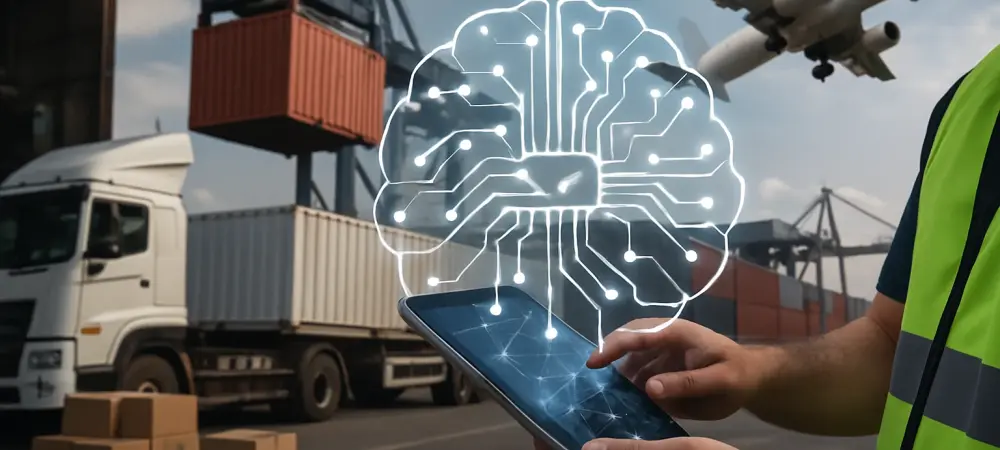
What if a single delayed shipment could cost a company millions in lost revenue and customer trust? In today’s fast-paced logistics landscape, where global supply chains stretch across continents and customer expectations soar, such risks are all too real. Artificial intelligence (AI) is stepping in as a game-changer, turning chaos into precision with data-driven solutions. From optimizing delivery routes to automating warehouses, AI is not just enhancing efficiency—it’s redefining how goods move around the world. Dive into this exploration of seven pivotal use cases that showcase AI’s transformative power in logistics.
Why AI Is the Backbone of Modern Logistics
The logistics industry faces relentless pressure to deliver faster, cheaper, and more sustainably amidst rising fuel costs, driver shortages, and unpredictable disruptions. Traditional approaches often buckle under these demands, leaving companies vulnerable to delays and inefficiencies. AI emerges as a critical tool, harnessing machine learning and predictive analytics to address these challenges with unmatched accuracy. Its ability to process vast amounts of data in real time offers a lifeline for businesses striving to stay competitive in a digital era.
Beyond merely solving problems, AI empowers logistics firms to anticipate them. By analyzing patterns and forecasting issues like supply chain bottlenecks, this technology shifts operations from reactive to proactive. A recent report by McKinsey highlights that companies integrating AI can reduce operational costs by up to 15%, underscoring its undeniable value. This isn’t just about cutting expenses—it’s about building resilience in an industry where every second counts.
The Core Challenges AI Tackles in Logistics
Logistics has long grappled with balancing tight deadlines against spiraling costs, all while navigating global complexities. Issues like volatile fuel prices, port congestion, and last-mile delivery hurdles create a perfect storm of inefficiency. Manual processes and outdated systems often exacerbate these problems, leading to errors and missed opportunities. AI steps into this fray, offering automation and insights that traditional methods can’t match.
Unlike older strategies that rely on guesswork, AI uses real-time data to drive decisions. Whether it’s rerouting a truck to avoid a traffic jam or predicting inventory needs before a shortage hits, the technology delivers precision. DHL, for instance, has leveraged AI to enhance supply chain visibility, ensuring stakeholders can react swiftly to disruptions. This shift toward data-driven logistics isn’t optional—it’s essential for survival in a hyper-competitive market.
Unveiling 7 Game-Changing AI Use Cases in Logistics
AI’s influence permeates every corner of logistics, offering targeted solutions to persistent pain points. Below are seven critical use cases that illustrate how this technology is revolutionizing the field, each backed by real-world impact and measurable outcomes.
- Route Optimization: By processing live data on traffic, weather, and fuel costs, AI maps out the most efficient delivery paths. UPS has reaped millions in annual savings through such systems, slashing both time and expenses.
- Warehouse Management: AI-driven robotics and computer vision automate tasks like picking and packing, while optimizing storage. This cuts labor costs and minimizes errors, boosting overall throughput.
- Predictive Analytics: AI forecasts demand spikes and identifies potential delays, such as weather-related disruptions. Maersk employs these tools to preempt port issues, ensuring smoother operations.
- Last-Mile Delivery Optimization: The costly final leg of delivery benefits from AI’s route refinement and autonomous vehicle integration. Amazon’s use of this technology has accelerated deliveries while trimming overhead.
- Real-Time Supply Chain Visibility: End-to-end tracking powered by AI provides transparency across shipments and inventory. DHL’s systems enable rapid responses to issues, fostering customer confidence.
- Logistics Automation: AI extends beyond physical tasks to streamline order processing and scheduling via robotic process automation, freeing staff for higher-value work and enhancing productivity.
- Smarter Operations: Integrating AI with logistics software enables dynamic pricing and fraud detection, creating agile, data-driven operations ready for evolving demands.
These use cases collectively transform logistics into a leaner, more responsive sector, proving that AI’s potential is not theoretical but profoundly practical.
Insights from the Frontlines of AI in Logistics
Experts and data paint a compelling picture of AI’s role in reshaping logistics. A study by McKinsey projects that AI adoption could slash delivery times alongside those significant cost reductions. An innovation leader at DHL noted, “AI is not just about efficiency; it’s about connecting with customers through real-time updates and trust.” Such sentiments echo across the industry, highlighting a shared belief in AI’s capacity to redefine service standards.
Real-world applications further validate these claims. FedEx has harnessed AI to optimize last-mile delivery, achieving faster turnarounds and lower costs. Logistics managers report dramatic drops in error rates after implementing AI in warehouse operations, with one noting a 20% uptick in order accuracy. These stories and statistics converge on a singular truth: AI is delivering results that demand attention from every player in the field.
Practical Steps to Integrate AI into Logistics Operations
Adopting AI doesn’t require a complete overhaul—it starts with strategic, actionable steps tailored to specific challenges. Begin by pinpointing inefficiencies, whether it’s excessive fuel spending or sluggish last-mile delivery, and target AI tools to address these gaps. Small-scale pilots, like testing route optimization software on a single fleet, allow for manageable implementation before broader rollout.
Integration with existing systems is key to seamless adoption. Linking AI solutions with platforms like Microsoft Dynamics 365 ensures smooth data flow and actionable insights. Training teams to collaborate with AI, such as interpreting predictive analytics or overseeing automated processes, maximizes its impact. Finally, continuous monitoring of performance metrics like cost savings or delivery speed enables ongoing refinement, ensuring the technology adapts to changing needs. These steps make AI a practical asset for any logistics operation, regardless of scale.
Reflecting on AI’s Journey in Logistics
Looking back, AI carved a path of transformation in logistics by addressing inefficiencies that once seemed insurmountable. From optimizing delivery routes to automating mundane tasks, it tackled soaring costs and unpredictable disruptions with precision. Industry giants like UPS and Amazon demonstrated how embracing this technology led to tangible gains in speed and savings.
The journey revealed a broader lesson: adaptation was not just beneficial but necessary. Companies that integrated AI found themselves better equipped to meet customer demands for transparency and speed. Smaller firms, too, discovered scalable solutions that leveled the playing field. As logistics evolved, AI stood as a cornerstone of innovation, proving its worth in every corner of the supply chain.
Moving forward, the focus shifts to actionable progress. Logistics leaders should prioritize identifying specific pain points and testing AI tools in targeted areas. Collaboration with tech providers can unlock tailored solutions, while investing in team training ensures sustainable impact. Embracing this technology now positions businesses to not only keep pace but to lead in an ever-shifting global market.