

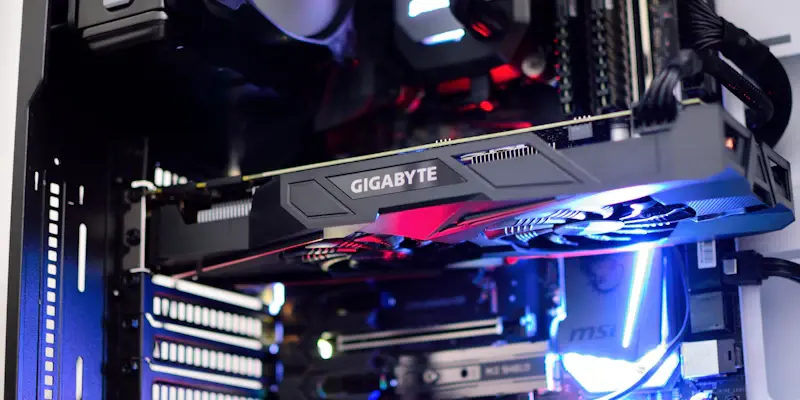
The gaming industry is undergoing a significant transformation, driven by the integration of artificial intelligence (AI) with graphics processing units (GPUs). This fusion is pushing the boundaries of what these powerful components can achieve, delivering unprecedented gaming experiences. GPUs, specialized hardware designed to accelerate image creation and animation, are at the heart of realistic game graphics. The increasing demand for sophisticated GPUs stems from the intensive graphical requirements of contemporary games. AI’s emergence in gaming is another significant theme, leading to more responsive and dynamic game environments.
The Role of GPUs in Modern Gaming
The Importance of GPUs in Rendering Graphics
GPUs are essential for rendering high-quality visuals in real-time, dealing with the complex computations required for modern video games. The capacity and functionality of a GPU significantly influence the visual smoothness and realism that players experience. As games become more graphically intensive, the demand for advanced GPUs continues to grow, making them a critical component in the gaming industry. These specialized processors handle the heavy lifting in terms of graphical fidelity, enabling dynamic lighting, high-resolution textures, and lifelike animations that contribute to an immersive gaming environment.
In addition to raw rendering power, GPUs facilitate parallel processing, allowing multiple tasks to be executed simultaneously. This capability is vital in modern gaming, where real-time rendering of intricate landscapes, character models, and environmental effects is a necessity. Furthermore, the combination of AI-driven algorithms with advanced GPUs enables real-time adjustments and optimizations, ensuring that gameplay remains fluid and visually stunning. The symbiotic relationship between AI and GPUs demonstrates how far technology has advanced, setting the stage for even more impressive developments in the future.
Enhancing Visuals with AI
AI techniques such as Deep Learning Super Sampling (DLSS) are revolutionizing the way visuals are rendered. DLSS upscales low-resolution images in real time, producing high-quality visuals without hindering game performance. This allows gamers to enjoy stunning graphics even on less powerful hardware setups, making high-quality gaming more accessible. By using neural networks and machine learning, DLSS can predict and fill in the details of lower-resolution images, resulting in impressive visuals that would otherwise require more powerful GPUs.
Another AI-driven technique that enhances visuals is AI-based texture generation. Traditional games require extensive manual effort to create detailed textures, but AI can generate these efficiently and with a higher level of detail. This not only saves time for developers but also ensures consistency in visual quality throughout the game. The use of AI in these processes highlights its transformative impact, allowing developers to push the boundaries of graphical fidelity while maintaining higher performance levels. In summary, AI is not just improving graphics but redefining the possibilities of visual presentation in gaming.
AI’s Impact on Game Environments
Intelligent Non-Player Characters (NPCs)
AI-powered NPCs exhibit more intelligent behaviors, creating more immersive and engaging gameplay experiences. These characters can learn from player actions and adapt their behavior accordingly, making the game environment more dynamic and responsive. This leads to a more realistic and enjoyable gaming experience. For example, AI can enable NPCs to remember previous interactions with the player, adapt their tactics in combat, or even develop unique personalities that react differently depending on the situation. This level of intelligence in NPCs makes them feel more like real entities, adding depth and complexity to the game world.
Moreover, advanced AI algorithms allow for cooperative behavior among NPCs, leading to more challenging and strategic gameplay. For instance, enemies can coordinate attacks or use environmental features to their advantage, creating a more believable and engaging combat experience. By making these non-player characters act in ways that are more consistent with human behavior, AI enriches the storytelling and interaction within games, allowing players to become more invested in the virtual worlds they explore. In essence, AI is transforming NPCs from simple programmed entities into sophisticated characters that enhance the overall narrative and gameplay experience.
Real-Time Scene Analysis
AI-driven software analyzes scenes in real time to render processes more efficiently. By predicting which parts of a scene need higher detail and which do not, GPUs can allocate resources more effectively. This optimization leads to smoother gameplay and reduced lag, significantly enhancing the overall gaming experience. Techniques such as Variable Rate Shading (VRS) take advantage of AI to prioritize rendering efforts on critical areas of the screen, ensuring that important elements are displayed with maximum clarity while less significant parts receive less processing power.
Real-time scene analysis also contributes to the dynamic adaptation of game environments based on player actions. For instance, AI can modify lighting, shadows, and reflections in response to changing in-game conditions, creating a more immersive and responsive visual experience. This level of adaptability ensures that games can maintain high performance without compromising on visual quality, offering players an optimized and visually consistent experience regardless of the complexity of the scene. In turn, power-efficient rendering makes it possible for a broader range of devices to deliver high-quality gaming experiences, bridging the gap between high-end and more accessible gaming systems.
Smarter Gameplay Mechanics
Adaptive Difficulty Levels
Machine learning algorithms can study player behavior and adjust game dynamics accordingly. If a player struggles with a particular level or challenge, AI can modify the difficulty or provide helpful hints. This adaptive approach makes games more accessible to a broader audience and caters to various skill levels, ensuring a more inclusive gaming experience. Players can enjoy games tailored to their abilities, preventing frustration and enhancing enjoyment. As a result, games can offer a personalized experience that evolves with the player’s skills, maintaining engagement and satisfaction throughout the gameplay.
Adaptive difficulty also extends to real-time adjustments during gameplay sessions. For example, if a player is excelling, AI can introduce new challenges to keep the experience engaging and rewarding. Conversely, if a player faces difficulty, the game might adjust by providing additional resources or lowering the challenge. This dynamic response ensures that players remain motivated and invested in the game, avoiding the pitfalls of static difficulty settings. By leveraging AI, developers can create a gaming environment that responds intelligently to player performance, fostering a more enjoyable and tailored experience for every gamer.
Procedural Content Generation
AI’s role in procedurally generating content allows developers to create expansive worlds filled with diverse landscapes, quests, and characters without manually coding every detail. This capability provides unique gaming experiences with each playthrough, offering players fresh adventures every time they engage with a game. Procedural content generation powered by AI enables the creation of vast and complex game environments that would be difficult to achieve through traditional means, significantly enriching the player’s exploration and discovery.
Furthermore, AI can ensure that procedurally generated content maintains a coherent and engaging narrative. By analyzing patterns and incorporating storytelling elements, AI can craft quests and characters that fit seamlessly into the game world, providing a consistent and immersive experience. This dynamic content generation allows games to offer endless replayability, with new experiences awaiting players each time they venture into the game. The integration of AI in procedural generation highlights its potential to revolutionize game development, enabling the creation of intricate and captivating virtual worlds that continuously evolve.
AI in Multiplayer Gaming
Balanced Gameplay and Fair Competition
In multiplayer gaming, maintaining balanced gameplay is crucial for player satisfaction. AI can analyze player statistics to match individuals with similar skill levels, fostering fair competition and a stronger sense of community among players. This ensures that all players have an enjoyable and competitive experience. By using advanced machine learning techniques, AI can assess various metrics, such as win/loss ratios, reaction times, and strategic choices, to create balanced matches that enhance the overall fairness and enjoyment of multiplayer sessions.
AI also plays a critical role in dynamic matchmaking, adjusting teams and pairings in real time based on ongoing performance. This flexibility helps maintain a competitive environment where players are consistently challenged and engaged, regardless of their skill level. Additionally, AI can monitor player behavior and interactions to identify patterns of cooperation or rivalry, using this data to refine matchmaking algorithms further. By ensuring balanced gameplay, AI bolsters the multiplayer experience, making it more inclusive and enjoyable for a diverse range of players.
AI-Based Moderation Tools
AI-based moderation tools detect and mitigate toxic behavior or cheating in real time, creating a safer and more enjoyable environment for all participants. These tools help maintain the integrity of online gaming communities, ensuring that players can enjoy their gaming experience without encountering disruptive behavior. By leveraging machine learning and natural language processing, AI can identify harmful actions, such as harassment or cheating, and take appropriate measures to address these issues promptly.
Moreover, AI moderation can provide data-driven insights to developers and community managers, enabling them to implement effective strategies for fostering positive interactions. These tools can autonomously enforce community guidelines, issuing warnings, or even suspensions to violators, thus preserving the game’s integrity and ensuring a more welcoming environment for all players. In conclusion, AI-based moderation is essential for maintaining a respectful and fair gaming community, allowing players to focus on the immersive and enjoyable aspects of gaming without distraction.
Challenges and Future Prospects
Computational Power Requirements
One significant challenge is the substantial computational power required to integrate AI effectively. This may not be accessible to all players, potentially creating disparities in gaming experiences based on hardware capabilities. Addressing this issue is crucial for ensuring that the benefits of AI-driven GPU technology are available to a wider audience. Advances in cloud gaming and scalable computing resources aim to bridge this gap, providing high-quality gaming experiences without the need for expensive hardware upgrades.
Additionally, developers are working on optimizing AI algorithms to be more efficient, reducing the strain on computational resources. This includes techniques like model compression and edge computing, which distribute processing tasks across various devices to enhance performance while minimizing resource demands. By focusing on these innovations, the industry strives to make AI-enhanced gaming accessible to a broader demographic, ensuring that all players can benefit from the advancements in GPU technology and AI integration.
The Future of AI and GPU Integration
The gaming industry is experiencing a major shift thanks to the integration of artificial intelligence (AI) and graphics processing units (GPUs). This combination is pushing the limits of what these advanced technologies can do, resulting in groundbreaking gaming experiences. GPUs, which are specialized pieces of hardware designed to enhance the creation of images and animations, play a crucial role in providing realistic game graphics. The surge in demand for high-performance GPUs is driven by the complex graphical needs of modern video games. Alongside this, the introduction of AI in gaming represents a significant development, leading to game environments that are more responsive, adaptive, and immersive. AI enables game characters to behave more like real players, reacting intelligently to different scenarios and player actions. This evolution in gaming technology not only enhances the visual appeal and realism of games but also enriches the overall gaming experience. As AI and GPU technology continue to advance, the possibilities for creating even more engaging and lifelike games are virtually limitless.