

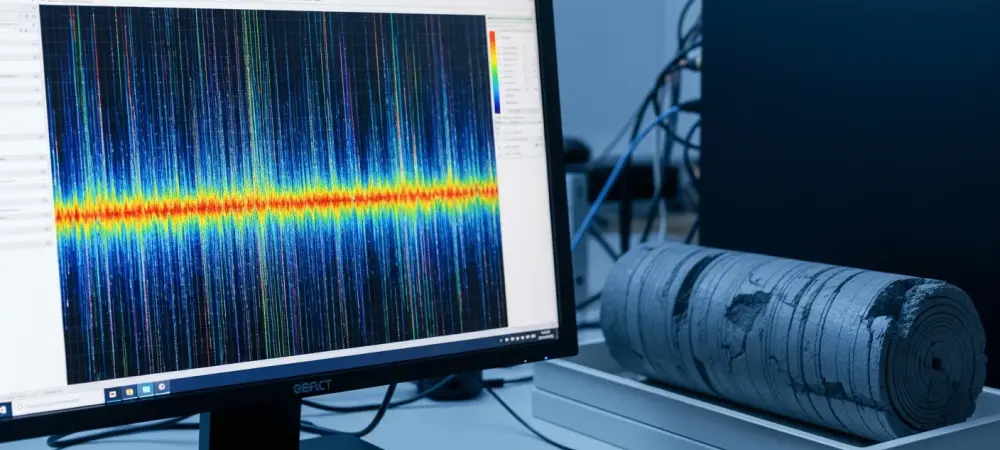
The hidden mechanisms governing the movement of supercritical fluids and the subsequent deposition of precious metals within the Earth’s crust have long remained some of the most computationally expensive puzzles in the natural sciences. Traditionally, understanding these deep-seated processes required an agonizingly slow dance with numerical simulations that often failed to capture the true complexity of fluid-rock interactions. However, the emergence of a specialized neural-network architecture known as Korzhinskii-Net has fundamentally shifted the landscape of computational geochemistry by merging mid-twentieth-century geological theory with contemporary deep learning. Developed by a research team led by Boris Kriuk, this system provides a sophisticated framework for simulating coupled heat transfer, fluid flow, and chemical reactions. This innovation addresses the historical difficulty of modeling ore deposits, where the intricate interplay of variables has previously pushed the limits of standard computing hardware.
The Evolution of Models: Bridging Classical Theory and Speed
For many decades, the gold standard for modeling reactive transport—the process by which fluids migrate through rock and trigger chemical transformations—rested on traditional numerical methods such as finite-element discretizations. Traditional numerical methods such as finite-element discretizations suffer from extreme computational exhaustion because the underlying equations are notoriously stiff. In this context, stiffness refers to the vast differences in time and space scales, ranging from the molecular level to kilometers, and from seconds to millennia. Resolving a single geological scenario using these conventional tools could often take days of intensive processing time, making it nearly impossible to run the thousands of iterations required for modern industrial needs. The sheer volume of data and the complexity of the nonlinear interactions between fluid pressure and rock porosity created a bottleneck that effectively limited the scope of geological exploration and academic research. Korzhinskii-Net eliminates this long-standing computational bottleneck by moving away from traditional grid-based solvers toward a continuous, coordinate-based representation of geological fields. By utilizing the inherent efficiency of neural networks, the model can evaluate complex chemical and physical fields in milliseconds rather than days, representing a massive leap in operational speed. This transformation is not merely about faster processing; it represents a paradigm shift in how geochemists interact with their data. Instead of waiting for a single simulation to conclude, researchers can now conduct real-time sensitivity analyses, exploring how subtle changes in fluid acidity or temperature might drastically alter the deposition of minerals. This speed allows for the rapid testing of multiple hypotheses, enabling a more dynamic approach to geosciences that was previously constrained by the slow pace of legacy software and hardware.
Physical Constraints: The Foundations of Informed Architectures
Unlike earlier iterations of machine learning in the geosciences, which often functioned as opaque black boxes that ignored physical reality, Korzhinskii-Net is built upon the solid foundation of infiltration metasomatism. This classical theory, pioneered by the architecture’s namesake, D.S. Korzhinskii, describes the process of mineral replacement that occurs when an infiltrating fluid is out of chemical equilibrium with its host rock. By embedding these specific physical laws directly into the network’s internal structure, the researchers have ensured that the AI respects the fundamental thermodynamic constraints that govern the natural world. This approach prevents the model from generating physically impossible results, a common flaw in purely data-driven AI systems. By forcing the neural network to adhere to the rules of mass balance and chemical potential, the system gains a level of predictive reliability that makes it indispensable for high-stakes geological assessments.
The architecture specifically addresses the formation of mineral zones, which traditionally move and evolve based on complex fluid-rock interactions. By incorporating Korzhinskii’s theories, the network can predict the sequence and spatial distribution of these zones with remarkable accuracy. This integration of old-world geochemistry with new-world computation ensures that the AI is not just identifying superficial patterns in raw data but is actually simulating the underlying physical reality. This methodology is particularly effective in environments where data is sparse or difficult to obtain, as the embedded physical laws act as a guide for the network’s learning process. This synergy between historical scientific knowledge and modern technology allows the system to bridge the gap between theoretical geology and practical application. Consequently, the model provides a robust tool for scientists who require both the speed of AI and the rigor of classical geochemistry to solve complex problems.
Industrial Utility: Specialized Innovation and Implementation
One of the most significant challenges in modeling geological processes is the sharp nature of the data, where mineral concentrations often change abruptly at reaction fronts. Standard neural networks usually struggle with these steep gradients, frequently smoothing them into blurred, physically inaccurate representations that fail to reflect the reality of the Earth’s crust. To overcome this limitation, Korzhinskii-Net utilizes a technique involving random Fourier features to lift spatial coordinates into a high-frequency feature space. This mathematical innovation allows the network to maintain the crisp, distinct boundaries of reaction zones that are critical for accurate resource mapping. By capturing these high-frequency details, the system avoids the spectral bias that often plagues general-purpose AI, ensuring that the final output matches the intricate mineralogical patterns observed in real-world geological cores and field samples. This level of precision is essential for mitigating risks and optimizing the performance.
The final developmental steps focused on expanding the network to accommodate three-dimensional domains and multi-component chemical systems. Researchers successfully laid the groundwork for inverse modeling, a process where the network analyzed existing mineral assemblages and worked backward to reconstruct the historical fluid pathways that created them. This advancement provided geologists with a powerful tool for decoding the deep history of the Earth’s crust, offering insights into how resources were concentrated over millions of years. By utilizing classical theories as the structural foundation for neural networks, this synthesis of disciplines established a new standard for computational geochemistry. Moving forward, the integration of these models into real-time drilling and monitoring systems became a priority for global energy and resource companies. The focus shifted toward autonomous geological mapping, where AI-driven insights guided decision-making in the field, ensuring that extraction remained efficient.