

Dominic Jainy stands at the intersection of cutting-edge computation and clinical necessity, bringing a wealth of knowledge in artificial intelligence and machine learning to the complex world of healthcare. With an extensive background in how these technologies can be leveraged to interpret biological signals, he offers a unique perspective on how we are moving away from traditional, reactive medicine toward a future of proactive, personalized care. Today, we delve into how these digital advancements are not just processing data, but are actively restoring the human element to the doctor-patient relationship and providing a voice to those who have lost theirs.
Our discussion explores the transition of AI from a back-end tool to a real-time clinical partner, capable of documenting patient visits and analyzing speech patterns to detect neurological struggles. We examine the revolutionary use of neural implants that allow patients with spinal injuries to communicate, the precision of ultrasound-guided brain surgeries, and the overarching vision of a healthcare system that functions without physical walls, prioritizing the patient’s home life as much as the clinic visit.
How is the integration of AI documentation tools fundamentally changing the dynamic of a standard doctor’s visit?
The most profound change is the restoration of the “human” connection between the provider and the patient. In a typical setting, a physician might be preoccupied with a keyboard or a tablet, but now we are seeing a shift where a cell phone on the desk can listen and help record the entire conversation in real-time. This machine carries the record so that the medical staff can focus entirely on the person sitting in front of them, rather than the paperwork. It acts much like the “two lanterns” analogy used by experts at the Neurology Data Science & AI Center; one lantern allows us to interpret the signals of the visit, and the other helps us orchestrate the care plan. By automating the documentation process, we ensure that the clinical connection remains deep and uninterrupted.
Could you elaborate on how a spectrogram of speech functions as a diagnostic tool for neurological conditions?
A spectrogram of speech allows us to look far beyond the literal words a patient is saying and instead analyze the “cadence” and rhythm of their communication. By measuring the amount of time a patient participates in a conversation and the specific nuances of their speech patterns, we can differentiate between those affected by neurologic disease and those who are not. It is a powerful way to “hear the struggle” that a patient might be experiencing in their daily life, which a doctor might miss during a brief, scheduled office visit. Essentially, the AI begins to understand a patient’s condition just as a family member would, noticing small, deteriorating changes in speech long before they become clinically obvious. This type of analysis allows medical care to bridge the gap between the doctor’s office and the patient’s actual life.
What advancements are we seeing for patients with spinal cord injuries or ALS through the use of neural implants?
We are witnessing a truly transformative era where implants are giving autonomy back to individuals who have lost the ability to move or speak. For patients with ALS or severe spinal cord injuries, these implants allow them to manipulate computers and communicate even when their arms or voices no longer function. One of the most moving aspects of this technology is our ability to look back at what a person’s voice used to be and use that data to help them speak again in a way that feels authentic to their identity. It turns a silent struggle into an active dialogue, ensuring that a physical limitation does not result in a total loss of connection to the world. These tools are the building blocks of an “institution without walls,” where the patient’s ability to interact with their environment is restored regardless of their location.
How is the approach to complex procedures, such as brain surgery, evolving through the use of real-time imaging and AI?
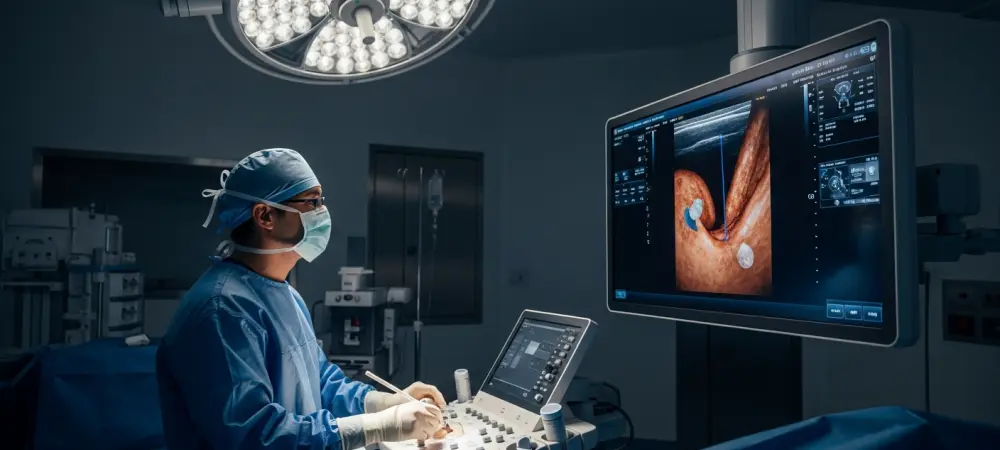
The evolution is moving us from a static view of the body to a dynamic, guided experience where surgeons are no longer just “seeing” a tumor but are being actively guided by ultrasound-guided images. This level of real-time feedback ensures that they can get the most out of every procedure, minimizing trial and error while maximizing the removal of diseased tissue. It creates a process of continuous care where the surgery is just one part of a larger, data-driven journey. By integrating these high-resolution images, we are moving toward a standard where the biology of the individual dictates the surgical path. This precision reduces the risks associated with such delicate operations and ensures a much more predictable outcome for the patient.
In what ways is the traditional pharmaceutical model of “trial and error” being replaced by more personalized biological matching?
We are shifting away from the old-fashioned “finish line” mentality of FDA approval and moving toward an iterative process of co-design. Instead of discovering treatments through broad trial and error, we are now matching specific therapies to an individual’s unique biology to design something that is truly personalized. This means that a patient doesn’t have to cycle through multiple ineffective medications; rather, the data-driven insights from AI and genetic science help us identify the right treatment from the start. It turns the development of cures into a collaborative, ongoing effort between the patient’s biological data and the scientific community. This approach ensures that the healthcare system asks less of the patient to “compress their life” into a trial and more of the technology to adapt to their specific needs.
What is your forecast for the future of healthcare institutions?
I believe we are heading toward a “Vision for 250,” where we finally transition from an office without walls to a medical institution without walls. Our healthcare system has traditionally asked patients to come to us in scheduled, compressed blocks of time, but the future lies in bringing medical care directly into the patient’s hyper-connected social space. We will see a world where the principles of our medical “bill of rights” focus on maintaining the integrity of a patient’s social network and monitoring their health in their natural environment. This revolution will ensure that we are not just treating symptoms in a vacuum, but are charting a course together with the patient, using a map that covers their entire life, not just the minutes they spend in a clinic. Success will be defined by how well we connect ourselves to the patient’s reality, ensuring that the institution exists wherever the patient happens to be.