

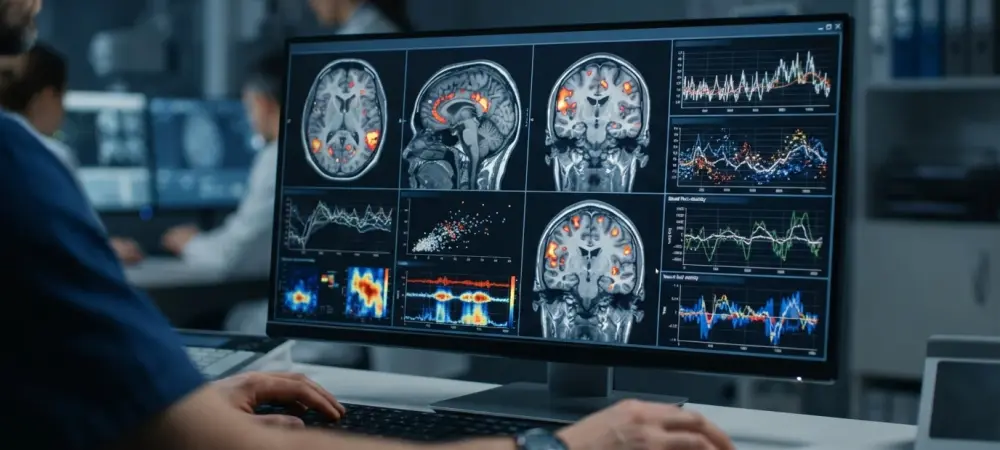
The transition toward an AI-supported healthcare model represents a pivotal shift in the societal understanding and treatment of the human brain’s complexities. In 2026, the global medical community is moving beyond traditional observational methods to embrace a paradigm where computational intelligence serves as the essential backbone of neurological assessment. This transformation is necessitated by the intricate nature of the brain, an organ that often hides its most devastating pathologies until symptoms become severe. The financial momentum behind this shift is significant, with the global market for brain AI-assisted diagnosis solutions reaching a valuation that reflects a compound annual growth rate of over 25 percent. This trajectory suggests that the industry will reach nearly seven billion dollars by 2030. Such rapid expansion is not merely a byproduct of technological novelty but a response to the urgent need for scalable tools that can keep pace with an increasingly complex healthcare environment.
Understanding the Technology and Clinical Value
The current standard for neurological assessment relies heavily on the interpretation of high-resolution imaging, such as magnetic resonance imaging and computed tomography scans. Brain AI-assisted diagnosis solutions are sophisticated software platforms that utilize advanced deep learning algorithms to process these images with a level of precision that human specialists sometimes find difficult to maintain over long shifts. These systems are capable of identifying subtle deviations in brain structure or electrical activity that might indicate the early stages of a stroke, a developing tumor, or the onset of neurodegenerative conditions. By providing an objective and standardized lens through which to view clinical data, AI mitigates the subjective variations that occur between different practitioners. This technological integration ensures that every patient, regardless of their location or the specific hospital they visit, receives a diagnosis grounded in the most comprehensive and up-to-date data available.
Beyond the initial detection phase, the primary value of these platforms lies in their ability to enhance operational efficiency within high-pressure clinical settings. In emergency departments where time is the most critical factor, AI serves as an essential tool for rapid triage by automatically flagging life-threatening abnormalities the moment a scan is completed. This immediate feedback allows neurologists and radiologists to prioritize the most urgent cases, effectively reducing the time between the patient’s arrival and the initiation of life-saving treatment. Furthermore, these diagnostic tools are instrumental in the development of personalized treatment plans. By identifying specific biomarkers and patterns of brain atrophy early in the disease cycle, AI enables clinicians to tailor interventions to the unique physiological profile of the individual. This shift toward precision medicine represents a move away from generalized care toward a targeted approach that optimizes outcomes for each unique case.
Demographic Shifts and Diagnostic Pressure
A primary driver for the widespread adoption of artificial intelligence in neurology is the shifting demographic profile of the global population. As individuals live longer, the brain undergoes various physiological changes, including reduced plasticity and increased oxidative stress, which inherently raise the risk of cognitive decline and structural dysfunction. This aging trend has led to a significant spike in the prevalence of neurological disorders, such as Alzheimer’s disease and various forms of dementia, which are now being diagnosed at record rates across the world. For instance, recent healthcare data from major international health organizations indicates that the volume of dementia cases has risen by hundreds of thousands in just the past year. Traditional diagnostic frameworks are increasingly strained by this influx, creating a bottleneck that can delay essential care. AI solutions provide the necessary scalability to manage this rising demand, ensuring that complex brain conditions are identified accurately.
The scalability offered by AI-assisted diagnosis is not just about speed; it is also about maintaining a high standard of care in the face of limited human resources. Radiologists and neurologists are frequently tasked with interpreting thousands of images daily, a workload that can lead to fatigue and an increased potential for oversight. Artificial intelligence platforms act as a persistent and tireless partner, processing vast quantities of patient data without any loss in diagnostic rigor. This capability allows medical facilities to handle a higher volume of patients without necessarily requiring a proportional increase in specialized staff, which is particularly beneficial for healthcare systems facing labor shortages. By automating the more repetitive aspects of scan analysis, these tools free up physicians to focus on the nuanced communication and complex decision-making aspects of patient care. This synergy between human expertise and computational power ensures that the quality of diagnostics remains high globally.
Emerging Technological Frontiers and Global Accessibility
The technological landscape of brain diagnostics is being reshaped by the rapid evolution of deep learning and the proliferation of cloud-based diagnostic services. Deep learning algorithms are now reaching a level of sophistication where they can recognize complex patterns in neuroimaging that were previously considered invisible to the naked eye. These models learn from massive, diverse datasets, allowing them to improve their accuracy and predictive capabilities over time. Simultaneously, the shift toward cloud-based platforms is democratizing access to these high-level tools. Previously, only large academic medical centers with significant computing power could utilize advanced AI diagnostics. However, cloud infrastructure now allows smaller clinics and rural hospitals to access the same state-of-the-art algorithms without a massive investment in on-site hardware. This decentralization of technology ensures that patients in underserved regions can receive the same quality of neurological assessment as those in major hubs.
While North America has historically led the market due to its robust healthcare infrastructure and high levels of venture capital investment, the integration of AI into brain diagnostics has become a truly global phenomenon. Regions such as Europe and the Asia-Pacific are aggressively updating their clinical guidelines to incorporate these digital tools as they manage their own aging populations and healthcare modernization projects. The regulatory environment is also evolving, with government bodies streamlining the approval process for AI-driven software to ensure that these innovations can reach the clinical front lines more quickly. This international push is driven by a shared recognition that precision neurology is a universal priority. By establishing standardized diagnostic protocols across different countries, the global medical community is creating a more interconnected and resilient system for managing brain health. This expansion is essential for creating a future where high-quality insights are available to every patient.
Strategic Integration and the Evolution of Patient Outcomes
Looking ahead toward the end of the current decade, the integration of artificial intelligence into clinical workflows is expected to transition from an innovative luxury to a fundamental utility. In the past, AI tools were often treated as separate programs that required radiologists to step away from their primary software to run an analysis. Today, these algorithms are being embedded directly into the daily diagnostic interfaces used by medical professionals, creating a seamless experience where AI insights are presented alongside raw imaging data. This deeper level of integration minimizes workflow disruptions and allows for the “second opinion” provided by AI to be considered in real-time. As the costs of these technologies continue to decrease and their ease of use improves, the total addressable market will expand to include every level of the healthcare system. This shift ensures that AI is no longer a niche tool for research but a ubiquitous asset in the broader effort to maintain public brain health.
The ultimate success of AI-assisted brain diagnostics was measured by its ability to transition the medical field toward a model of preventative and early-intervention care. By identifying the subtle biomarkers of neurodegenerative diseases years before clinical symptoms manifested, these tools fundamentally changed the trajectory of patient lives. Healthcare organizations focused on the strategic implementation of these technologies by investing in the necessary digital infrastructure and providing comprehensive training for their clinical staff. The emphasis shifted from simply reactive treatment to the proactive management of brain health, where early detection led to more effective, less invasive interventions. As society continued to navigate the complexities of the human brain, the ongoing collaboration between neuroscience and computational technology remained the most promising path toward a world where neurological disorders were no longer viewed as insurmountable challenges but as manageable aspects of long-term health.