

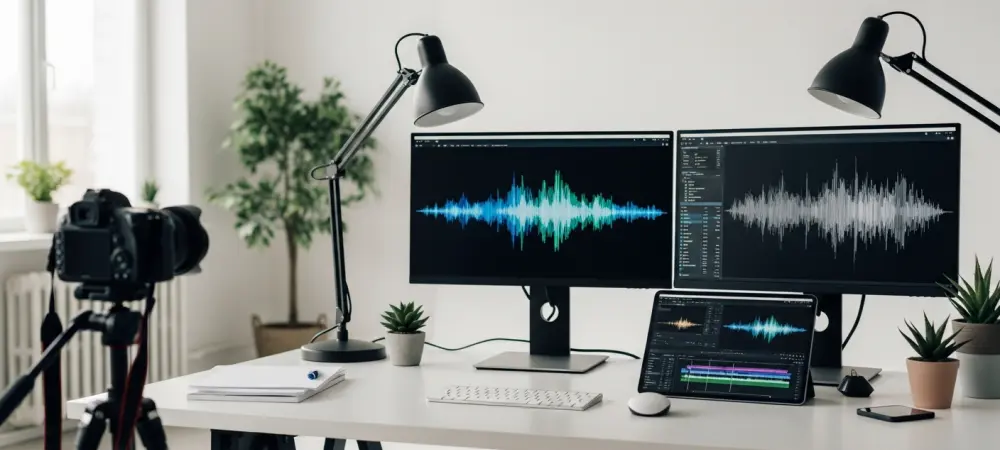
The traditional model of studio-bound music production has been fundamentally disrupted by the rapid integration of generative artificial intelligence into the standard creative toolkit of independent artists and digital marketers. For decades, the acquisition of high-quality audio remained an exclusive luxury reserved for those with significant financial backing and deep technical expertise, leaving the average independent creator to navigate a landscape of restrictive licensing and repetitive stock libraries. This legacy consumer-based model is being swiftly replaced by a dynamic generative approach, which empowers YouTubers, podcasters, and small business owners to synthesize bespoke soundtracks tailored to their unique projects in real time. By removing the friction associated with traditional sound procurement, these emerging technologies have transformed the sonic landscape into a playground for experimentation. The ability to generate complex compositions on demand ensures that professional-grade audio is no longer a bottleneck but a facilitator for creativity.
Accelerating the Creative Workflow: Efficiency and Speed
One of the most profound impacts of this technological shift is the unprecedented speed it introduces to the standard creative workflow. In the modern digital economy, content creators must maintain rigorous upload schedules to remain relevant within algorithmic feeds that prioritize frequent engagement. Generative music platforms eliminate the traditional music search bottleneck by condensing a process that once required days of negotiation or hours of scrolling through generic libraries into a matter of mere seconds. This newfound efficiency allows creators to test multiple variations of a potential track instantly, ensuring a perfect tonal match for their narrative without stalling the production pipeline. Furthermore, the ability to generate specific stems or alternative arrangements on the fly means that the music can evolve alongside the visual edit, rather than serving as a static backdrop that the editor must work around. This agility is essential for creators who operate in fast-moving niches. Beyond the sheer speed of generation, this technology is democratizing the production landscape by decoupling high-quality musical creation from the requirement of formal training. Mastery of music theory or the navigation of complex digital audio workstations is no longer a non-negotiable prerequisite for producing professional-grade sound. By handling the intricacies of arrangement, instrumentation, and harmonic progression, generative tools shift the role of the creator from a technical operator to a conceptual director. This shift empowers individuals to focus entirely on their overarching creative vision rather than being hampered by the mechanical hurdles of audio engineering. Consequently, a storyteller who lacks traditional musical skills can now produce a cinematic score that rivals the output of established studios. This democratization ensures that the barrier to entry for high-end audio production remains low, allowing a more diverse range of voices and perspectives to thrive in the competitive digital marketplace.
Technical Versatility: Exploring New Generative Workflows
The current landscape of generative audio offers diverse workflows that cater to specialized creative needs, most notably through sophisticated text-to-music and lyrics-to-music interfaces. These systems translate simple descriptive prompts—encompassing mood, tempo, instrumentation, or genre—into complex musical arrangements with remarkable accuracy. Some advanced platforms even allow creators to input written lyrics, which are then transformed into fully produced songs featuring realistic vocal performances. This capability allows creators who lack vocal or melodic talent to see their written words come to life as polished, radio-ready tracks without ever setting foot in a traditional recording studio. Moreover, the iterative nature of these tools allows for granular control over the final output, as creators can refine their prompts to adjust specific elements of the composition until the result perfectly aligns with their intended emotional impact or brand identity.
Artificial intelligence is also functioning as a powerful laboratory for stylistic experimentation through the reimagining of existing audio assets. Tools such as song cover generators enable creators to take a basic melody or a rough acoustic demo and transform it into entirely different genres, such as turning a folk song into a cinematic orchestral piece or a synth-wave track. This low-risk environment encourages creative exploration, giving musicians and producers the freedom to explore diverse sonic directions without the prohibitive costs of hiring session musicians or booking professional studio time. By allowing for the rapid prototyping of musical ideas, these tools have become indispensable for artists looking to push the boundaries of their signature sound. This flexibility ensures that creative projects can pivot stylistically at any stage of production, providing a level of adaptability that was previously impossible for independent creators working with limited budgets and tight deadlines.
Brand Identity: Integrating Personal Voice and Visuals
A particularly innovative development in the current market is the rise of custom voice training, which allows creators to maintain their personal branding within the generative ecosystem. By training a specialized model on their own vocal samples, creators can generate high-polish tracks that retain their unique vocal identity while benefiting from the production quality of advanced AI. This technology provides a professional veneer to home recordings, effectively bridging the quality gap between solo independent creators and major production houses. Most importantly, it ensures that the generated output remains authentic to the creator’s persona, which is a critical factor in building trust and loyalty among a modern audience. This approach allows for the creation of consistent sonic logos, custom theme songs, and personalized audio content that reinforces brand recognition across various platforms, ensuring that the creator’s voice is always the centerpiece of the auditory experience.
The synergy between generative audio and visual media is further redefining how music is marketed and consumed on platforms like TikTok and Instagram. New singing video generators can automatically synchronize generated audio with visual content, automating the labor-intensive tasks of lip-syncing and frame-by-frame video editing. This integration allows independent artists and brands to produce high-impact promotional content with minimal manual effort, ensuring their auditory creations are paired with the visual engagement necessary for success on modern social platforms. By streamlining the connection between sound and image, these tools have made it easier for creators to capture viewer attention in a crowded digital space. Furthermore, the ability to generate matching visual and auditory assets simultaneously has created a more cohesive storytelling experience, where the music and the visuals feel inherently linked rather than being separate elements that were forced together during the final stage of post-production.
Strategic Implementation: The Transition Toward Music Utility
Ultimately, the rise of generative technology represents a fundamental shift toward viewing audio as a utility rather than a scarce resource. While human composers continue to offer a unique level of bespoke artistry for high-end cinematic projects, generative tools serve the massive middle market of creators who require functional, high-quality audio that is both affordable and immediate. By closing the gap between initial inspiration and a finished piece of media, these tools ensure that the only remaining limit to production is the creator’s imagination rather than their budget or technical skill set. This transition has changed the economic landscape of the industry, as the value of music is increasingly tied to its functionality and its ability to be customized for specific contexts. Creators are no longer passive consumers of pre-existing tracks; they are active participants in a generative process that treats sound as a flexible material that can be shaped to meet the specific requirements of any digital project. The successful integration of these tools depended on the strategic adoption of ethical frameworks and technical standards established throughout the year. Creators prioritized platforms that offered clear copyright protections and utilized high-quality, licensed training data to ensure their projects remained legally sound. They also took the necessary steps to combine generative outputs with human oversight, ensuring that the final products maintained an emotional resonance that purely automated systems sometimes lacked. By treating generative tools as an extension of the creative mind rather than a replacement for it, artists developed a hybrid workflow that maximized both efficiency and originality. This transition period proved that the most effective strategy involved using AI to handle repetitive tasks while reserving the final creative decisions for the human director. Consequently, the industry moved toward a future where the synergy between human intuition and machine precision defined the new standard for independent content excellence.