

The unprecedented demand for high-density compute power has effectively shattered the traditional blueprints that have governed the data center industry for more than three decades. While legacy facilities were designed to support general-purpose cloud computing and enterprise applications with modest energy requirements, the current surge in artificial intelligence workloads necessitates a radical departure from these established norms. Engineers are now grappling with power densities that exceed 100 kilowatts per rack, a figure that would have been unthinkable just a short time ago. This shift is not merely about scaling up existing technology but involves a fundamental reimagining of how electricity is distributed and how heat is dissipated within the data hall. As the industry moves from 2026 toward 2030, the primary challenge remains the reconciliation of massive infrastructure needs with the finite availability of power and space, forcing a shift from rigid redundancy to a more fluid and precise architectural model.
The End of Universal Redundancy
Moving Away from Legacy Uptime Standards
The historical obsession with “five nines” of availability—representing 99.999 percent uptime—functioned as the cornerstone of data center engineering since the dawn of the internet age. This rigid standard was essentially a safety net for a broad spectrum of digital services where the specific criticality of the workload was often unknown to the facility operator. In the previous landscape, a single data hall might host everything from non-essential internal archives to high-frequency trading platforms and emergency response systems. Because the financial and social consequences of a blackout were so severe, the industry adopted a defensive posture, installing massive uninterruptible power supply systems and double-redundant cooling loops. This overengineering ensured that any single component failure would not trigger a cascading outage, but it also resulted in significant capital inefficiencies and an enormous carbon footprint that the modern energy environment can no longer sustain as demand continues to skyrocket. As artificial intelligence begins to dominate the total share of global compute capacity, the “one-size-fits-all” approach to uptime is increasingly viewed as an expensive relic of a less sophisticated era. Modern developers and operators are recognizing that not all digital tasks require the same level of physical protection against failure. By segmenting workloads based on their actual tolerance for brief interruptions, providers can optimize their infrastructure to save both energy and money. This realization is driving a move toward “precision resilience,” where the underlying hardware and power systems are designed to match the specific behavioral profile of the software they support. This shift allows for the construction of facilities that are more streamlined and cost-effective, bypassing the need for redundant generators and massive battery arrays where they do not add direct value to the specific application, thereby allowing resources to be redirected toward higher-priority compute needs.
Tailoring Infrastructure to AI Training Workloads
Large-scale AI training processes operate on a logic that is fundamentally different from the transactional nature of traditional IT services, enabling a more relaxed approach to physical uptime. These massive workloads, which involve processing trillions of tokens across thousands of GPUs, are inherently designed to be resilient at the software level rather than the hardware level. Through a technical method known as “checkpointing,” the training system periodically saves the state of the model to persistent storage. If a power fluctuation or a hardware failure occurs, the training run does not start over from the beginning; instead, it simply resumes from the last saved state once the issue is resolved. This batch-processing behavior means that a training campus can prioritize raw power density and cooling efficiency over the extreme electrical redundancy that was once mandatory for every enterprise-grade facility built in previous decades.
The shift toward specialized training campuses allows engineers to focus on the massive thermal challenges posed by modern AI hardware without being hindered by legacy redundant designs. With chips now pushing the limits of air cooling, these new facilities are increasingly being designed with liquid cooling as a primary requirement rather than an optional upgrade. Direct-to-chip cooling and rear-door heat exchangers are becoming the standard, allowing for much tighter rack spacing and a smaller physical footprint for the same amount of compute power. Because these training sites are often located in remote areas where power is abundant and cheap, the design priority shifts toward maximizing the work done per watt. This evolution marks the end of the data center as a generic warehouse for servers and the beginning of its life as a specialized industrial plant, optimized for the sole purpose of generating the intelligence that will drive the next wave of global innovation.
Balancing Speed and Specialization
Managing Real-Time Demands and Market Pressures
In contrast to the flexible nature of model training, the process of AI inference requires a much more robust and immediate infrastructure response to satisfy user expectations. Inference occurs when a person asks a chatbot a question or a car uses a computer vision model to navigate a street, necessitating a near-instantaneous response that cannot tolerate the delays of a system restart. Because these interactions are tied directly to the end-user experience, the facilities housing inference hardware must maintain high reliability and be located in close proximity to major population centers to minimize latency. However, even in this high-stakes environment, the industry is moving away from the traditional model of building a single, indestructible bunker. Instead, the focus has shifted toward building high-performance edge sites that are integrated into a larger, more intelligent network capable of handling localized demands.
The evolution of inference infrastructure is currently being shaped by the concept of “distributed resilience,” where reliability is managed through software and network routing rather than just physical hardware. If a specific data center in a metropolitan area experiences a localized power event or a cooling failure, the intelligent network can automatically reroute the user’s query to a neighboring facility in a different part of the city. This architectural shift allows operators to build sites that are less complex and faster to deploy while still providing a seamless experience for the consumer. By relying on a mesh of interconnected sites, the industry can achieve high availability without the astronomical costs associated with building redundant power paths into every single square foot of floor space. This approach effectively balances the need for speed and reliability, ensuring that the AI tools people rely on are always available.
Addressing the High Costs of Overengineering
Maintaining a commitment to universal overengineering has become a significant financial and operational liability in a market defined by extreme scarcity and high interest rates. Every additional layer of redundancy—whether it be an extra set of backup generators or a complex dual-bus power distribution system—requires a massive upfront capital investment that could otherwise be used to purchase more GPUs or secure additional land. Furthermore, the specialized components required for ultra-resilient designs often have the longest lead times in the supply chain, creating bottlenecks that can delay a project by months or even years. In the current competitive environment, the ability to bring capacity online quickly is often more critical to a company’s success than achieving a marginal increase in theoretical uptime, leading many to rethink their design priorities.
The labor shortage within the electrical and mechanical engineering sectors has further accelerated the move toward simpler, more efficient data center designs. Complex, highly redundant facilities require a larger and more specialized workforce to build, test, and maintain, which drives up operational costs and increases the risk of human error during construction. By simplifying the underlying architecture and focusing on the core requirements of the AI workload, operators can reduce the number of potential failure points and streamline the commissioning process. This strategic simplification not only lowers the overall cost of ownership but also allows for a more predictable construction schedule. As the industry moves forward, the focus is increasingly on “lean” infrastructure that eliminates waste and ensures that every dollar spent is directly contributing to the performance and scalability of the artificial intelligence systems being deployed.
The Future of Modular Infrastructure
Scaling Through Standardization and Factory-Built Components
To meet the explosive demand for AI capacity, the data center industry has largely abandoned the tradition of designing every facility as a unique, one-off architectural project. Instead, there is a massive move toward standardization, where providers utilize a set of universal reference designs that can be replicated across multiple geographic regions with minimal adjustment. This shift allows for the mass production of data center “blocks,” which include pre-integrated racks, cooling units, and power modules. By treating the data center as a product rather than a building, operators can significantly reduce the time spent on engineering and site-specific troubleshooting. This standardization also makes it easier to train maintenance crews and manage spare parts, as the equipment used in a facility in Northern Virginia is identical to the equipment used in a facility in Dublin or Singapore.
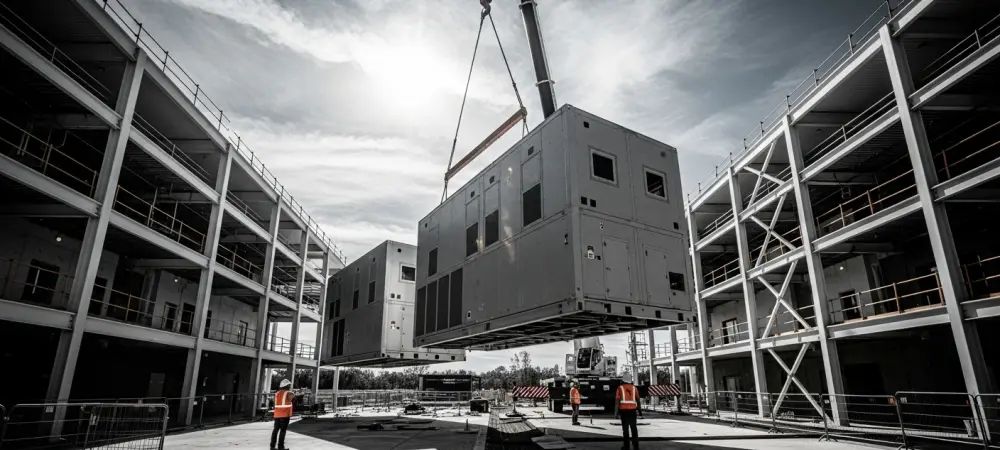
A major driver of this speed is the transition to offsite manufacturing, where critical infrastructure components are assembled in controlled factory environments before being shipped to the site. This modular approach allows the construction of the building shell to happen simultaneously with the fabrication of the internal mechanical and electrical systems. Once the site is ready, these factory-tested modules are simply plugged into the main power and water lines, drastically reducing the amount of on-site labor and the risk of weather-related delays. This method of “pre-fabricated” construction ensures a higher level of quality control and allows operators to scale their capacity in discrete, predictable increments. As the demand for AI continues to grow, this industrial-scale approach to building infrastructure will be the only way to keep pace with the needs of the world’s largest technology companies and research institutions.
Building Specialized and Diversified Portfolios
The modern data center landscape is rapidly evolving into a diversified portfolio of specialized assets, moving away from the concept of the general-purpose facility that does everything for everyone. In this new paradigm, operators are strategically placing different types of data centers in environments that best suit their specific operational requirements. For example, massive AI training campuses are being established in regions with abundant renewable energy or low-cost hydroelectric power, where the environmental conditions can assist in cooling the massive heat loads. These sites are optimized for throughput and energy efficiency, serving as the “heavy lifting” engines of the AI economy. Meanwhile, smaller, more resilient inference sites are being embedded within urban environments to provide the low-latency response times needed for real-time applications and consumer-facing services.
This strategic alignment between the physical infrastructure and the digital application ensures that the industry can maximize its use of available resources while maintaining a sustainable growth trajectory. By categorizing workloads into “trains,” “planes,” and “cargo ships,” operators can apply the appropriate level of investment and engineering to each specific journey. This nuanced approach allows for a more efficient use of the power grid, as less critical workloads can be scheduled or located to take advantage of off-peak energy availability. Ultimately, the future of data center design is defined by its flexibility and its ability to adapt to the specific needs of the software it houses. This shift represents a transition from a rigid industry governed by tradition to a dynamic and responsive sector that is capable of supporting the most complex and power-hungry technology ever created by humanity. The evolution of data center design into a more modular and specialized field successfully addressed the massive infrastructure challenges posed by the sudden rise of artificial intelligence. By abandoning the outdated “one-size-fitts-all” redundancy model, the industry achieved a more sustainable balance between power consumption, capital expenditure, and operational speed. This transition allowed for the rapid deployment of massive compute clusters while ensuring that critical, real-time applications remained resilient through networked, distributed architectures. Moving forward, stakeholders should focus on deep integration between software developers and hardware engineers to ensure that future facilities are built with the specific requirements of next-generation algorithms in mind. Adopting liquid cooling as a universal standard and investing in site-level energy storage will be essential steps for maintaining flexibility as power densities continue to climb. The era of the generic data center ended, giving way to a more intelligent, purpose-built foundation for the global digital economy.