

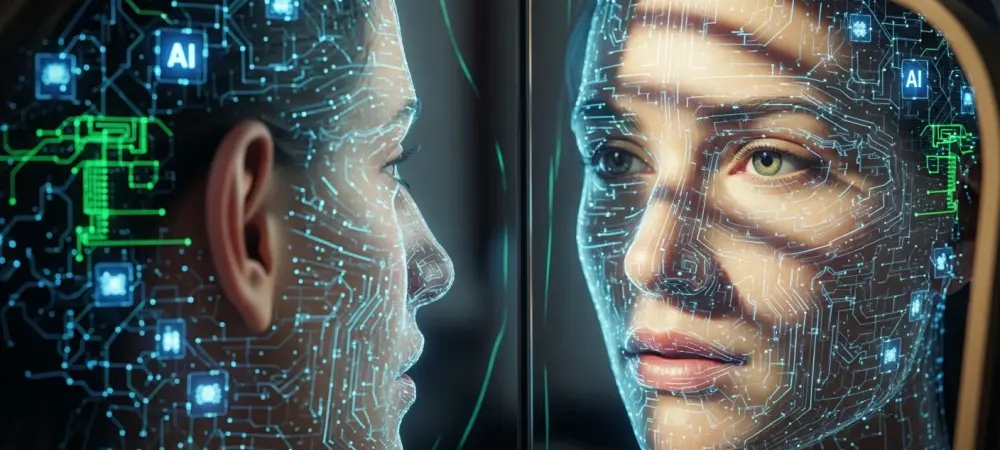
Long before the first light of dawn breaks the horizon, a digital confessor is awake, listening to the most profound and personal questions humanity dares to ask in the quiet solitude of the night. This is not science fiction but a reality uncovered by a landmark study from the Microsoft AI (MAI) research team, which has revealed that artificial intelligence is evolving far beyond a simple productivity tool. It is increasingly becoming an intricate mirror of human life, reflecting our natural daily, weekly, and emotional rhythms. By analyzing a vast, anonymized dataset of 37.5 million user conversations, the research paints a detailed portrait of a new kind of human-AI relationship—one where technology serves as a confidant, a creative partner, and a guide for life’s most complex challenges. The findings demonstrate that AI is integrating into the very fabric of our existence, adapting to the nuances of the human experience.
Beyond the Hype Unpacking Data on Our Digital Confidants
The foundation of these insights is the comprehensive analysis conducted by MAI researchers Bea Costa-Gomes and Seth Spielman. The sheer scale of the study provides a statistically significant window into how millions of people interact with AI assistants like Copilot. This data moves the conversation about AI’s role in society from speculative to evidence-based, showing a clear pattern of integration into the routines that define human life. The research matters because it confirms that AI is no longer a peripheral utility but a central component of how people manage their schedules, pursue their passions, and even process their emotions.
One of the most striking discoveries is a modern parallel to F. Scott Fitzgerald’s observation that “in a real dark night of the soul, it is always three o’clock in the morning.” The analysis uncovered a distinct temporal split in user queries, with conversations about profound topics like “Religion and Philosophy” consistently peaking in the early morning hours. This contrasts sharply with the daytime, when practical matters such as travel planning dominate during commuting hours. This duality challenges the simplistic view of AI as a mere task manager, revealing its dual function as both a pragmatic assistant for daily logistics and a quiet sounding board for our deepest curiosities.
The Rhythms of Life Reflected in Code
The research also identified a clear and consistent weekly cycle that neatly separates professional pursuits from personal leisure. Data from last August, for example, showed a strict segregation between programming and gaming queries. Conversations related to coding climbed steadily from Monday to Friday, aligning perfectly with a standard workweek. As the weekend arrived, however, these discussions receded, replaced by a surge in queries about gaming. This pattern highlights how users maintain a distinct boundary between their work and personal lives, even when both spheres involve digital engagement on the same platform.
Beyond the daily and weekly cadences, the study confirmed that AI usage is profoundly influenced by cultural moments and social pressures. A pronounced spike in relationship-related conversations was observed in February, peaking on Valentine’s Day. In the days leading up to the holiday, discussions around personal growth and wellness also increased, suggesting users were turning to the AI to prepare for the social and emotional expectations of the event. This trend reveals that during emotionally charged periods, individuals increasingly seek private counsel from AI, using it as a tool to navigate complex social dynamics and process personal feelings away from public view.
In the Researchers Words The Voices Behind the Data
The human element behind these patterns was a central theme for the researchers. They noted that the data points toward a deeply contemplative side of human nature, observing, “The larger-than-life questions seem to have a rise during the early hours of the morning.” This expert observation lends weight to the idea that AI is becoming a tool for introspection, used when people feel most reflective and unburdened by the day’s demands.
This thoughtful engagement is balanced by a vibrant, active user base. The distinct separation of work and play led researchers to describe a “vibrant, creative community that loves to code during the week and play during the weekends in equal measure.” This insight paints a picture of AI users as balanced individuals who leverage the technology across different facets of their lives. Furthermore, during significant social events, the data confirmed AI’s role as a support system. Researchers noted, “we saw a spike in activity as people turned to Copilot for guidance, reminders, and support,” particularly around Valentine’s Day, solidifying its function as a modern-day advisor.
The Deepening Trust in Our Digital Companions
A significant trend identified in the analysis is the evolution of user intent, signaling a deepening trust in AI. While information retrieval remains a popular function, Microsoft detected a clear rise in users asking Copilot for substantive advice on personal matters, including relationships, health, and major life decisions. This shift repositions AI from a mere search engine to a digital consultant for navigating life’s complexities, indicating that users are growing more comfortable with its role as a source of guidance.
This deepening trust is amplified by the choice of device. Across all hours of the day and throughout the year, health-related topics were consistently the most common type of conversation on mobile devices. This dominance was not replicated on desktops, pointing to the unique role smartphones play as intimate and trusted companions. As the researchers wrote, “When it comes to mobile, with its intimacy and immediacy, nothing tops our health.” The private and accessible nature of a smartphone makes it the preferred interface for discussing personal health concerns, further cementing AI’s role as a personal confidant.
A Blueprint for a More Human-Centric AI
The insights gleaned from this large-scale analysis had significant implications for the future of AI development, providing a clear blueprint for creating more human-centric technology. By understanding what matters most to users—from managing health to seeking emotional support—developers gained the ability to design features that integrated more naturally and effectively into daily life. The privacy-preserving methods used in the study, which focused on aggregated topic summaries rather than individual content, ensured that this progress did not come at the expense of user confidentiality. Ultimately, the study underscored the critical importance of AI quality and responsibility. As users increasingly relied on AI for substantive, personal advice, the imperative to maintain a high bar for quality and ethical considerations became more pronounced. The research provided a crucial behavioral dimension to the industry’s understanding of AI adoption, concluding that AI assistants were evolving from static tools into dynamic companions. They had become a mirror reflecting the complex, rhythmic, and deeply human patterns of the people they were designed to serve.