

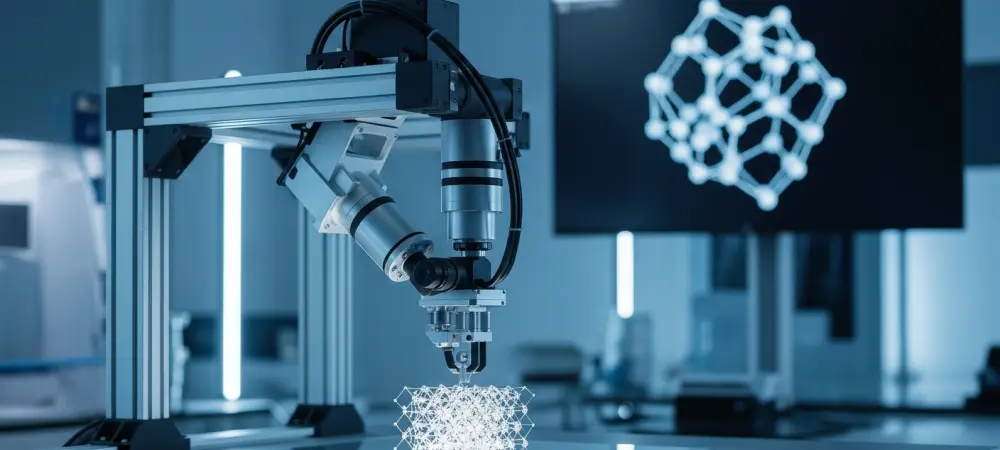
The traditional paradigm of material discovery, which often relied on serendipity and decades of labor-intensive laboratory experimentation, has undergone a radical transformation as artificial intelligence streamlines the identification of stable crystalline structures. In the current landscape starting in 2026, researchers no longer spend years synthesizing failed compounds; instead, deep learning architectures like Graph Neural Networks predict the thermodynamic stability of new materials before a single atom is moved in a physical lab. Platforms such as the Materials Project have integrated advanced generative models to expand the known universe of inorganic crystals from a few hundred thousand to several million in a fraction of the time previously required. This shift allows scientists to bypass the “Edison” method of trial and error, focusing instead on high-performance candidates for semiconductors and superconductors. By training on vast datasets of quantum mechanical calculations, these AI systems identify patterns in atomic arrangements that human intuition might overlook, effectively narrowing down the search space for the next generation of technological breakthroughs in energy storage and electronics.
The Rise of Autonomous Laboratories and Robotic Synthesis
Beyond mere prediction, the integration of generative AI with automated robotic platforms has given birth to self-driving laboratories that function with minimal human intervention. These systems utilize active learning loops where an AI agent designs an experiment, a robotic arm executes the synthesis, and integrated sensors analyze the resulting material properties to inform the next iteration. For instance, in the development of thin-film materials for solar cells, autonomous setups can screen thousands of chemical combinations in a week, a task that would have consumed a decade of manual research. This closed-loop approach ensures that every failure is utilized as a data point to refine the underlying model, rapidly accelerating the optimization of complex alloys and polymers. Leading institutions are now deploying these modular robotic units to work around the clock, significantly reducing the cost of research and development while maintaining a level of precision and reproducibility that human scientists find difficult to achieve consistently. This seamless transition from digital simulation to physical reality represents the cornerstone of modern industrial chemistry and materials engineering.
Strategic Implementation for Sustainable Industrial Scaling
The successful deployment of AI-driven discovery frameworks necessitated a shift toward collaborative data ecosystems and standardized digital twins for molecular modeling. Industries prioritized the development of solid-state batteries and carbon-capture membranes, recognizing that these technologies were essential for meeting global sustainability targets by 2030. To maximize these gains, organizations moved away from siloed research departments, instead fostering interdisciplinary teams that combined domain expertise in metallurgy with advanced machine learning capabilities. The focus shifted toward ensuring data quality over quantity, as high-fidelity experimental results became the primary currency for training more accurate predictive models. Leaders in the field established open-source benchmarks to track the performance of various AI architectures, which catalyzed innovation across the entire supply chain. Looking ahead, the emphasis remained on refining the explainability of AI models to understand why certain atomic configurations yielded superior results. This transition enabled the rapid commercialization of breakthrough materials that effectively addressed the most pressing environmental challenges while securing a competitive edge in the global market.