

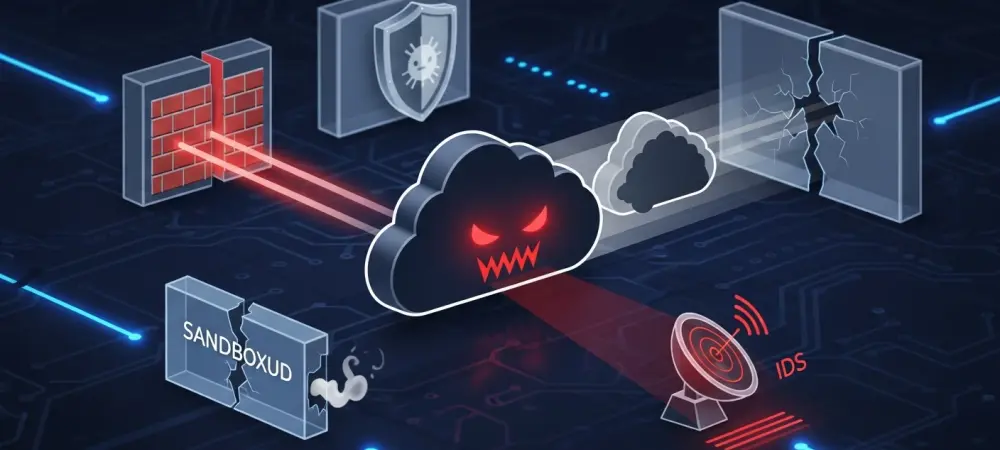
A single misplaced line of code from a forgotten programming era can dismantle the most expensive digital fortifications ever constructed by global corporations today. While cybersecurity experts focus on the looming threat of quantum-decryption and generative artificial intelligence, a more grounded and archaic danger has quietly infiltrated the enterprise landscape. DarkCloud, a sophisticated yet deceptively simple infostealer, serves as a stark reminder that the most effective weapons are often those that hide in the shadow of progress. This malware does not rely on zero-day vulnerabilities in cutting-edge frameworks; instead, it weaponizes the very foundations of the early internet to bypass modern security protocols.
The emergence of DarkCloud represents a fundamental shift in the economics of cybercrime, where the cost of a breach no longer correlates with the complexity of the attack. By exploiting the industry’s collective obsession with modern threats, the developers of this tool have found a fertile hunting ground in the “legacy blind spot.” The threat is not just a technical one but a structural failure in how organizations perceive risk. When a thirty-dollar subscription can compromise a billion-dollar network, the traditional defense-in-depth model requires an urgent and radical reassessment.
The Obsolete Code Paradox: Why Old Tools Are Winning
The effectiveness of legacy software in a high-tech threat landscape creates a jarring contradiction for modern defenders. Security suites are meticulously tuned to identify the fingerprints of modern exploitation techniques, such as memory-only payloads or advanced PowerShell obfuscation. However, DarkCloud leverages Visual Basic 6.0, a language officially retired by its creator nearly two decades ago. Because this runtime environment is so rarely encountered in modern development, many heuristic engines treat its activity as a benign relic rather than a lethal intrusion. This oversight allows DarkCloud to operate with a level of stealth that modern, high-level languages struggle to achieve.
The financial disparity between the attacker’s investment and the victim’s potential loss is staggering. For the price of a modest dinner, an entry-level threat actor gains access to a toolkit capable of exfiltrating high-value intellectual property and financial credentials. This “low-cost” malware creates a multi-million dollar risk profile for enterprises that have invested heavily in AI-driven endpoint protection but neglected the security implications of older architectural frameworks. The irony remains that the very frameworks that built the early internet are now being utilized to dismantle the security of its modern successor.
Furthermore, the prevalence of these legacy components in corporate environments makes them difficult to remove or block entirely. Many critical business applications still rely on older DLLs for compatibility, creating a permanent doorway for attackers. DarkCloud thrives in this environment, using the legitimacy of these older files to mask its malicious intent. As long as security tools prioritize the new over the known, these ancient codebases will remain the preferred vehicle for stealthy data exfiltration.
The Democratization: Cyber Espionage for the Masses
The rise of the Malware-as-a-Service (MaaS) model has fundamentally changed the profile of a typical threat actor. DarkCloud is managed by an entity known as “Darkcloud Coder,” a developer who has evolved from earlier projects like BluCoder to create a highly accessible and persistent threat. By offering a subscription-based model, the developer has removed the technical barriers to entry for cyber espionage. A novice attacker no longer needs to understand the intricacies of buffer overflows or encryption algorithms; they simply need a subscription and a target.
This democratization of digital theft has led to a surge in high-volume, low-sophistication attacks that can still yield devastating results. A thirty-dollar entry fee provides a dashboard, customer support, and a pre-configured payload ready for deployment. This shift in the threat landscape means that an organization’s primary adversary may not be a state-sponsored hacking group, but rather an opportunistic individual utilizing a standardized, professional-grade tool. The gap between marketing claims and malicious intent is also narrowing, as the developer often masks the software under the guise of “surveillance” or “administrative” tools to evade legal scrutiny.
The evolution from BluCoder to DarkCloud demonstrates a commitment to longevity and refinement in the underground market. This is not a fleeting project but a structured business enterprise designed to survive shifting security trends. The developer provides regular updates, ensuring that the malware remains compatible with the latest browser versions and security patches. This professionalization of malware development ensures that even “cheap” tools maintain a level of efficacy that rivals bespoke espionage software used by more advanced groups.
The Technical Blueprint: Anatomy of an Invisible Thief
DarkCloud’s technical architecture is a masterclass in weaponizing the “MSVBVM60.DLL” runtime to create a massive security blind spot. By compiling the malware into a native format using Visual Basic 6.0, the developer ensures that the resulting payload mimics the behavior of a legitimate, if dated, Windows application. Unlike modern C++ or C# payloads that often trigger red flags through suspicious API calls or unusual entropy, DarkCloud’s interactions with the operating system appear routine and unremarkable to many legacy-focused security filters.
Evasion is further enhanced through a deterministic decryption process that avoids the network noise associated with traditional command-and-control communication. The malware utilizes a pseudo-random number generator (PRNG) native to the VB6 environment. By resetting the PRNG to a specific seed value at runtime, the malware can reconstruct its encrypted strings and instructions without ever requesting a key from an external server. This algorithmic evasion makes it incredibly difficult for traffic analysis tools to identify the malware’s presence before the exfiltration process begins.
The data harvesting capabilities of DarkCloud are exhaustive and specifically target the modern browser ecosystem. It doesn’t just stop at Chrome or Edge; it infiltrates Firefox, Brave, and a host of secondary browsers to extract cookies, login data, and stored payment information. Beyond the browser, the thief targets infrastructure tools like FileZilla and VPN configurations, providing attackers with the keys to the kingdom. A secondary but equally potent threat is the scraping of contact lists from mail clients like Outlook, which provides the raw data necessary for follow-up social engineering attacks against a victim’s entire professional network.
Expert Insights: Tracing the Historical Lineage
The history of DarkCloud is not one of sudden emergence but of calculated evolution. Tracing its ancestry reveals deep linkages to the “A310LoggerStealer,” also known as BluStealer, highlighting a continuous development cycle that spans several years. Code-level analysis shows that the core logic of the malware has remained remarkably consistent, with refinements focused almost exclusively on evasion and the broadening of data-harvesting targets. This lineage proves that the threat actor is not reinventing the wheel but is instead perfecting a proven method of theft.
One of the most telling pieces of evidence in this historical lineage is the reuse of identical regular expressions across different versions of the software. These expressions, used to identify and parse credit card numbers and sensitive data patterns, have remained unchanged through multiple iterations. This suggests a mature and stable codebase where the developer focuses on incremental improvements rather than radical shifts. Such stability is a hallmark of successful commodity malware, as it allows for predictable performance across a wide range of victim environments.
Empirical detection data consistently shows that legacy-based malware like DarkCloud outperforms modern variants on major threat-scanning platforms. While a new C++ infostealer might be flagged by fifty different antivirus engines within hours of release, a VB6-based variant often maintains a much lower detection rate for a significantly longer period. This data confirms that the developer’s choice of an “obsolete” language is a deliberate and highly effective strategy for maintaining a persistent presence on infected machines.
Strategic Defense: Strengthening the Identity Perimeter
Defending against an invisible thief requires a shift in focus toward the monitoring of legacy runtime interactions. Organizations must configure their Endpoint Detection and Response (EDR) tools to prioritize the auditing of “MSVBVM60.DLL” and other obsolete runtime files. By treating any unusual behavior originating from these legacy components as high-risk, security teams can close the blind spot that DarkCloud exploits. This proactive monitoring must be coupled with advanced traffic analysis that looks for stealthy exfiltration through non-traditional channels such as Telegram bots, FTP, and SMTP.
Identity hygiene remains the most critical barrier against the success of an infostealer. Moving beyond browser-based credential storage is no longer an option but a necessity for enterprise security. Centralized, encrypted password managers that do not store secrets in the local browser profile provide a much smaller attack surface. Additionally, enforcing aggressive attachment filtering for compressed files like ZIP and RAR can neutralize the primary delivery mechanism for DarkCloud before it ever reaches the endpoint.
Ultimately, the goal of a strategic defense is to neutralize the value of harvested data through rigorous rotation policies. If session tokens and credentials are rotated frequently, the window of opportunity for an attacker is significantly reduced. By implementing these measures, organizations moved toward a posture that recognized the reality of the modern threat landscape: identity is the new perimeter, and the most dangerous tools are often those we have already forgotten. Security teams successfully mitigated the risk by acknowledging that ancient code could still bite. They reinforced their defenses by auditing every legacy interaction and ensuring that no background process remained unmonitored. This shift in perspective allowed the enterprise to stay one step ahead of the DarkCloud.