

Artificial Intelligence (AI) and advanced computing are reshaping industries at an unprecedented pace. At the forefront of this technological evolution stands NVIDIA, a company revered for its innovation in GPU design and AI frameworks. From entertainment to healthcare, NVIDIA’s contributions are vast and impactful. This article delves into NVIDIA’s extensive offerings, highlighting how they’re revolutionizing various sectors.
Transformational Power of NVIDIA’s Graphics Cards and Gaming Solutions
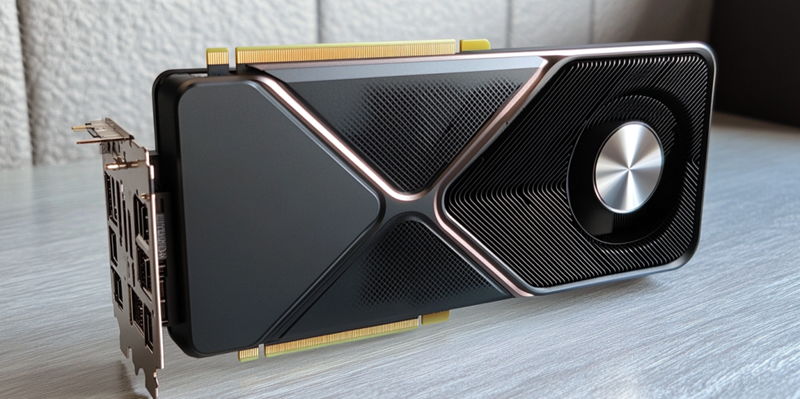
NVIDIA’s legacy in the gaming industry is unmatched, primarily due to its cutting-edge graphics cards and the innovative technologies they employ. The GeForce Graphics Cards are tailored for gamers and content creators, leveraging RTX technology to deliver advanced ray-tracing and AI-enhanced graphics performance. These cards ensure immersive gaming experiences and facilitate high-quality content creation. Moreover, when it comes to gaming laptops, NVIDIA equips them with high-performance GPUs, catering to gamers who need portability without compromising performance.
Beyond gaming, the G-SYNC Monitors provide an enhanced gaming experience through adaptive synchronization technology. This ensures smooth visuals and reduces screen tearing, making high-paced games more enjoyable. Additionally, products like Studio and SHIELD TV cater to content creators and entertainment enthusiasts, providing optimized hardware solutions for demanding workloads and streaming capabilities, respectively. NVIDIA’s dedication to improving gaming hardware demonstrates its commitment to pushing the boundaries of what’s possible in the world of digital entertainment.
High-Performance Laptops and Workstations for Professionals
NVIDIA extends its prowess to professional work environments with its powerful laptops and workstations equipped with its renowned RTX technology. These professional devices offer advanced computational capabilities for AI tasks, data science projects, and creative workflows. AI workstations, in particular, are designed for complex machine learning models, providing users with cutting-edge computational power. These workstations support intensive applications, making them ideal for industries requiring significant computational resources, such as graphic design, video editing, and scientific research.
By leveraging the power of NVIDIA RTX, professionals can achieve higher efficiency and remarkable precision in their tasks. Whether for creative endeavors or scientific experimentation, these high-performance workstations enable users to tackle large datasets and complex algorithms with ease. Professionals across various sectors benefit from the enhanced capabilities that NVIDIA’s technology brings to the table, demonstrating the company’s influence beyond just consumer electronics.
Advancements in Cloud and Data Center Technologies
NVIDIA’s contributions to cloud computing and data centers are pivotal in handling large-scale computational tasks. The Grace CPU is NVIDIA’s custom solution designed for high-performance computing, addressing the growing needs of data-centric applications. On a broader scale, the DGX Platform offers an optimized environment for AI training and inference, providing scalable solutions for enterprises of varying sizes.
NVIDIA also introduces EGX and IGX Platforms, focused on bringing AI capabilities to the edge of networks. This edge computing is crucial for real-time data processing and analysis. Meanwhile, the HGX Platform caters to high-performance applications needing intensive computational power, such as large-scale simulations. For modular and scalable enterprise needs, NVIDIA’s MGX and OVX systems are designed to provide advanced computing resources tailored to different requirements.
Networking and Embedded Systems
In networking technologies and embedded systems, NVIDIA continues to lead by enhancing connectivity and efficiency in data processing. The company’s DPUs and SuperNICs offer fast and efficient data processing capabilities, crucial for modern data centers. Networking solutions, such as Ethernet and InfiniBand, cater to the high-speed network demands essential for optimized data flow and communication within data centers.
NVIDIA’s Jetson and DRIVE AGX embedded systems have a significant impact on robotics and autonomous driving, providing robust AI capabilities for real-world applications. In the healthcare sector, Clara AGX offers advanced computing solutions designed for medical imaging and diagnostics, contributing to more accurate and efficient patient care. These advancements in connectivity and embedded systems reinforce NVIDIA’s position as a leader in technological innovation, serving various industries with tailored solutions.
Robust Software Solutions: AI and Machine Learning
NVIDIA’s software solutions span various industries, offering powerful tools for AI and machine learning. For AI inference, Triton provides an efficient server to deploy AI models, making complex computations more feasible. The NeMo frameworks support the development of large language models, conversational AI, and speech recognition—pivotal for NLP applications. CuLitho targets computational lithography, essential for semiconductor manufacturing, while RAPIDS accelerates data analytics and processing.
Healthcare applications see significant advancements with Clara, offering AI-enhanced medical imaging solutions. These tools not only improve diagnostic accuracy but also streamline workflows, ensuring timely and effective patient care. By providing powerful AI and machine learning frameworks, NVIDIA enables industries to leverage these technologies for enhanced performance and efficiency, revolutionizing various domains.
Building Scalable Recommender Systems and Metaverse Applications
NVIDIA’s role in pioneering scalable recommender systems and metaverse applications is noteworthy. Merlin, NVIDIA’s end-to-end framework, enables building scalable recommender systems leveraging GPUs, ensuring personalized user experiences at scale. On the other hand, Omniverse is a suite designed for creating and operating metaverse applications, facilitating real-time collaboration in 3D simulated environments.
These frameworks underscore NVIDIA’s efforts in pushing the boundaries of interactive digital experiences and personalized digital interactions. Merlin and Omniverse cater to the next generation of internet applications, providing innovative solutions that enhance user engagement and interaction. NVIDIA’s commitment to these emerging fields demonstrates its vision for the future of digital ecosystems and interactive technologies.
Pioneering Application Frameworks Across Industries
NVIDIA’s application frameworks span various sectors, driving innovation and efficiency. Maxine provides cloud-AI video streaming solutions, enhancing the quality and reliability of digital interactions. Morpheus leverages AI for cybersecurity, using advanced models to detect and analyze threats, thus bolstering security protocols. Metropolis offers intelligent video analytics for smart city applications, aiding in urban planning and management through AI-driven insights.
Isaac provides tools and simulation environments for robotics development, enabling the creation of sophisticated robotic systems. These frameworks highlight NVIDIA’s role in pioneering applications that not only enhance performance but also bring about transformative changes in their respective domains. By offering industry-specific solutions, NVIDIA is poised to continue its trajectory of driving innovation and technological advancement across the globe.
Conclusion and Objective Analysis
Artificial Intelligence (AI) and advanced computing are transforming industries at an extraordinary speed. Leading this revolution is NVIDIA, a company celebrated for its breakthroughs in GPU design and AI frameworks. NVIDIA’s impact spans numerous sectors, from entertainment to healthcare, showcasing its extensive reach and influence.
In the realm of entertainment, NVIDIA’s GPUs deliver stunning graphics, enhancing gaming experiences and powering high-quality visual effects in movies. Its AI frameworks optimize complex algorithms, making real-time rendering more efficient. In healthcare, NVIDIA’s technologies facilitate groundbreaking research and diagnostics. AI-driven tools help in predicting patient outcomes, enabling personalized treatment plans and expediting drug discovery.
Moreover, NVIDIA’s contributions extend to autonomous vehicles, where its AI systems enhance safety and navigation. NVIDIA’s technology also plays a crucial role in scientific research, powering simulations and data analysis at unprecedented speeds.
This article delves into NVIDIA’s wide-ranging innovations, illustrating how the company is revolutionizing different industries by pushing the boundaries of what’s possible with AI and advanced computing. Through continuous innovation and adaptation, NVIDIA stands as a pivotal player in shaping the future of technology across multiple fields.