

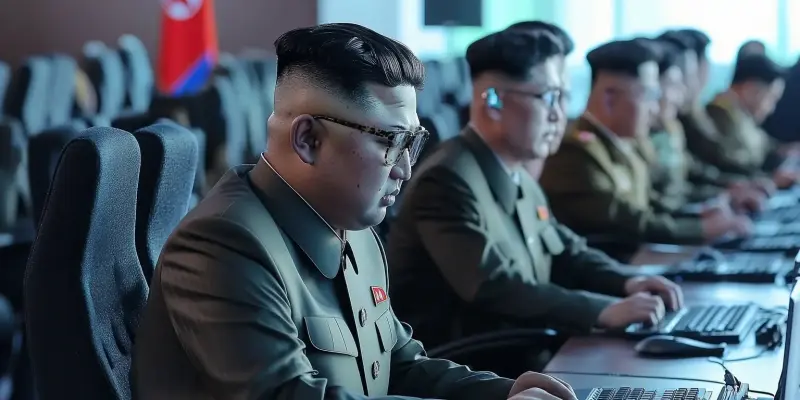
North Korea has evolved remarkably in the realm of cyber warfare, transitioning from primitive hacking attempts to sophisticated, strategically integrated operations. This emerging cyber prowess poses significant global security threats, with implications for military espionage, financial stability, and social harmony worldwide. The transformation of North Korea’s cyber capabilities showcases a strategic shift that has caught the attention of global security experts. Recognizing and mitigating these threats is essential for maintaining a stable international order.
Evolving Cyber Capabilities
North Korea’s cyber force has undergone a formidable transformation, showcasing a drastic shift from basic hacking to advanced intrusions targeting sensitive information. Initially regarded as an amateur in the cyber domain, the nation has rapidly developed its skill set to conduct highly sophisticated and coordinated cyberattacks. Their tactics now extend far beyond simple data breaches, involving intricate schemes designed to steal military secrets, manipulate public opinion, and orchestrate large-scale cryptocurrency heists.
This transition in capability is not merely about technological prowess but also demonstrates a keen understanding of the strategic advantages of cyber warfare. North Korean cyber warriors have shown considerable expertise in developing malware and other malicious software tools, which are then used to infiltrate targeted systems. This evolution highlights the regime’s commitment to leveraging cyber operations as a means of achieving broader strategic objectives, including undermining adversaries’ security and economic stability.
Organizational Hierarchy and Strategic Focus
Under the military umbrella, entities like the “227 Research Center” play pivotal roles in orchestrating cyber efforts, emphasizing the high priority placed on digital warfare. The North Korean government has established a well-organized hierarchy of cyber operatives tasked with specific missions. By creating specialized units, the regime ensures that each cyber operation is strategically executed to achieve defined objectives. These units are meticulously structured, focusing on intelligence collection, financial crimes, and public opinion manipulation.
This organizational approach underscores North Korea’s strategic planning and highlights the importance they place on cyber warfare as a tool for both national defense and offense. Cyber operatives are deployed based on their roles and areas of expertise, ensuring highly coordinated and effective operations. The meticulous division of tasks ensures that personnel are optimally utilized, enabling the execution of complex and high-stakes cyber operations that align with the regime’s overarching goals.
Espionage and Intelligence Gathering
A prime focus of North Korea’s cyber operations is acquiring vital intelligence. These campaigns frequently target defense contractors, research institutions, and military networks. The information gathered through these cyber espionage activities provides North Korea with valuable insights into the technological advancements and strategic plans of its adversaries. This data is then used to strengthen North Korea’s military and technological capabilities, giving it a strategic edge.
The 2014 breach of a South Korean defense company is a poignant example of the success and ongoing threats posed by North Korean cyber espionage endeavors. During this attack, significant missile-related technology was stolen, demonstrating the far-reaching impact of such operations. These cyber espionage activities are not isolated incidents but part of a larger and more cohesive strategy aimed at disrupting the military and economic stability of rival nations, thereby enhancing North Korea’s regional influence and power.
Manipulating Public Opinion
Another critical aspect of North Korea’s cyber strategy includes psychological operations designed to fracture social cohesion within adversary nations. By spreading disinformation and manipulating social media platforms, North Korean cyber operatives aim to amplify divisions around sensitive issues. These issues often involve politics, race, and economic inequality, and the intention is to exacerbate existing tensions within societies, ultimately weakening their ability to present a unified front against external threats.
Such manipulation not only fuels domestic unrest but also distracts governments and security organizations from external threats, making it easier for North Korea to achieve its strategic objectives. The regime’s sophisticated use of fake news, impersonation of foreign media outlets, and social media manipulation reflects a deep understanding of the impact of information warfare. These tactics are designed to erode trust in institutions and create a volatile environment conducive to North Korea’s geopolitical ambitions.
Financial Crimes and Cryptocurrencies
North Korea’s cyber-soldiers are heavily involved in financial cybercrimes as a means to circumvent international sanctions, focusing on fraudulent activities and cryptocurrency theft. The economic sanctions imposed on North Korea have necessitated the development of alternative revenue streams, and cybercrime has emerged as a particularly lucrative avenue. These cyber operatives engage in a variety of financial crimes, including fraudulent employment schemes and direct hacking of financial institutions to siphon funds.
Cryptocurrency theft has become a significant component of these financial cyber operations. By targeting crypto exchanges and businesses involved in digital currencies, North Korea has managed to accumulate substantial foreign currency reserves. The anonymity and decentralization associated with cryptocurrencies have provided the regime with an effective means to evade sanctions and continue funding its activities. The focus on cryptocurrencies represents a strategic adaptation to the evolving financial landscape.
Global Security Implications
The advancements in North Korea’s cyber capabilities present substantial threats to international security, necessitating heightened vigilance and coordinated response strategies from the global community. The potential for widespread disruption caused by these cyber activities is significant, affecting not only national security but also global financial stability and social harmony. The international community must recognize the urgency of this threat and respond with comprehensive measures to safeguard against it.
To combat these threats effectively, there is an urgent need for international cooperation and the development of enhanced security measures among nations and financial entities. Collaborative efforts are essential to create a formidable defense against the sophisticated cyber tactics employed by North Korea. This includes sharing critical information, improving cyber surveillance networks, and developing robust countermeasures to detect and neutralize cyber threats before they can cause substantial harm.
Towards a Unified Response
Given these threats, a concerted effort involving information sharing, improved surveillance, and robust defense mechanisms is essential to mitigate the risks posed by North Korea’s cyber activities. Joint initiatives and partnerships among nations can significantly enhance the collective ability to prevent and respond to cyberattacks. By aligning resources and strategies, the international community can establish a unified front capable of effectively countering the sophisticated cyber threats emanating from North Korea.
Global institutions and governments must prioritize collaborative measures and proactive strategies to protect against the escalating cyber threats originating from North Korea. This includes investing in advanced cybersecurity technologies, conducting regular security assessments, and fostering open channels of communication for timely threat intelligence sharing. Strengthened alliances among nations and cooperation with private sector entities are critical components of an effective global cybersecurity strategy.
The Path Ahead
North Korea has made significant strides in the field of cyber warfare, evolving from rudimentary hacking attempts to conducting advanced, strategically integrated operations. This newly developed cyber expertise represents a major global security threat. The consequences span military espionage, financial systems’ stability, and societal peace on an international scale. The dramatic evolution of North Korea’s cyber capabilities signifies a strategic realignment that has piqued the interest of global security analysts. Understanding and addressing these threats is crucial for upholding a stable global order. As these cyber threats escalate, it is imperative for nations to develop robust defenses and cooperative strategies in order to counteract North Korea’s activities effectively. Ensuring global alliances are strong and responsive to these challenges will be vital for maintaining the integrity and safety of nations worldwide. Thus, paying attention to North Korea’s growing cyber capabilities and responding proactively is essential for worldwide security continuity.