

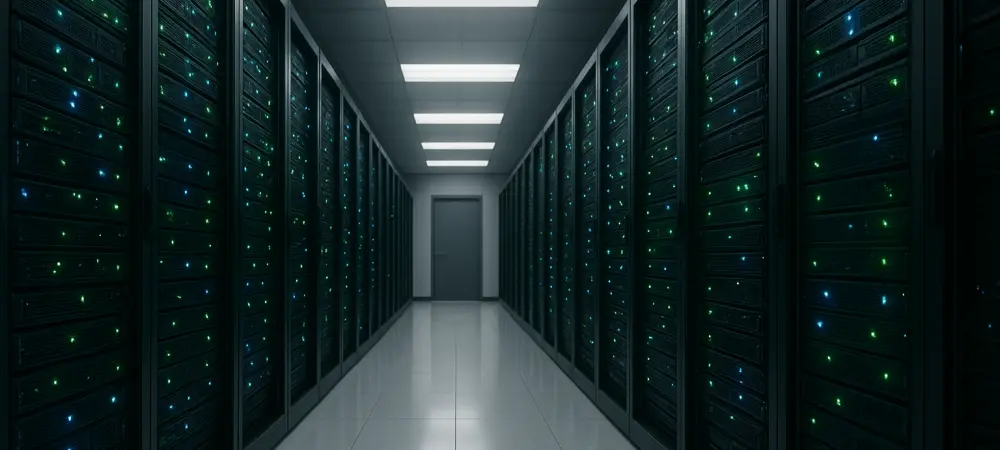
Strategic hardware investments provide the necessary headroom for organizations to meet today’s workloads while building a framework for future AI-driven opportunities. As digital ecosystems evolve into more complex, data-reliant networks, the traditional approach of maintaining legacy systems has become a liability rather than an asset. The 2026 technological climate demands that data centers function as dynamic engines of innovation instead of mere storage repositories. This shift is characterized by a fundamental reimagining of how compute power is distributed and utilized across global networks. Organizations are currently navigating a landscape where the integration of artificial intelligence is no longer an optional upgrade but a core requirement for operational survival. To bridge this gap, technical leaders are prioritizing the deployment of unified platforms that blend standard database management with machine learning tasks, ensuring the underlying hardware can scale rapidly to meet demands without requiring frequent, disruptive overhauls.
Maximizing Efficiency: The Path to Hardware Consolidation
Modern data centers are undergoing a radical physical transformation where the emphasis has shifted from quantity to density through sophisticated consolidation strategies. By utilizing advanced architectures such as the Lenovo ThinkSystem V4, IT departments are successfully collapsing sprawling server farms into compact, high-performance environments. The current capability to achieve a 4:1 consolidation ratio means that a single modern unit can effectively replace four legacy servers, providing a massive reduction in physical space requirements. This architectural lean-down does more than just save room on the data center floor; it simplifies the entire hardware lifecycle management process from deployment to eventual decommissioning. Furthermore, the reduction in physical processors and total core counts—often requiring 4.2x fewer CPUs for equivalent workloads—directly impacts the bottom line by lowering per-core software licensing costs. This strategic reduction in complexity allows personnel to focus on system optimization rather than the constant troubleshooting of disparate, aging hardware.
Environmental responsibility and operational costs have converged, making energy efficiency a cornerstone of AI readiness in the current 2026-2028 cycle. Transitioning to the latest server generations allows organizations to realize an impressive 2.5x reduction in energy consumption, a vital achievement as power costs continue to fluctuate globally. These improvements are driven by more than just better power supplies; they stem from intelligent thermal management and the integration of high-speed memory and bandwidth that minimize the energy required for data movement. High computing density ensures that demanding tasks like real-time automation and AI inferencing can be performed within the same power envelope that previously supported only basic administrative functions. By optimizing the power-to-performance ratio, companies are able to meet stringent corporate sustainability mandates while simultaneously building the headroom necessary to process the massive datasets required for advanced analytics. This sustainable approach ensures that the digital infrastructure remains viable and cost-effective as data volumes grow.
Transforming Operations: Real-World AI and Edge Deployments
The practical application of modern infrastructure is perhaps most evident in the public safety sector, where real-time data processing is literally a matter of life and death. In municipalities like San Gabriel, California, the deployment of robust on-premises AI platforms has fundamentally changed how first responders interact with their environment. By utilizing ThinkSystem servers equipped with Intel Xeon 6 processors, the city developed a situational awareness network capable of processing dozens of data streams simultaneously. This setup was crucial for managing large-scale public events, where the ability to run 24/7 AI-powered analysis allows for immediate threat detection and resource allocation. Moving AI inferencing directly to the edge, rather than relying on distant cloud nodes, eliminates the latency that often plagues traditional systems during peak demand. This proximity to the data source ensures that critical information is processed and visualized in milliseconds, providing a template for how other cities can leverage high-performance compute power to protect their communities during high-stress operational scenarios.
Digital transformation is not limited to major metropolitan centers, as evidenced by the innovative work being done by regional service providers in geographically isolated areas. Organizations like Arafura Connect in Australia’s Northern Territory are demonstrating that distance is no longer a barrier to high-performance computing through the use of edge-ready infrastructure. By integrating specialized hardware like the ThinkSystem SR650 V4, these providers are bringing advanced capabilities to local businesses that were previously excluded from the AI revolution. A key component of this success is the use of Intel Advanced Matrix Extensions, or AMX, which provides built-in acceleration for AI workloads directly on the processor. This allows regional enterprises to run complex data models locally, fostering innovation in industries like agriculture and mining where low latency is essential for automated machinery. This democratization of technology ensures that the tools for economic growth and technical advancement are distributed equitably, allowing businesses far from traditional tech hubs to compete on a global scale while maintaining control over their local data sovereignty.
Building Foundations: Strengthening Core Services and Scalability
For many organizations, the primary motivator for infrastructure modernization remains the unwavering need for reliability and speed in mission-critical core services. The experience of financial institutions like the Belagavi District Central Co-Operative Bank in India illustrates how legacy bottlenecks can hinder service delivery to vital economic sectors. By transitioning to modern Lenovo ThinkSystem hardware, the bank achieved a 100% increase in performance, which translated into a 70% improvement in application response times for its customers. This level of performance is critical for agricultural workers who require 24/7 access to financial services through mobile and digital platforms. The upgrade path did not just address current speed issues; it established a stable foundation that can support future AI-driven banking services such as fraud detection and personalized financial advice. This case study confirms that even when AI is viewed as a future objective, the immediate benefits of modernization—such as enhanced stability and faster transaction processing—provide an immediate return on investment that justifies the strategic shift away from legacy architecture. Successful organizations recognized that infrastructure was not a static asset but a fluid platform that required constant alignment with emerging technological demands. Technical leaders prioritized a holistic assessment of their data center environments, identifying where consolidation and energy optimization could yield the greatest long-term savings. They moved beyond the pilot phase of AI and began integrating high-performance compute capabilities directly into the fabric of their daily operations, ensuring that scalability was baked into the hardware layer. By focusing on the implementation of unified systems that handled both traditional and AI-specific workloads, these companies eliminated the silos that previously slowed down innovation cycles. The decision to invest in high-density, power-efficient servers created a sustainable model for growth that remained resilient as data volumes increased throughout the decade. Strategic planning focused on maximizing throughput and minimizing latency, which ultimately provided the flexibility needed to seize new opportunities as they arose. These actions proved that a modern digital foundation was the single most important factor in achieving long-term competitive readiness.