

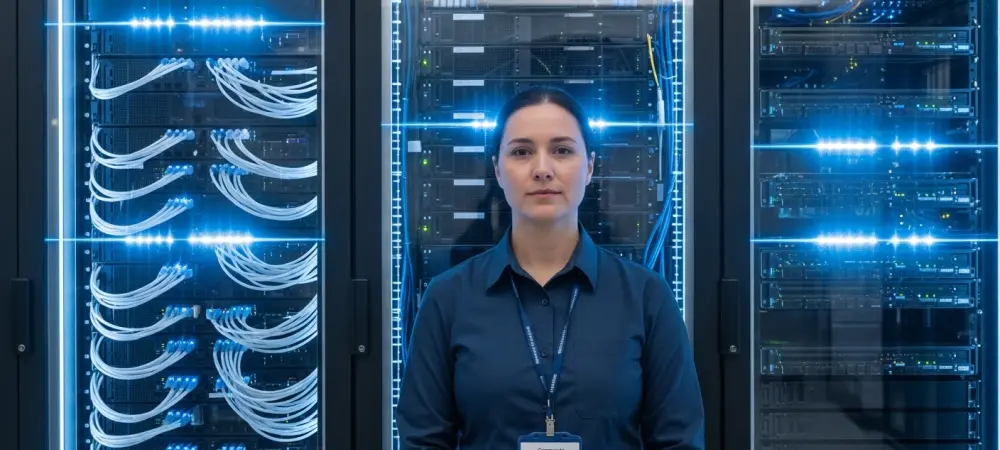
The traditional concept of a locked digital vault is rapidly evolving into a complex web of neural networks where a single line of malicious code can compromise an entire corporate ecosystem. As enterprises move beyond simple experimentation toward full-scale deployment of large language models, the security landscape has shifted from protecting static data to safeguarding dynamic, unpredictable intelligence. Microsoft Azure AI Foundry has emerged as a central stage for this transformation, attempting to bridge the gap between the raw power of generative models and the uncompromising safety requirements of modern business.
The Vanishing Perimeter: Why Standard Security Is No Longer Enough for AI
Modern cybersecurity formerly relied on a clear boundary between the trusted internal network and the untrusted external world, but the rise of generative AI has effectively dissolved these borders. When an organization integrates a third-party model, it is not just adding a tool; it is inviting a sophisticated piece of software that can interact with sensitive databases and execute complex tasks. Traditional firewalls, which were designed to inspect packets of data, are fundamentally unequipped to understand the nuances of a prompt injection attack or the subtle poisoning of a model’s training set.
This shift necessitates a departure from reactive security measures toward a more proactive, context-aware defense strategy. In the current environment, the model itself must be scrutinized as a potential entry point for attackers who aim to bypass traditional authentication methods. By recognizing that AI represents a new category of risk, developers have had to rethink the entire stack, ensuring that the model does not become a “black box” that operates without oversight or accountability within the corporate infrastructure.
The Rising Stakes of AI Supply Chain Vulnerabilities
The global market for AI models has expanded into a diverse ecosystem of open-source and proprietary technologies, yet this variety introduces significant risks to the software supply chain. Malicious actors have shifted their focus toward embedding harmful artifacts deep within the architecture of these models, often targeting the very layers that developers assume are safe. Because these models are frequently built upon previous versions or shared datasets, a single vulnerability in a popular base model can propagate through thousands of downstream applications, creating a systemic risk for the industry. Treating a model as a standalone entity is no longer a viable strategy for risk management. Instead, security teams must view AI as a component of a larger delivery pipeline that requires constant verification from the moment of ingestion to the point of deployment. The complexity of these systems means that unauthorized network calls or hidden logic triggers can remain dormant for months before being activated. This reality has forced a move toward more rigorous inspection protocols that treat every imported model with the same level of suspicion as unverified third-party code.
Building a Foundation on Zero-Trust Architecture and Data Sovereignty
Microsoft addresses these systemic risks by embedding AI models within a strict zero-trust framework, essentially treating every model as an isolated application running on a secured virtual machine. This architectural choice ensures that no component of the AI system is trusted by default, regardless of its origin or perceived reputation. By enforcing granular identity management and least-privileged access, the platform prevents a model from reaching beyond its designated parameters, effectively containing any potential breach within a single, isolated tenant.
Data sovereignty remains the cornerstone of this defensive posture, addressing the primary concern of enterprise leaders: the privacy of their intellectual property. In Azure AI Foundry, customer-provided data used for prompts or specific fine-tuning is never leaked into the shared base models used by other clients. Any specialized training or adjustments made to a model remain locked within the customer’s specific environment. This isolation ensures that the proprietary insights a company uses to sharpen its competitive edge do not inadvertently become part of a public knowledge base or a competitor’s output.
The Multi-Layered Technical Scanning Framework
To identify threats before they can impact a production environment, the platform utilizes an automated, multi-stage scanning engine that evaluates models for a wide array of hidden dangers. This process begins with deep malware analysis, which hunts for traditional viruses or scripts that might be lurking within the model files themselves. Following this, the system conducts extensive vulnerability assessments to check for known Common Vulnerabilities and Exposures (CVEs) that could be exploited to gain unauthorized access to the underlying cloud infrastructure.
The technical scrutiny goes even deeper by inspecting the internal mechanics of the model, specifically looking for backdoors and signs of integrity tampering. By monitoring for unauthorized network communication and analyzing the internal tensors—the mathematical building blocks of the AI—the framework can detect if a model has been intentionally “poisoned” to behave erratically under specific conditions. This level of transparency allows organizations to verify that the model they are deploying is identical to the one they intended to use, free from any silent modifications made during the supply chain journey.
Beyond Automation: Red-Teaming and Human Oversight for High-Risk Models
While automated tools provide a strong first line of defense, high-visibility or high-risk models, such as the DeepSeek R1 series, undergo an even more intensive level of scrutiny involving human expertise. Specialized security teams engage in manual source code reviews and adversarial red-teaming, where they simulate the tactics of sophisticated hackers to find weaknesses that algorithms might miss. These experts attempt to trick the model into revealing sensitive information or bypassing safety filters, ensuring that the AI remains resilient even against novel attack vectors.
Once a model has survived this gauntlet of automated and manual tests, it is awarded a “scan-complete” badge on its model card. This indicator serves as a certificate of health, providing a clear signal to developers that the model has met the industry’s most rigorous safety standards. This transparency is vital for building trust, as it allows security officers to make informed decisions about which models are safe for production use without needing to conduct their own exhaustive, weeks-long forensic investigations from scratch.
Strategic Framework for Implementing Shared Responsibility
Securing the future of generative AI was not solely the responsibility of the platform provider, as organizations were required to adopt a model of shared responsibility to maintain a truly resilient environment. Enterprises discovered that the most effective strategy involved integrating Microsoft’s foundational scans with their own internal governance policies. By establishing a clear protocol that favored “scan-complete” models and applying real-time monitoring to AI outputs, businesses were able to mitigate risks while still moving at the speed of innovation.
Looking ahead, the evolution of AI security will likely focus on even more granular control and automated remediation of detected threats. Organizations should now prioritize the training of their security personnel in AI-specific risk management and consider implementing “AI firewalls” that can intercept and sanitize inputs and outputs in real-time. The transition from blind trust to continuous verification became the defining characteristic of a successful AI strategy, ensuring that the productivity gains of the future were built on a bedrock of verifiable safety and uncompromising data integrity.