

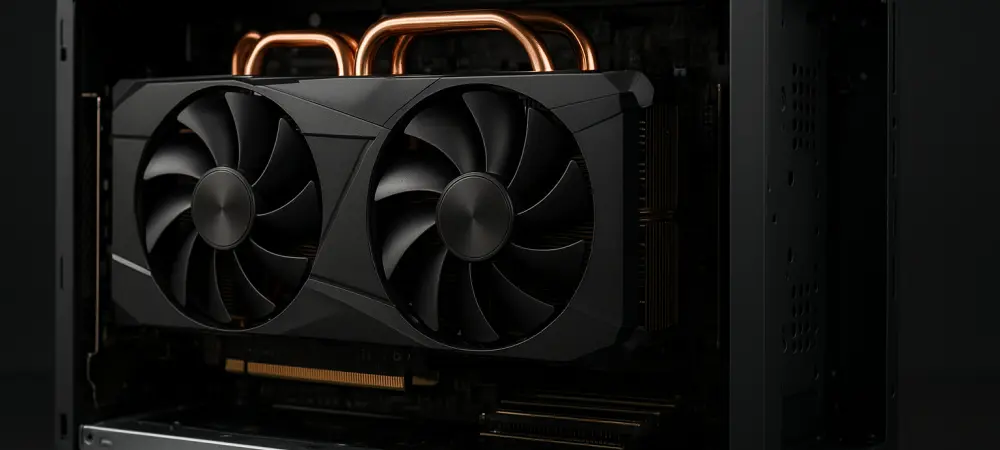
Using time-slicing technology, the integrated scheduler runs multiple workloads on a single chip without allowing processes to encroach on shared memory spaces. This capability marks a significant departure from traditional GPU management, where a single task often monopolized an entire accelerator, leading to profound resource underutilization. By embedding the Run:ai orchestration layer directly into the Lambda Kubernetes Service (LKS), the platform has transitioned from a basic infrastructure provider into a sophisticated managed AI software library. This strategic shift occurred following the landmark decision in late 2026 to open-source the full Run:ai suite under the Apache 2.0 license, empowering providers to offer deeply validated and automated scheduling environments. The result is a robust system that alleviates the operational burdens previously shoulders by AI research teams, who once had to manually assemble these complex layers. This integration ensures orchestration is no longer a separate hurdle.
Optimized Resource Allocation: The Shift to Granular Control
Standard Kubernetes schedulers frequently struggle with the erratic and heavy demands of deep learning workloads, often resulting in massive efficiency gaps within high-performance clusters. Traditionally, a researcher might reserve a full NVIDIA #00 or B200 instance for basic model debugging or exploratory data analysis, even though the task requires only a fraction of the chip’s memory and compute throughput. This fragmentation leads to ‘orphaned’ capacity, where expensive hardware remains powered on and allocated but effectively idle for a large percentage of the time. The integration of Run:ai addresses this by implementing a rigorous GPU fractioning model that divides physical hardware into multiple logical units. By utilizing advanced virtualization techniques, the system permits several independent containers to run concurrently on a single physical device. This ensures that every gigabyte of high-bandwidth memory and every tensor core is utilized to its maximum potential for the organization.
Beyond just partitioning resources, this fractional approach provides a critical sandbox for the early stages of the AI development lifecycle. During the experimentation phase, where code failures are frequent and model architectures are still in flux, providing researchers with dedicated but right-sized resources is more effective than forcing them into a queue for full-node access. Lambda’s managed implementation allows for the creation of virtual GPU instances that maintain strict isolation, preventing a single runaway process from crashing adjacent workloads on the same chip. This level of granularity transforms how research teams view their hardware budget, moving from a scarcity mindset to one of fluid, on-demand availability. Furthermore, this method is designed to be mutually exclusive with Multi-Instance GPU (MIG) modes where necessary, giving administrators the flexibility to choose between hardware-level partitioning and software-defined time-slicing based on specific cluster performance requirements.
Dynamic Quota Management: Balancing Flexibility and Guarantee
Effective cluster management requires more than just sharing hardware; it demands a sophisticated governance model that can navigate the competing priorities of multiple research departments. The managed Run:ai scheduler introduces a ‘fair-share’ algorithm that replaces static resource limits with a dynamic, quota-based system. Each team within an organization is assigned a ‘deserved quota,’ which serves as a guaranteed baseline of compute power they can access at any time. However, the system is designed to be elastic, allowing teams to borrow unused capacity from other groups when the cluster is under-utilized. This elasticity ensures that the infrastructure never sits idle while a backlog of jobs exists elsewhere in the organization. When a team that has lent out its resources suddenly initiates a high-priority job, the scheduler recognizes the shift and prepares to reclaim the necessary capacity. This strategy balances individual team autonomy with the goal of maximizing total cluster throughput.
The underlying mechanics of this rebalancing involve continuous cycles where the scheduler takes frequent snapshots of the entire cluster state to perform allocation, consolidation, and reclamation. This process is highly proactive, utilizing a preemption mechanism that can gracefully pause or relocate ‘over-quota’ workloads to make immediate room for guaranteed-quota tasks. Unlike primitive scheduling methods that might simply kill a job, this sophisticated approach prioritizes workload persistence and minimizes lost progress. The scheduler operates in real-time, reacting to the volatile nature of AI training where resource demands can spike instantly. By automating these complex decisions, the system removes the need for manual intervention from IT administrators, who previously had to referee disputes over GPU availability. This shift toward an automated, policy-driven environment allows organizations to scale their operations horizontally without a linear increase in management overhead for the cluster.
Operational Resilience: Integration With Hardware Remediation
Even the most intelligent scheduler is rendered ineffective if it lacks visibility into the physical health of the underlying hardware, especially in distributed training environments. Large-scale AI clusters are susceptible to a range of hardware failures, from NVLink degradation and PCIe errors to memory row remapping and InfiniBand port fluctuations. If a scheduler is unaware of these issues, it may continue to dispatch jobs to a failing node, creating a ‘black hole’ effect where jobs crash immediately upon startup. Lambda addresses this challenge by tightly coupling the Run:ai scheduler with an integrated auto-remediation framework within the LKS ecosystem. This framework monitors nodes for specific hardware conditions and exposes these health metrics directly to the orchestration layer. When a fault is detected, the system immediately marks the node as unsuitable for new workloads, ensuring that the scheduler skips the compromised unit. This hardware-aware approach is essential for maintaining integrity.
Once a node is identified as faulty, the LKS automation initiates a structured remediation sequence designed to minimize downtime while ensuring reliability. The process begins with ‘cordoning,’ which prevents the scheduler from assigning new tasks, followed by ‘draining,’ where existing jobs are safely migrated or terminated according to their priority. The system then attempts a series of automated software-level corrections, such as driver resets or firmware updates, to resolve common transient errors. If these automated fixes prove insufficient, the platform triggers a formal hardware repair request, alerting engineering teams to the specific component failure. A critical component of this workflow is the validation phase; a node is only permitted to return to the active pool after passing a rigorous suite of performance and stability benchmarks. This synergy between the scheduler and the remediation layer provides a level of operational resilience often missing in self-managed environments.
The Open-Source Foundation: Adaptation and Long-Term Value
The decision by NVIDIA to transition the Run:ai platform to an open-source model under the Apache 2.0 license has been a catalyst for deeper transparency and innovation in AI orchestration. This open nature allows providers like Lambda to inspect, adapt, and refine the core components—including the KAI Scheduler and GPU Fractioning Operator—to better suit specific hardware configurations. For instance, the orchestration layer can be tuned to work seamlessly with InfiniBand RDMA setups and specialized high-speed interconnects that are common in modern data centers but often require custom configuration. This level of visibility into the code base empowers infrastructure engineers to optimize the software-hardware interface, ensuring that features like podgroupers can automatically connect workloads with frameworks like Kubeflow, Ray, and Argo. By providing a pre-validated version of these open-source tools, the service lowers the barrier to entry for researchers by handling orchestration internals.
The strategic integration of managed scheduling tools provided a clear pathway for organizations to overcome the dual challenges of resource waste and operational complexity. As teams looked toward the future, the emphasis shifted from basic availability to the nuanced management of high-speed interconnects and hardware health. Those who successfully adopted these managed frameworks found that their research cycles accelerated because the infrastructure became largely invisible. The transition to hardware-aware software stacks highlighted the importance of moving away from generic cloud solutions toward specialized, tuned environments. Moving forward, AI teams were advised to audit their current utilization rates and consider how fractional GPU allocation might reduce their overall operational costs. The focus remained on ensuring that every developer had access to the precise amount of compute needed for their specific stage of work. By prioritizing a unified, automated approach, organizations secured a competitive advantage.