

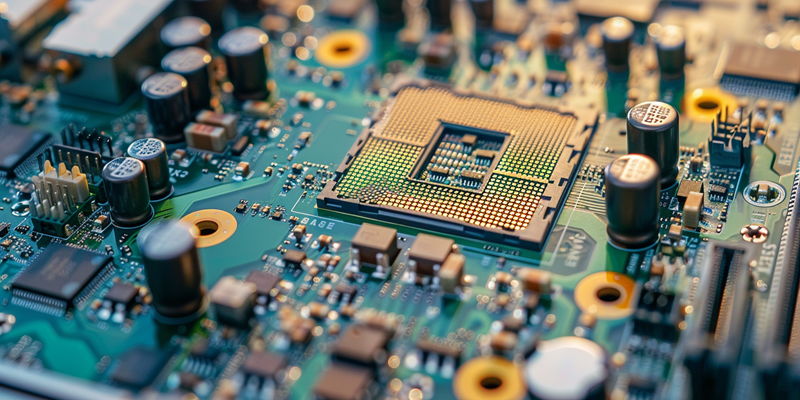
Gigabyte’s release of the Z790 series motherboards, notably the Z790 AORUS PRO AX, represents a significant leap forward in motherboard technology tailor-made to support Intel’s 14th Gen CPUs. Through the harmonious integration of advanced technical specifications, refined hardware design, and enhanced connectivity options, these motherboards aim to elevate performance and user experience for both computing enthusiasts and professionals. The unveiling of the Z790 series hinges on providing a robust foundation that can handle the enhanced capabilities of Intel’s flagship Core i9-14900K CPU, among others. This strategic deployment ensures compatibility while introducing innovations that promote stability, efficiency, and high-speed operations.
Upgraded Hardware and Design
One of the standout features of the Z790 series is its upgraded hardware and design, marking substantial innovations over its predecessors. Gigabyte has taken significant strides in enhancing the onboard components, particularly focusing on improved heatsinks and VRMs (Voltage Regulator Modules). These critical enhancements ensure that the motherboard can meet the increased power and thermal demands of modern CPUs, maintaining stability and peak performance even under strenuous conditions. Furthermore, the aesthetic improvements, including a contemporary visual design, marry style with functionality, making the motherboard not just efficient but also visually appealing.
The inclusion of the latest WIFI 7 technology provides a considerable upgrade in wireless connectivity, ensuring that users are equipped for the next generation of high-speed internet applications and multitasking environments. This upgrade supports significantly faster data rates and enhanced network efficiency, which are essential for both professional and personal use scenarios. By integrating these state-of-the-art features, Gigabyte reaffirms its commitment to delivering future-proof hardware that can stand the test of time. Collectively, these advancements set a new benchmark in motherboard technology, reflecting an all-encompassing approach to performance optimization and user satisfaction.
Compatibility with Intel’s 14th Gen CPUs
Gigabyte’s Z790 motherboards are meticulously engineered to be compatible with Intel’s latest 14th Gen CPUs, enabling users to maximize the potential of the new processors. Utilizing the LGA 1700 socket, the Z790 series supports both Raptor Lake-S and Alder Lake CPUs. This dual compatibility augments the motherboard’s versatility and longevity, allowing users to transition seamlessly across different CPU generations without the need for a new motherboard. Such thoughtful design ensures that users can fully exploit the advanced features and enhanced performance metrics of the 14th Gen CPUs, embodying a sensible upgrade path.
This compatibility philosophy also caters to enthusiasts who frequently update their systems, offering a stable platform that can accommodate the rapidly evolving landscape of CPU technology without necessitating frequent hardware changes. The LGA 1700 socket’s support is pivotal as it ensures that users adopting the new CPUs can take full advantage of their improved capabilities. By offering a foundation of stability and adaptability, the Z790 series safeguards users’ investments in high-performance computing. This strategic compatibility underscores Gigabyte’s commitment to offering cutting-edge technology that is both innovative and enduring, setting a standard for future motherboard designs.
Enhanced I/O and Connectivity Options
The Z790 series motherboards come equipped with a host of enhanced I/O and connectivity features, designed to future-proof systems and optimize user experience. One standout feature is the inclusion of high-speed I/O options such as USB 3.2 Gen 2×2, Intel Wireless-AC (Wi-Fi 6E/7), and Thunderbolt 4.0. These advanced connectivity options enable rapid data transfer rates and ensure robust, stable internet connectivity. For users engaged in professional tasks such as video editing or large file transfers, these features are invaluable, providing the speed and reliability required to handle intensive workflows effectively.
Moreover, the inclusion of Thunderbolt 4.0 offers a versatile, high-speed link capable of supporting a variety of peripherals. This feature enhances the motherboard’s capability to manage multiple high-bandwidth connections simultaneously, which is crucial for power users who deploy several peripherals at once. These enhanced I/O and connectivity options ensure that the Z790 series can meet the demands of modern applications and technologies, providing a seamless, lag-free experience for both professional and recreational uses. This emphasis on state-of-the-art connectivity reflects Gigabyte’s dedication to keeping their hardware at the forefront of technological advancements.
Technical Specifications and Improvements
The technical specifications of the Z790 chipset represent a significant leap forward from previous models, incorporating improvements that enhance computing capabilities. Built using a 14nm process node, the Z790 chipset features a slightly larger die size compared to the Z590 PCH found on older motherboards. This architectural refinement allows for better processing performance and efficiency, ensuring that the motherboard can meet the demanding requirements of Intel’s latest CPUs. In addition to improved processing capabilities, the Z790 motherboards also support faster memory speeds and enhanced PCIe lanes.
This improved technical framework ensures that the Z790 series can handle the rigorous demands of current and future applications, offering a robust platform for high-performance computing needs. The advanced specifications not only improve the motherboard’s overall performance but also enhance its efficiency, enabling users to exploit the capabilities of new hardware fully. This evolution in technical design underscores Gigabyte’s commitment to providing cutting-edge technology that meets the intricate demands of modern computing environments. By focusing on both processing power and efficiency, the Z790 series sets a new standard for what users can expect from a high-end motherboard.
Cooling Efficiency and Adaptations
Gigabyte has placed significant emphasis on enhancing cooling efficiency in the Z790 series, recognizing the importance of thermal management for optimal performance. Given the asymmetric design of the new LGA 1700 socket and the changes in CPU dimensions, proper cooling solutions are paramount to maintaining optimal performance. The Z790 motherboards incorporate advanced heatsinks and thermal solutions that ensure adequate heat dissipation even during intensive tasks. These advanced cooling mechanisms are critical for sustaining the high-performance levels expected from modern CPUs, preventing thermal throttling and ensuring consistent performance.
Additionally, many cooler manufacturers are releasing LGA 1700 upgrade kits, allowing users to adapt their existing cooling solutions to fit the new socket design. Proper mounting pressure and distribution are emphasized, ensuring that cooling solutions can be effectively integrated with the Z790 motherboard. This adaptability further enhances the motherboard’s utility, allowing users to maintain their existing cooling infrastructure while upgrading their mainboard. By focusing on both advanced cooling mechanisms and compatibility with existing solutions, Gigabyte ensures that users can achieve optimal cooling performance. Such focus on cooling efficiency underscores the importance of thermal management in maintaining CPU stability and performance under heavy loads.
Future-Proofing Through Evolution
Gigabyte’s recent release of the Z790 series motherboards, particularly the Z790 AORUS PRO AX, marks a major advancement in motherboard technology specifically designed to support Intel’s 14th Gen CPUs. These new motherboards offer a seamless fusion of cutting-edge technical specs, meticulous hardware design, and improved connectivity options. The goal is to enhance performance and user experience for both computing enthusiasts and professionals. Key to the Z790 series launch is its ability to provide a robust foundation for Intel’s high-powered Core i9-14900K CPU, among others. This strategic deployment not only ensures compatibility but also introduces various innovations aimed at enhancing stability, efficiency, and high-speed operations. By incorporating such advanced features, Gigabyte aims to meet the demands of modern computing environments, ensuring that users can take full advantage of the enhanced capabilities offered by Intel’s latest processors. Overall, the Z790 series represents a significant step forward in delivering high-performance computing solutions.