
How Does G.Skill’s New DDR5 Kit Redefine Memory Speed?

Article Highlights
Off On

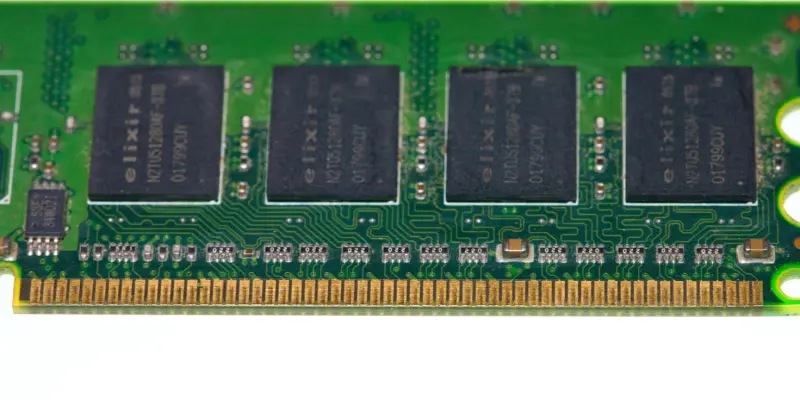
In the rapidly evolving landscape of computer memory technology, G.Skill’s introduction of the Trident Z5 NEO RGB DDR5 memory kit signifies a major advance in balancing high frequency with substantial memory capacity. This innovative product is setting a new benchmark, offering a remarkable 128 GB capacity while achieving overclocking speeds of up to 8400 MT/s. Such a combination was once a formidable challenge in the realm of memory technology, reflecting G.Skill’s adeptness in overcoming traditional barriers. These advances are pushing the boundaries of what’s possible, not only in terms of capacity but also in performance, transforming expectations in fields requiring extensive computational power. This evolution in DDR5 memory technology resonates well with users whose tasks involve AI model development, high-resolution content creation, and machine learning, where swift data-processing speeds are essential.

The Impact on Computing Applications

The compatibility of the Trident Z5 NEO RGB DDR5 memory with state-of-the-art motherboards highlights its importance in current high-performance computing settings. Pairing specifically well with AM5 motherboards, such as the ASUS ROG Crosshair X870E APEX and the Ryzen 9 9950X3D processor, it caters effectively to professionals needing robust computational capabilities. Its stability at remarkable speeds, confirmed by the RunMemtestPro tests, strengthens its suitability for demanding tasks. This aligns with industry trends by focusing on increasing both speed and capacity in DDR5 modules. G.Skill’s developments show a move towards using the latest platforms like AM5, targeting exceptional performance for intensive applications. This move indicates a leap in technology, with potential advantages for diverse high-performance scenarios. Since 2025, memory technology has experienced significant transformations, and advancements like G.Skill’s demonstrate the vast possibilities in combining speed and capacity, reflecting a future tailored for complex, data-intensive tasks in varied sectors.

Explore more

How Can HR Resist Senior Pressure to Hire the Unqualified?

The request usually arrives with a deceptive sense of urgency and the heavy weight of authority when a senior executive suggests a “perfect candidate” who happens to lack every required credential for the role. In these high-pressure moments, Human Resources professionals find themselves caught in a professional vice, squeezed between their duty to uphold organizational integrity and the direct orders

Why Strategy Beats Standardized Healthcare Marketing

When a private surgical center invests six figures into a digital presence only to find their schedule remains half-empty, the culprit is rarely a lack of technical effort but rather a total absence of strategic differentiation. This phenomenon illustrates the most expensive mistake a medical practice can make: assuming that a high-performing campaign for one clinic will yield identical results

Why In-Person Events Are the Ultimate B2B Marketing Tool

A mountain of leads generated by a sophisticated digital campaign might look impressive on a spreadsheet, yet it often fails to persuade a skeptical executive to authorize a complex contract requiring deep institutional trust. Digital marketing can generate high volume, but the most influential transactions are moving away from the screen and back into the physical room. In an era

Hybrid Models Redefine the Future of Wealth Management

The long-standing friction between automated algorithms and human expertise is finally dissolving into a sophisticated partnership that prioritizes client outcomes over technological purity. For over a decade, the financial sector remained fixated on a zero-sum game, debating whether the rise of the robo-advisor would eventually render the human professional obsolete. Recent market shifts suggest this was the wrong question to

Is Tune Talk Shop the Future of Mobile E-Commerce?

The traditional mobile application once served as a cold, digital ledger where users spent mere seconds checking data balances or paying monthly bills before quickly exiting. Today, a seismic shift in consumer behavior is redefining that experience, as Tune Talk users now spend an average of 36 minutes daily engaged within a single ecosystem. This level of immersion suggests that