

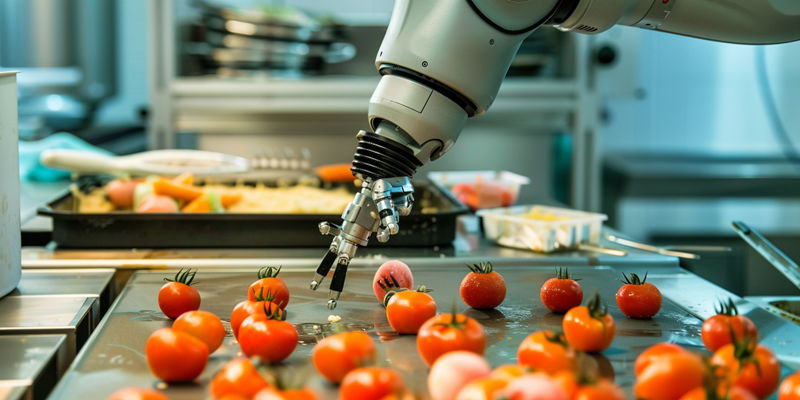
The landscape of the food and beverage industry is rapidly evolving, driven by technological advancements and increasing consumer demands for quality and hygiene. One of the revolutionary innovations in this sector is FANUC’s SR-12iA/C food-grade SCARA robot. This state-of-the-art robotic solution is designed to meet the stringent sanitary regulations of food processing environments while offering unparalleled efficiency, precision, and speed.
Advanced Features of the SR-12iA/C
Impressive Payload and Reach Capabilities
The SR-12iA/C stands out with its substantial payload capacity and extensive reach, offering significant advantages over previous models. Capable of handling up to 12 kg (approximately 26 lb), the robot can manage double the load of its predecessors in FANUC’s food-grade SCARA lineup. This impressive payload capacity is pivotal for various food processing tasks, as it not only enhances operational efficiency but also reduces the need for multiple robots, thereby cutting costs and simplifying operations.
Equally noteworthy is the robot’s reach, which extends up to 900 mm (35 inches). This extended reach allows the SR-12iA/C to perform tasks over a larger area, making it highly versatile for different applications within food processing and packaging sectors. By being able to work from greater distances, the robot enhances operational flexibility and efficiency, ensuring that tasks are completed swiftly and accurately. Such capabilities signify a major step forward in automating labor-intensive tasks while maintaining high standards of hygiene and precision.
Unmatched Speed and Mobility
Speed plays a crucial role in the food industry, where swift handling and processing are essential to maintaining the freshness and quality of products. The SR-12iA/C excels in this domain with its remarkable movement capabilities. Capable of moving at speeds up to 2800 mm/s on a single axis, the robot is optimally designed for high-speed assembly and pick-and-place operations. This extraordinary speed not only ensures rapid task completion but also significantly improves overall throughput in food processing plants.
The robot features a versatile Z-axis stroke varying between 300 and 450 mm, coupled with a push force of 250 N (56 lb). This range of motion and push capacity enhances its ability to handle a diverse array of material handling applications swiftly and effectively. Whether it’s placing items onto conveyor belts or handling delicate food products, the SR-12iA/C’s agility and speed make it an invaluable asset in minimizing cycle times and maximizing productivity. This blend of speed and precision ensures that the robot can meet the rigorous demands of modern food processing environments.
Design for Hygienic Environments
Corrosion-Resistant and Easy-to-Clean Build
The design of the SR-12iA/C is meticulously tailored with hygiene in mind, ensuring effective operation in sanitary environments. One of the standout features is its body, which is coated with white epoxy paint. This coating is not only corrosion-resistant but also easy to clean, making the robot ideal for maintaining the rigorous sanitary conditions required in food processing. The corrosion resistance ensures longevity, while the ease of cleaning complies with high standards of food safety, helping prevent contamination.
Additionally, the SR-12iA/C includes protective bellows that cover the Z-axis spindle, further enhancing cleanliness and safety. These bellows act as a barrier, preventing dust and other contaminants from entering critical areas of the robot. This focus on hygiene ensures that the robot can operate efficiently without compromising the integrity of the food products it handles. By combining robust construction materials with thoughtful design elements, FANUC has created a robot that not only meets but exceeds the stringent hygiene requirements of the food and beverage industry.
Compliance with Food-Grade Standards
Implementing robots in the food industry not only requires operational efficiency but also strict adherence to regulatory standards. The SR-12iA/C stands out in this aspect, as it is equipped with specialized components designed to meet food-grade requirements. One of the most notable features is the use of NSF # food-grade grease on all axes. This specific grease ensures that the robot is safe for incidental contact with food, making it compliant with rigid industry standards.
The robot also boasts an IP65 rating, offering robust protection against dust and water. This level of ingress protection ensures that the SR-12iA/C is well-suited for demanding environments where maintaining cleanliness and durability is crucial. By meeting these stringent standards, the robot provides operators with the assurance that it can safely and effectively perform tasks in the most sensitive of food processing settings. This combination of advanced material usage and compliance underscores FANUC’s commitment to quality and safety in automation solutions for the food industry.
User-Friendly Programming and Control
Accessible Programming Interfaces
One of the historical barriers to the widespread adoption of robotic solutions has been the complexity involved in programming them. FANUC addresses this issue by offering intuitive and versatile programming tools for the SR-12iA/C. The robot can be programmed using iRProgrammer, a web-based interface that allows users to set up and control the robot using common devices like tablets, laptops, or computers. This level of accessibility ensures that even operators with limited technical expertise can efficiently manage the robot’s functions.
Additionally, FANUC provides the Roboguide software, which supports comprehensive programming capabilities. This powerful tool offers detailed and customized programming options, making it ideal for more intricate and specialized operations. By providing these user-friendly programming tools, FANUC ensures that businesses can quickly implement and integrate the SR-12iA/C into their existing workflows, enhancing productivity and reducing downtime. The blend of accessibility and depth in programming options makes the SR-12iA/C a versatile and practical choice for various operational needs.
Optional Teach Pendant
For users who prefer traditional methods, FANUC offers an optional teach pendant, adding another layer of flexibility and control in programming the SR-12iA/C. This tool provides a hands-on approach to robot programming, allowing operators to make real-time adjustments and optimizations directly. Its ease of use is a significant advantage, particularly for operators who may not be as comfortable with web-based or software programming interfaces.
The teach pendant’s user-friendly interface ensures that even operators with minimal technical background can effectively program and control the robot. This versatility is crucial in environments where quick adjustments are necessary to respond to changing production demands. By providing multiple programming options, FANUC ensures that the SR-12iA/C can be adapted to various operational scenarios, making it a highly flexible and user-friendly solution that meets the diverse needs of the food processing industry.
Applications in the Food Industry
Enhanced Material Handling and Efficiency
The design and capabilities of the SR-12iA/C make it highly suitable for a range of applications within the food industry, significantly boosting productivity and precision. One of its primary uses is in material handling, where it excels in managing various materials, from raw ingredients to finished products. The robot’s ability to handle heavier loads and perform tasks over a larger area reduces the need for manual labor, thereby minimizing the risk of contamination and enhancing overall efficiency.
In assembly operations, the robot’s high-speed and accurate movements ensure that assembly lines run smoothly and consistently. This capability is particularly beneficial in producing consistent quality and reducing errors, which are critical in food processing where precision is paramount. By automating these labor-intensive tasks, the SR-12iA/C helps to streamline operations, reduce operational costs, and maintain high standards of hygiene and quality.
Quality Control and Packaging Operations
Beyond material handling and assembly, the SR-12iA/C excels in quality control and packaging, which are essential components of the food processing industry. The robot’s precision is a significant asset in quality control, where detailed inspections are necessary to ensure products meet established standards. By conducting thorough and accurate inspections, the SR-12iA/C helps reduce waste, improve product quality, and maintain consistency across production batches.
In packaging operations, the robot’s capability to handle heavier loads and cover larger areas proves invaluable. It speeds up the packaging process while maintaining high hygiene standards, ensuring that products are packaged efficiently and safely. This efficiency not only boosts productivity but also enhances the overall quality of the packaged products. The multifunctional capabilities of the SR-12iA/C make it an integral part of the food industry’s quest for improved automation, quality control, and operational excellence.
Impact
The food and beverage industry is undergoing a significant transformation, largely driven by technological advancements and the growing consumer demand for enhanced quality and hygiene standards. Among these ground-breaking advancements is the FANUC SR-12iA/C food-grade SCARA robot, a cutting-edge technological solution poised to revolutionize food processing. This robot is meticulously engineered to comply with the rigorous sanitary regulations inherent within food processing environments. What truly sets the FANUC SR-12iA/C apart is its unparalleled efficiency, precision, and speed.
In an industry where every second counts and hygiene cannot be compromised, this robot’s ability to perform complex tasks quickly and with utmost accuracy is a game-changer. It can streamline operations, improve production timelines, and ensure compliance with stringent safety standards, thereby providing a remarkable return on investment. Additionally, its advanced features make it an ideal choice for manufacturers looking to modernize and optimize their operations. As consumer expectations continue to rise, innovations like the FANUC SR-12iA/C robot are essential for keeping pace with new industry standards.