

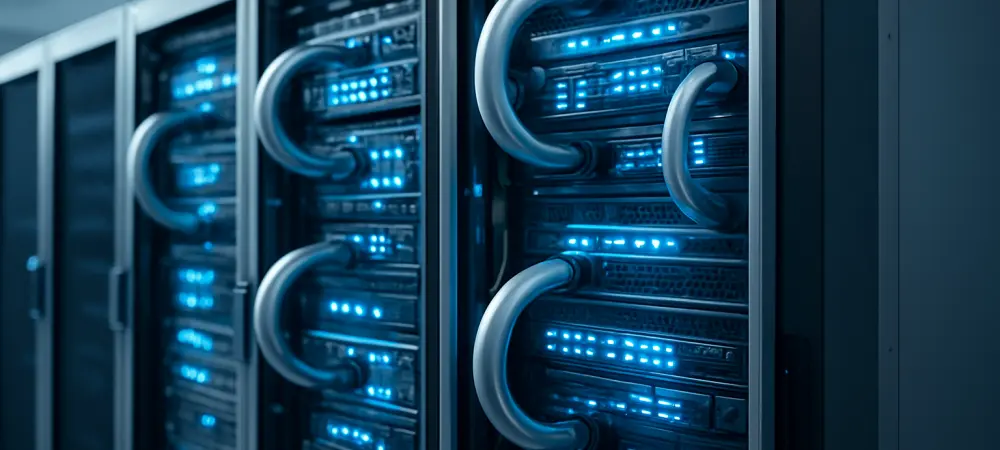
By offloading networking protocols and storage orchestration to a dedicated DPU, data centers can ensure that every available GPU cycle is dedicated to actual AI processing. As the industry moves into 2026, the transition from static large language models to autonomous agentic AI systems has fundamentally altered the requirements of modern data centers. These agentic factories are no longer just repositories of data; they are dynamic ecosystems where AI agents continuously interact, learn, and execute complex tasks without human intervention. This shift demands a level of coordination and throughput that traditional general-purpose CPUs simply cannot handle while simultaneously running intensive AI logic. The NVIDIA BlueField-4 DPU addresses this bottleneck by acting as an intelligent orchestrator that sits at the intersection of compute, storage, and networking. By managing these critical infrastructure layers independently, the DPU enables the main processors to focus on the heavy lifting of generative reasoning.
Hardware Breakthroughs: Redefining Performance and Efficiency
The BlueField-4 represents a massive technical leap over its predecessor, doubling network bandwidth to 800 Gb/s and quadrupling memory bandwidth to handle the most demanding workloads. By integrating 64 Arm Neoverse V2 cores and 128 GB of LPDDR5x memory, this DPU possesses the local compute power necessary to manage heavy infrastructure tasks that typically slow down a server’s main processor. This hardware evolution effectively eliminates the latency issues that often plague high-performance computing environments by ensuring that data moves at the speed required by next-generation AI models. With this increased capacity, the BlueField-4 can process massive streams of telemetry data and manage complex network traffic patterns that characterize modern agentic systems. Such robust specifications allow the DPU to serve as a high-performance engine capable of executing millions of concurrent operations, thereby maintaining the high availability required for mission-critical AI operations.
This specialized architecture is built around the concept of offloading, where the DPU takes over responsibility for networking protocols, security encryption, and storage management. In traditional server setups, these background tasks consume valuable CPU cycles, leaving less power for the actual AI applications that drive business value. By creating a dedicated domain for infrastructure processing, the BlueField-4 acts as a secondary brain for the server, allowing the primary processors to focus entirely on executing complex AI logic and data analysis. This separation of concerns is vital because it prevents infrastructure noise from interfering with the deterministic performance required for training and inference. Furthermore, the DPU handles the intensive encryption and decryption of data at line rate, ensuring that security protocols do not become a performance liability. This ensures that every bit of energy consumed by the server is directed toward meaningful AI output rather than administration.
Architectural Evolution: Scaling for Autonomous Intelligence
A defining feature of the BlueField-4 ecosystem is the transition to a Scale-In architectural model, which moves away from the linear, predictable data paths of older data centers. Modern AI factories require a unified infrastructure domain where networking, storage, and security are tightly integrated rather than managed in separate silos. This approach, supported by the Spectrum-X Ethernet platform and DOCA software, ensures that data flows seamlessly across massive, interconnected clusters without the friction of traditional networking boundaries. By collapsing these disparate layers into a single, programmable fabric, organizations can achieve much higher utilization rates for their hardware investments. The Scale-In model also allows for more flexible resource allocation, enabling the data center to respond dynamically to the changing needs of different AI agents. This architectural shift represents a fundamental rethinking of how computing clusters are built, prioritizing low-latency communication and high-speed data access.
Integrating BlueField-4 into the data center environment required a strategic approach to infrastructure planning that prioritized long-term scalability and security. Organizations that successfully deployed these DPUs found that the initial investment was quickly offset by significant gains in power efficiency and compute density. By offloading management tasks, they reduced the overall number of physical servers needed to achieve a given level of performance, leading to a smaller operational footprint. Technical teams focused on mapping out their specific networking bottlenecks before implementing the DOCA framework to tailor the DPU’s performance to their unique application profiles. This proactive strategy enabled a smooth transition from legacy networking to a truly agentic-ready environment. Looking ahead, the focus shifted toward optimizing inter-agent communication protocols to maximize the collaborative potential of autonomous systems, setting a new benchmark for what modern AI factories were capable of achieving in terms of power.