

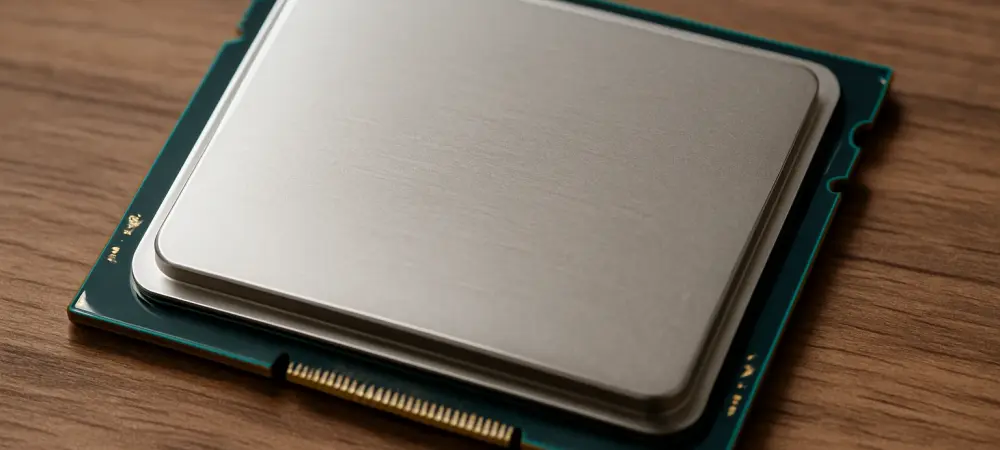
In a world where computational power defines the cutting edge of innovation, the unveiling of a processor that shatters performance benchmarks is nothing short of a technological milestone. Imagine a CPU so powerful that it redefines what professionals and enthusiasts can achieve in multi-threaded workloads, from 3D rendering to complex simulations. AMD has delivered just that with the Ryzen Threadripper PRO 9995WX, a flagship processor in the Threadripper 9000 series built on the Zen 5 architecture. This 96-core behemoth has not only claimed a new world record in Cinebench R23 but has also set a precedent for what high-performance computing can accomplish. With scores that outpace its predecessors even at lower clock speeds, this launch marks a significant leap forward, sparking curiosity about the limits of modern CPU design and the collaborative efforts behind such feats.
Unveiling Unmatched Performance
Benchmark Dominance in Multi-Threaded Tasks
The Ryzen Threadripper PRO 9995WX has emerged as a titan in the realm of multi-threaded performance, securing a staggering Cinebench R23 score of 222,766 points when overclocked to 5.8 GHz using liquid nitrogen cooling. This achievement, facilitated by ASUS’s PRO WS WRX90E-SAGE SE motherboard, represents a 6% improvement over the previous record holder, the Threadripper 7995WX, despite the latter being pushed to a higher 6.25 GHz. Such a result hints at untapped potential within the Zen 5 architecture, suggesting that efficiency gains play as critical a role as raw speed. Beyond Cinebench, the processor excelled in other demanding benchmarks, posting scores like 760,318 points in Geekbench 3 multi-core and 364.087 FPS in x265 4K encoding. These numbers underscore its suitability for professionals handling intensive workloads, establishing a new standard in the industry.
Overclocking Feats and Hardware Synergy
Pushing the boundaries of performance, the Threadripper PRO 9995WX owes much of its record-breaking success to extreme overclocking efforts by experts like US-based overclocker Seby. The collaboration with ASUS has proven instrumental, with the motherboard manufacturer securing eight world records and 31 global first places across the Threadripper 9000 lineup. This partnership highlights the importance of optimized hardware platforms in unlocking a processor’s full potential. The ability to achieve such feats under exotic cooling methods like liquid nitrogen also points to a vibrant overclocking community eager to explore further limits. As these results ripple through the tech world, they emphasize how synergistic advancements in both CPU design and complementary hardware can redefine performance expectations for workstation-grade systems.
Exploring Technical Excellence and Market Impact
Architectural Innovations of Zen 5
At the heart of the Threadripper PRO 9995WX lies the Zen 5 architecture, a leap forward in efficiency and raw power, boasting 96 cores, 192 threads, and 384 MB of L3 cache. With a base clock of 2.5 GHz and a boost clock reaching 5.4 GHz, coupled with support for 8-channel DDR5-6400 memory at a 350W TDP, this processor is engineered for unparalleled multi-threading capabilities. Compared to the Zen 4-based 7995WX, the newer model achieves higher benchmark scores at lower frequencies, a testament to architectural refinements. The broader Threadripper 9000 series, ranging from the 12-core 9945WX to this flagship, offers options for diverse professional needs with pricing spanning $1,499 to $11,699. Such specifications position the lineup as a versatile solution for high-end computing tasks.
Shaping the Future of High-Performance Computing
The launch of the Threadripper 9000 series, with the 9995WX at its pinnacle, signals AMD’s continued dominance in the multi-core processing arena, catering to both professionals and enthusiasts. This processor family, alongside complementary hardware like the Radeon AI PRO R9700, strengthens AMD’s foothold in specialized markets. The ongoing competition among overclockers and hardware partners suggests that performance boundaries will keep expanding, potentially yielding even more impressive results in the coming years. As workstation and professional-grade CPUs evolve, the industry watches closely to see how such advancements influence broader technological trends. Reflecting on this milestone, it’s evident that the groundwork laid by these achievements paves the way for future innovations, urging stakeholders to explore new applications and optimizations in high-performance computing environments.