

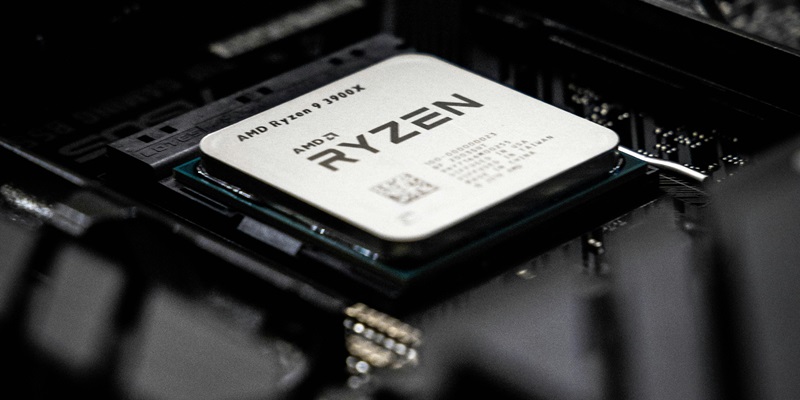
In the world of high-performance laptop processors, AMD’s newly announced Ryzen AI 9 HX 370 APU from the Zen 5 Strix Point lineup has been generating significant buzz. Showcased at Computex in June 2024, this processor promises a mix of powerful performance and efficient energy use. But how does it measure up against its competitors? Let’s delve into the benchmarking results, comparisons with rival processors, and anticipate its performance in real-world applications.
Benchmarking Performance: Single-Core and Multi-Core
The Geekbench 6 performance test results for the Ryzen AI 9 HX 370 have been eagerly anticipated. Tested on an ASUS ProArt P16 notebook, the APU posted impressive scores: 2,879 in the single-core test and 14,888 in the multi-core test. These results highlight the processor’s strong single-core performance. In direct comparison, the Ryzen AI 9 HX 370 outperforms the Intel Core i9-14900HX and AMD’s Ryzen 9 7945HX3D by 4.4% and 2.1%, respectively, in single-core benchmarks. This makes it a formidable contender for applications that rely heavily on single-core efficiency.
However, in multi-core tests, the Ryzen AI 9 HX 370 lags slightly behind, trailing the Ryzen 9 7945HX by 6%, the Ryzen 9 7945HX3D by 9%, and the Intel Core i9-14900HX by 8%. Despite these figures, the Ryzen AI 9 HX 370’s single-core dominance is clear and sets a new performance benchmark for similar processors. As more testing and benchmarks emerge, it will be interesting to see how this translates to real-world usage in varied applications. The promise of strong single-core performance may attract users needing robust processing power for specific tasks, but those requiring high multi-core performance might need to weigh their options carefully.
Rival Processors: How Competitors Stack Up
In comparison to its primary competitors, including the Intel Core i9-14900HX and AMD’s Ryzen 9 7945HX3D, several important factors come to light. The Ryzen AI 9 HX 370 appears to offer competitive, if not superior, single-core performance relative to these high-end options. AMD’s innovative design and the inclusion of 12 Zen 5 cores with a 5.1 GHz boost clock have certainly contributed to its capabilities. Multi-core performance, however, paints a different picture. While the HX 370’s scores are quite respectable, they fall short of Intel’s and AMD’s flagship Zen 4 processors’ multi-core capabilities.
This discrepancy suggests that while the Ryzen AI 9 HX 370 is well-suited for tasks that benefit from high single-core speeds, it may not be the top choice for highly parallelized applications. The ASUS ROG Strix G16 (2024) gaming laptop provides a direct comparison, integrating the Core i9-14900HX and spotlighting the differences under similar operational conditions. This context emphasizes that while single-core performance is crucial for certain tasks, the balance between single and multi-core capabilities tailored to specific needs should guide processor selection. The market’s reaction to these differences will likely influence the development and marketing strategies surrounding these high-performance processors.
Power Efficiency: A Key Advantage
Another critical aspect of the Ryzen AI 9 HX 370 is its power efficiency. The APU is configurable between 15 to 54 watts, a stark contrast to the higher power consumption rates of its competitors. For instance, the Intel Core i9-14900HX has a base TDP of 55 watts with a maximum power consumption reaching up to 175W. Similarly, the RX 7945HX/X3D series can consume up to 75W. This significant difference in power consumption potentially makes the Ryzen AI 9 HX 370 more appealing for users who prioritize energy efficiency, which could be particularly advantageous in mobile and battery-operated contexts.
It’s expected that further detailed reviews will shed light on how well the APU balances power efficiency and processing power in practical scenarios. The practical implications of these configurations, especially when included in devices like the ASUS ProArt P16 that support up to 70 watts TDP for the CPU, warrant close scrutiny. How manufacturers integrate and optimize this flexibility in TDP will be a key factor in the APU’s real-world success. The promise of lower power consumption without a significant drop in performance makes the Ryzen AI 9 HX 370 a highly attractive option for environmentally conscious users and mobile professionals.
Future Expectations and Real-World Applications
In the realm of high-performance laptop processors, AMD’s recently unveiled Ryzen AI 9 HX 370 APU, part of the Zen 5 Strix Point family, has been causing quite a stir. Introduced at Computex in June 2024, this advanced processor promises a harmonious blend of robust performance and energy efficiency. This combination has left many in the tech community speculating about its potential to outperform existing rivals. Now, it’s time to scrutinize its benchmarking results, see how it stacks up against competing processors, and project its capabilities in practical, real-world settings.
Comparing the Ryzen AI 9 HX 370 APU to its competitors, preliminary benchmarks suggest it holds its own impressively. Early testing indicates remarkable gains in speed and efficiency, promising a leap forward in processing power for demanding applications, including gaming and professional software. The improved architecture of the Zen 5 Strix Point line also emphasizes reduced power consumption while boosting performance.