

Dominic Jainy has spent years at the intersection of artificial intelligence and blockchain, developing a keen eye for how emerging technologies reshape the security landscape of modern enterprises. As organizations grapple with the increasing sophistication of digital threats, Dominic’s expertise provides a necessary bridge between technical capability and strategic deployment. His deep understanding of machine learning and decentralized systems allows him to dissect not just the “how” of security tools, but the “why” behind their evolution in a cloud-first world. This conversation dives into the shifting paradigms of identity management and the crucial move toward high-assurance verification in an era where traditional passwords are no longer enough to protect the perimeter.
The discussion explores several key themes, including the streamlined procurement of security software through major cloud marketplaces and the rising tide of AI-driven identity fraud in remote work environments. We examine the transition from simple authentication to robust identity proofing that utilizes biometrics and government-issued documentation to ensure the person behind a screen is who they claim to be. Additionally, the conversation touches on the vulnerability of help desks and the importance of securing the entire employee lifecycle—from the initial point of hiring through sensitive account recovery processes—across diverse industries like banking and healthcare.
How does the availability of workforce identity tools on a major cloud marketplace change the game for security teams who are often bogged down by bureaucratic hurdles?
The shift to a marketplace model is a significant relief for security and identity teams who have historically felt the weight of endless procurement cycles. When a solution like 1Kosmos Workforce lands on a platform like Google Cloud Marketplace, it essentially removes the friction of separate billing and independent vendor onboarding that often stalls critical security updates for months. It feels like finally getting a “fast pass” at a congested theme park; the technical integration reviews and internal approvals are still necessary, but the path to deployment is noticeably shorter because the financial and infrastructure frameworks are already in place. This allows organizations to move at the speed of the threat landscape, deploying high-assurance identity verification as a streamlined extension of their existing cloud environment. For a Chief Information Security Officer, this means less time fighting with the purchasing department and more time focusing on the actual defense of corporate systems.
In an era where remote hiring is the norm, how are sophisticated attackers using AI to exploit the gaps in traditional onboarding processes?
We are seeing a disturbing rise in what I call “synthetic identity fraud,” where attackers leverage AI to create incredibly convincing impersonations of job applicants or employees. These bad actors aren’t just guessing passwords anymore; they are using generative tools to manipulate service desks and pose as legitimate candidates to gain a foothold within a company from day one. It creates a sense of high-stakes anxiety for HR and IT departments who have to wonder if the person they just interviewed on screen is actually a real human or a digital mask. This trend toward AI-enabled impersonation makes it incredibly dangerous to rely on old-school credentials like usernames and passwords, which are easily phished or spoofed. By targeting the point of hire, attackers can bypass traditional security layers entirely, making it imperative for companies to verify the physical identity of a worker before they are even granted their first set of access keys.
Could you walk us through the mechanics of how combining government-issued documents with real-time biometrics actually creates a “bind” between a person and their digital account?
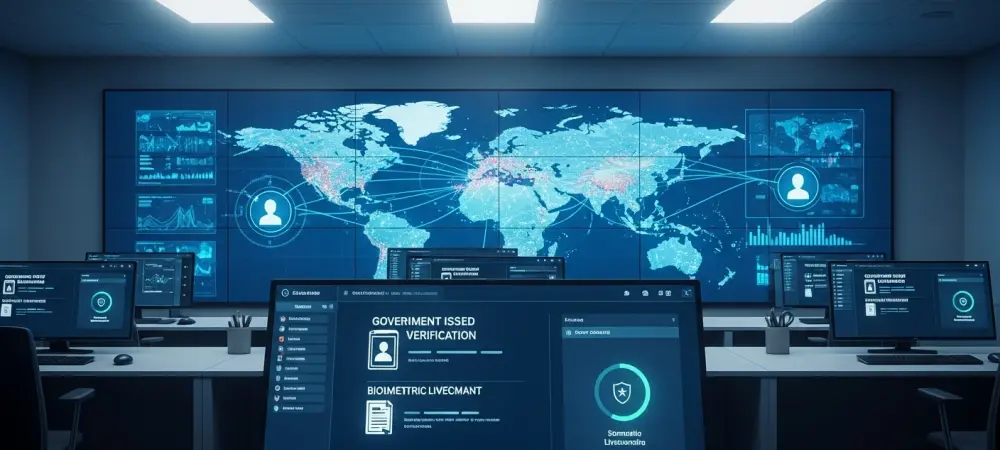
The core of this high-assurance model lies in moving beyond “something you know” to “someone you are.” The process typically begins with the user scanning a government-issued identity document, which is then verified for authenticity against trusted databases to ensure it isn’t a sophisticated forgery. This is then matched with a live biometric scan of the individual, which includes liveness detection to ensure someone isn’t just holding up a high-resolution photo or a video of the legitimate owner. Once these two data points are reconciled, the platform binds the digital account to that specific, verified person, effectively creating a hardware-backed identity that is nearly impossible for a remote attacker to replicate. It turns the authentication process into a sensory experience—a quick facial scan or a look at a document—that feels much more personal and secure than typing a string of characters into a box. This level of proofing ensures that when a privileged request is made, the system isn’t just checking a key, but confirming the identity of the person holding it.
Service desks and help centers are often cited as the “soft underbelly” of corporate security; how does a passwordless, biometric approach harden these specific targets against social engineering?
The service desk has traditionally been a goldmine for social engineers because it relies so heavily on human empathy and the pressure to be helpful. An attacker can call in, sound distressed, and provide just enough leaked personal information to trick an administrator into resetting a password or granting access to a locked account. By implementing a system that requires the same biometric and identity proofing for account recovery as it does for daily login, you take the “human guess-work” out of the equation. If a user needs a reset, they don’t have to convince a help desk agent of their identity; they simply provide their live biometrics, which are then compared to the verified record on file. This removes the emotional leverage that attackers use, transforming a vulnerable conversation into a secure, automated transaction that handles millions of authentications each day with far greater precision.
What is your forecast for the future of workforce identity over the next few years?
I anticipate we are entering a period where “identity” and “authentication” will no longer be viewed as two separate functions, but as a single, continuous stream of verification. With more than $72 million in venture funding recently flowing into this space and high-adoption sectors like banking, healthcare, and telecommunications leading the charge, the move toward a completely passwordless ecosystem is inevitable. We will likely see a decline in the traditional concept of a “login” as we know it, replaced by background biometric checks and high-assurance proofing that happens seamlessly across cloud and hybrid environments. As attackers continue to refine their AI tools, the only sustainable defense will be these systems that can handle millions of daily authentications by verifying the actual human being. My forecast is that the “verified identity” will become the new perimeter, and companies that fail to adopt these high-assurance standards will find themselves increasingly unable to stop the tide of synthetic and credential-based attacks.