

In a world increasingly driven by artificial intelligence, the quest for high-quality, real-time data has become a cornerstone of technological advancement, pushing the boundaries of what’s possible. Imagine a pair of sleek smart glasses not only enhancing personal convenience but also feeding vast AI systems with critical information from the physical world. This scenario is no longer a distant dream but a tangible reality through groundbreaking collaborations in the tech industry. A notable partnership between two innovative companies has set the stage for transforming wearable technology into a powerful data layer for AI applications. By leveraging decentralized systems, this alliance is redefining how data is captured, processed, and utilized for enterprise needs. The implications stretch across industries, from robotics to finance, promising a future where digital and physical realms are seamlessly intertwined through intelligent automation.
Revolutionizing Wearable Technology for AI
Capturing Real-World Data with Cutting-Edge Glasses
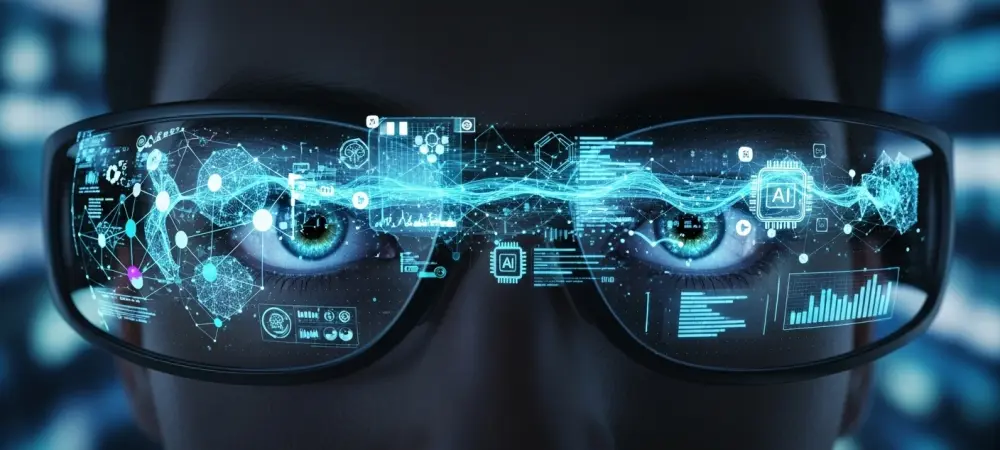
The emergence of advanced smart glasses, equipped with state-of-the-art features, marks a significant leap in wearable technology. These glasses, known for their 12-megapixel camera, electronic image stabilization, dual open-ear speakers, and high-fidelity microphone, offer users a hands-free way to interact with their surroundings. Beyond personal utility, the real value lies in their ability to collect vast amounts of vision data from everyday environments. This data, captured through a decentralized network, becomes a raw resource for AI systems hungry for real-world insights. By converting natural language into actionable tasks, these glasses bridge the gap between human intent and digital execution, providing a continuous stream of information that reflects genuine human behavior and interaction. Such capabilities position them as more than just gadgets; they are pivotal tools in gathering frontier data essential for training sophisticated AI models used in diverse applications.
Transforming Vision Data into AI-Ready Assets
Once captured, the raw vision data from smart glasses undergoes a meticulous process to become a valuable asset for enterprise AI. Through advanced processing systems, this information is labeled and annotated to meet rigorous standards required for training and evaluation. The result is a verifiable, structured dataset that can be seamlessly integrated into large-scale model development for fields like robotics, autonomous systems, and beyond. This transformation is not merely technical but also strategic, as it opens avenues for co-monetization between collaborating tech entities. Enterprises gain access to high-quality data streams that enhance the accuracy and relevance of their AI solutions, while the decentralized nature ensures that data handling remains transparent and secure. This synergy highlights how wearable technology can evolve into a critical infrastructure component, supporting the next generation of intelligent systems with real-time, actionable insights.
Building a Decentralized Future with AI Integration
Enhancing Workflows with Real-Time Data Streams
The integration of low-latency data pipelines into AI-driven workflows represents a transformative step in achieving real-time automation. By embedding up-to-the-minute signals related to behavior, finance, and potential threats, these pipelines empower AI agents to respond swiftly and effectively to dynamic conditions. This capability is particularly impactful in specialized areas such as financial trading, pricing strategies, sentiment analysis, and situational awareness for news monitoring. Enterprises benefit from tools that not only process data but also act on it instantaneously, creating a competitive edge in fast-paced markets. The collaboration behind this innovation ensures that the data streams are both robust and reliable, offering a foundation for building applications that require precision and immediacy. As a result, the fusion of decentralized data and AI workflows sets a new standard for how industries leverage technology to stay ahead of emerging trends and challenges.
Prioritizing User Agency and Privacy in Digital Ecosystems
A core principle driving this technological advancement is the commitment to user sovereignty and privacy within digital ecosystems. With smart glasses serving as a conduit for data, the underlying systems are designed to prioritize seamless interaction while maintaining strict access controls and continuous identity verification. This approach reduces the cognitive load on users, who no longer need to juggle multiple applications or devices to navigate their digital lives. Instead, ambient authentication and automation create an intuitive experience where privacy is preserved without sacrificing functionality. This vision of decentralized living aligns with broader industry trends advocating for distributed infrastructure and agent-based economies. By embedding such principles into wearable tech, the partnership paves the way for a future where users retain control over their data while benefiting from intelligent, automated interactions that enhance daily life.
Reflecting on a Milestone in Tech Collaboration
Looking back, the alliance between these pioneering companies stood as a defining moment in the evolution of AI and wearable technology. The transformation of vision data from smart glasses into structured, enterprise-ready datasets marked a significant achievement in addressing the growing demand for high-quality AI training resources. Equally impactful was the integration of real-time data streams into automated workflows, which empowered industries with tools for immediate, informed decision-making. This collaboration not only tackled pressing enterprise challenges but also set a precedent for privacy-focused, user-centric innovation. As the tech landscape continues to evolve, the next steps involve scaling these solutions to broader applications, exploring new wearable form factors, and deepening the integration of decentralized systems to ensure that AI remains a force for empowerment and efficiency across all sectors.