

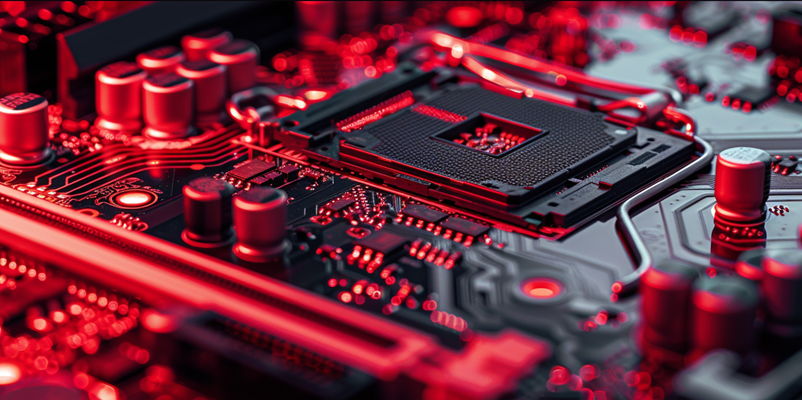
Erying has launched its premium Polestar MoTD motherboard series featuring Intel’s 13th Gen Raptor Lake-HX CPUs, melding desktop and mobile computing at a competitive price point starting at $270. The flagship Core i9-13980HX, with 24 cores, along with the 13900HX and Core i7-13700HX with 16 cores, showcase the series’ advanced technology.
Each Polestar MoTD motherboard is engineered to pair perfectly with HX series CPUs, which are soldered onto the board. They’re equipped with a robust 10-phase VRM for reliable power and a large vapor chamber for cooling, essential for managing the CPUs’ performance output. Support for up to 192 GB of DDR5 memory is provided through four DIMM slots, and expansion is top-notch with dual PCIe 4.0 x16 and three M.2 slots, catering to users with heavy graphics and storage demands. The Polestar series stands out by offering high-end features that appeal to users seeking a powerful computing experience in a hybrid desktop-mobile format.
Accessible Power, Streamlined Integration
The Polestar MoTD motherboards by Erying merge high-end desktop computing with the sleek efficiency of mobile processing architecture. This seamless integration is reflected in the generous I/O panel options, tailored to meet the varied demands of users. These motherboards showcase commendable efficiency within their standard TDP (Thermal Design Power) ranges, yet they also offer enthusiasts the ability to enhance performance by increasing the TDP up to an impressive 260W. This capability puts the Polestar MoTD in the same league as the potent Intel Core i9-13900K, especially when optimized to its full potential. Through such features, Erying demonstrates a commitment to versatile and powerful computing solutions that cater to both everyday tasks and intense computational needs. The Polestar series, therefore, represents a significant step in motherboard evolution, combining power and adaptability in a market that demands both.
Trendsetting Desktop Innovations
Mobility Meets Desktop Power
Erying’s launch of the Polestar MoTD series is a game-changer in blending mobility with desktop-level processing. These motherboards forego CPU upgradeability for an integrated all-in-one design, aiming at users who prefer ease over modularity. Despite this, the cost-efficiency and robust features make it compelling. Erying is capitalizing on the trend toward mobile CPU portability and efficiency, meshing it with the raw power of desktop systems.
The debut of the Polestar MoTD series marks an industry shift where end-users benefit from high desktop performance at costs echoing mobile thriftiness. Erying’s HX CPUs, permanently attached to their motherboards, indicate they’re targeting those who prioritize consistent performance and system longevity rather than upgrade flexibility. This launch could redefine expectations for high-end yet affordable desktop computing, blending power with budget-friendliness.