

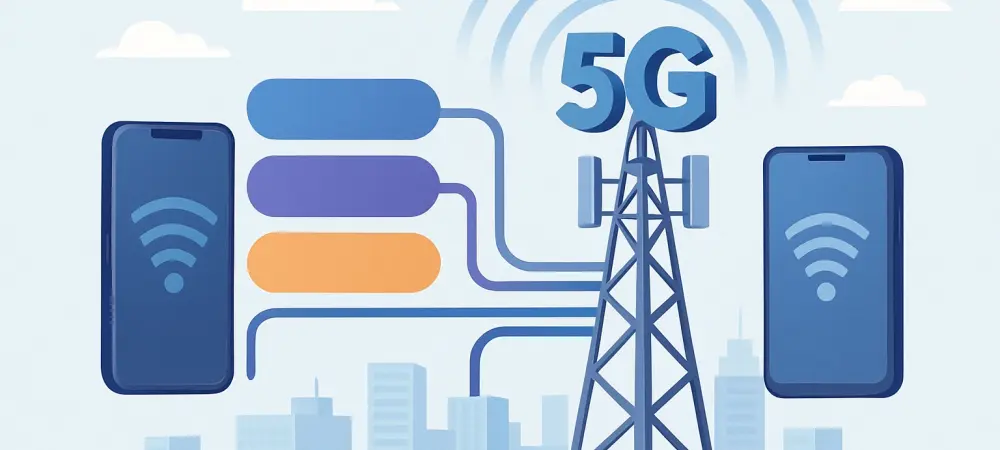
Imagine a world where seamless video calls, lightning-fast downloads, and real-time industrial automation are not just promises but everyday realities, even in the busiest urban centers or sprawling rural landscapes of the Asia Pacific region. This is the transformative power of 5G, a technology that hinges on more than just new infrastructure—it thrives on intelligent strategies like carrier aggregation and spectrum innovation. These mechanisms are the unsung heroes behind the scenes, ensuring that networks can handle unprecedented demand while delivering consistent, high-quality performance. This guide aims to help readers understand how these technologies propel 5G forward and why they are pivotal for telecom operators seeking to maximize efficiency and stay competitive.
The purpose of this guide is to demystify the complex yet critical roles of carrier aggregation and spectrum innovation in shaping the 5G landscape. For operators, enterprises, and tech enthusiasts, grasping these concepts means unlocking insights into how networks achieve higher speeds, greater reliability, and support for cutting-edge applications. Beyond technical jargon, the focus here is on their real-world impact—how they enable everything from cloud gaming to smart factories. By exploring their mechanisms and strategic importance, this guide sheds light on why they are indispensable for sustainable growth in telecommunications.
Moreover, the significance of these technologies cannot be overstated, especially in a region as dynamic as Asia Pacific, where diverse markets demand tailored solutions. As 5G deployment moves beyond basic coverage to optimizing performance, carrier aggregation and spectrum innovation stand out as key differentiators. They allow operators to turn fragmented spectrum resources into powerful, unified networks, setting the stage for measurable business outcomes. Let’s dive into the historical shifts, actionable strategies, and future trends that make these advancements the backbone of next-generation connectivity.
Unveiling the Power of 5G Through Carrier Aggregation and Spectrum Innovation
The journey of 5G is not just about faster internet—it’s about redefining how connectivity supports modern life, from immersive entertainment to critical enterprise operations. Carrier aggregation and spectrum innovation are at the heart of this revolution, enabling networks to deliver unprecedented performance by making the most of limited resources. These technologies go beyond mere technical upgrades; they represent a paradigm shift in how telecom operators address escalating data demands and ensure scalability for years to come.
In regions like Asia Pacific, where population density and digital adoption vary widely, the ability to optimize spectrum usage is a game-changer. Carrier aggregation allows for combining different frequency bands into a single robust channel, while spectrum innovation finds creative ways to expand capacity without hefty investments. Together, they empower operators to support bandwidth-hungry applications and maintain service quality, even under peak loads, positioning them as leaders in a fiercely competitive market.
Furthermore, the strategic deployment of these solutions drives sustainable revenue growth by reducing operational costs and meeting stringent enterprise needs. They are not just tools but pillars of differentiation, helping providers stand out by offering reliable, high-speed connectivity tailored to local challenges. As the narrative unfolds, it becomes clear that mastering these technologies is essential for anyone looking to harness the full potential of 5G in today’s fast-evolving digital ecosystem.
The Evolution of Spectrum Strategies in the 5G Landscape
To appreciate the significance of carrier aggregation and spectrum innovation, one must first look back at the journey of wireless networks through previous generations. Early mobile technologies, like 2G and 3G, relied on narrow, often fragmented spectrum bands, prioritizing basic voice and data over capacity. As demand grew with 4G, the limitations of scattered spectrum holdings became evident, pushing the industry toward more efficient usage to deliver consistent performance across wider areas.
However, the arrival of 5G brought a seismic shift, with ambitious goals of ultra-low latency, massive device connectivity, and gigabit speeds. This demanded a complete rethink of spectrum strategies, as traditional approaches fell short of supporting such intensive requirements. Fragmented allocations across markets, coupled with the need for high-capacity networks, underscored the urgency of innovative solutions to bridge gaps in coverage and capability.
Consequently, the focus shifted to maximizing every available frequency through advanced techniques and strategic planning. The transition wasn’t merely technical but a response to a pressing industry need: ensuring that 5G could live up to its promise without requiring unattainable new spectrum resources. This historical context sets the stage for understanding why carrier aggregation and spectrum innovation emerged as cornerstones of modern telecommunications, paving the way for a deeper exploration of their mechanisms.
Dissecting the Mechanisms of Carrier Aggregation and Spectrum Innovation
Step 1: Understanding Carrier Aggregation for Unified Bandwidth
Carrier aggregation stands as a cornerstone of 5G performance, ingeniously combining multiple spectrum bands into a single, high-capacity data channel. By integrating low, mid, and high frequencies, this technology creates a unified bandwidth pipeline that significantly boosts network efficiency. The result is a seamless user experience, whether streaming high-definition content or operating complex industrial systems, even in challenging environments.
Leveraging Band Strengths for Optimal Results
Each spectrum band plays a unique role in this synergy, contributing distinct strengths to the overall network. Low-band frequencies excel in providing wide coverage, penetrating buildings and reaching remote areas, while mid-band offers a balanced mix of capacity and reach, ideal for urban settings. High-band frequencies, including mmWave, deliver blistering speeds over short distances, perfect for dense zones. Together, they enhance both reliability and throughput, ensuring users experience fewer disruptions.
Enabling Advanced Applications Through Aggregation
The true power of this approach lies in its ability to support cutting-edge applications that define the 5G era. Industrial IoT setups, reliant on stable connections for automation, benefit from the consistent bandwidth. Live streaming and cloud gaming, which demand low latency and high speeds, become not just possible but exceptional. This technology ensures that networks can handle diverse, data-intensive tasks without faltering, meeting the needs of both consumers and businesses alike.
Step 2: Innovating Spectrum Use for Enhanced Capacity
Spectrum innovation complements aggregation by stretching existing resources to their fullest potential through creative techniques. Methods like re-farming, dynamic spectrum sharing, and multi-layer aggregation allow operators to extract more value from legacy frequencies. This approach minimizes the need for costly new spectrum acquisitions, making 5G deployment more economically viable across varied markets.
Re-farming Legacy Bands for 5G Efficiency
Re-farming involves repurposing frequencies once dedicated to 3G or 4G for 5G services, a practical step toward efficiency. By reallocating these bands, operators can expand their 5G footprint without significant capital outlay. This strategy proves especially vital in regions with limited new spectrum availability, allowing for a smoother upgrade path while maintaining service continuity for older technologies.
Dynamic Sharing for Seamless Coexistence
Dynamic spectrum sharing takes efficiency a step further by enabling 4G and 5G to operate on the same frequencies simultaneously. This flexibility ensures a gradual transition to 5G without sidelining existing users, optimizing resource use during rollout phases. Such coexistence is crucial for maintaining customer satisfaction while progressively expanding next-generation capabilities in a cost-effective manner.
Harnessing mmWave for High-Demand Zones
In densely populated urban centers or specialized industrial settings, mmWave frequencies add a critical layer of ultra-high capacity. Though limited in range, these high-band waves cater to specific, high-demand scenarios like stadiums or smart factories, delivering unparalleled speeds where they matter most. Integrating mmWave with other bands creates a robust network tailored to localized peaks in usage, addressing unique challenges efficiently.
Step 3: Strategic Spectrum Management for Future Growth
Beyond immediate techniques, long-term spectrum management is essential to sustain 5G’s growth trajectory. Harmonized allocation across markets ensures that operators can plan deployments with confidence, avoiding inefficiencies caused by disjointed policies. This strategic foresight is key to unlocking the technology’s full potential over the coming years.
Harmonizing Allocation for Cost Efficiency
Industry projections, such as those from the GSMA, highlight the need for an average of 2 GHz of mid-band spectrum per market by the decade’s end. Such harmonization fosters economies of scale, reducing equipment and operational costs through standardized approaches. A unified framework across regions enables providers to invest smarter, not harder, in scaling their networks.
Reducing Broadband Costs for Wider Adoption
Effective spectrum management also translates to lower broadband costs, a critical factor in driving widespread 5G uptake. By optimizing resources and minimizing redundancies, operators can offer competitive pricing, making advanced connectivity accessible to more users. This affordability accelerates digital inclusion, ensuring that the benefits of 5G reach diverse populations and spur broader economic growth.
Key Takeaways from Carrier Aggregation and Spectrum Innovation
- Carrier aggregation unifies spectrum bands for enhanced speed, reliability, and application support.
- Spectrum innovation maximizes capacity through re-farming, sharing, and mmWave deployment.
- Strategic spectrum management ensures scalability and cost efficiency for long-term 5G success.
Real-World Impact and Future Trends in 5G Optimization
Across the Asia Pacific, the practical application of carrier aggregation and spectrum innovation reveals their transformative potential through diverse strategies. In Japan, combining mid-band and mmWave frequencies has yielded downlink speeds several times faster than standalone bands, enhancing indoor coverage in crowded cities. This approach supports premium services for both consumers and enterprises, showcasing the power of targeted spectrum use.
In South Korea, triple-band aggregation across varied frequencies has boosted average user speeds by significant margins in trial areas, while improved uplink capacity aids industrial automation. Singapore balances coverage and capacity through low- and mid-band integration, meeting commercial demands efficiently. Meanwhile, India’s early deployments leverage re-farming and dynamic sharing with low and mid-band combinations to enhance network reach, setting a scalable foundation for expansion.
Looking ahead, market growth for these technologies is poised to soar, with a projected compound annual growth rate of 24.7% from this year to 2030, especially in high-growth areas like India. Emerging trends, such as 5G-Advanced and early 6G concepts, hint at even greater possibilities, though challenges like spectrum harmonization and financial constraints remain. These hurdles underscore the need for continued collaboration among stakeholders to refine policies and drive innovation, ensuring that 5G evolves to meet future demands.
Embracing the Future of 5G with Strategic Innovation
Reflecting on the journey, it was evident that carrier aggregation and spectrum innovation had become indispensable in unleashing 5G’s capabilities. The steps taken—unifying bandwidth, maximizing spectrum through creative techniques, and planning strategically for growth—had laid a robust foundation for telecom operators. Their adoption had turned fragmented resources into powerful assets, driving speed, reliability, and enterprise readiness across diverse markets.
Moving forward, the focus shifted to actionable next steps, such as advocating for harmonized spectrum policies to streamline deployments. Exploring partnerships with technology providers to integrate advanced solutions offered another pathway to stay ahead. Additionally, keeping an eye on evolving standards like 5G-Advanced promised to prepare networks for tomorrow’s challenges, ensuring that the momentum built would continue to reshape connectivity for consumers and businesses in innovative ways.