

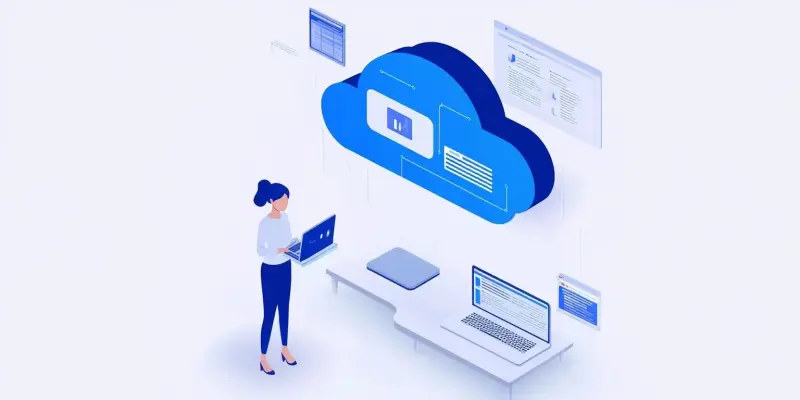
In today’s rapidly evolving business landscape, two technological advancements stand out for their transformative potential: Big Data and cloud computing. These innovations have revolutionized how businesses acquire, store, and utilize data, impacting daily operations and strategic decision-making. The convergence of Big Data and cloud computing offers a robust, cost-effective, and scalable solution for data analysis, enabling businesses to optimize their operations and maintain a competitive edge. By understanding how these technologies intersect, organizations can harness their combined power to drive efficiency and innovation.
Understanding Big Data
Big Data is defined by its vastness, rapid generation, and diverse types of data, stemming from various digital devices, social media platforms, and internet sensors. The three Vs—Volume, Velocity, and Variety—capture Big Data’s essence. Volume refers to the sheer amount of data generated, Velocity to the speed at which data is produced and processed, and Variety to the different forms of data, including structured, semi-structured, and unstructured formats. Traditional data management systems often fall short in processing this enormous data pool efficiently, necessitating advanced frameworks and techniques to extract valuable insights.
The exponential growth of digital data creates both opportunities and challenges for businesses. On one hand, leveraging this data can lead to improved decision-making, customer insights, and operational efficiencies. On the other, managing and analyzing such vast amounts of information requires significant computational power and specialized tools. Companies must invest in technologies that can handle the complexity and scale of Big Data to fully benefit from its potential. As businesses continue to generate and rely on more data, the importance of advanced data analytics frameworks only increases.
The Role of Cloud Computing
Cloud computing enables individuals and businesses to access, use, and store data and run applications via remote servers on the Internet. This delivery model provides resources like storage, processing power, servers, and software as on-demand services, allowing users to manage usage and costs flexibly. By significantly reducing dependency on physical IT infrastructure, cloud computing enhances organizational flexibility, scalability, and security. It operates through three main service models: Infrastructure as a Service (IaaS), Platform as a Service (PaaS), and Software as a Service (SaaS).
Infrastructure as a Service offers fundamental infrastructure and manages all related maintenance, allowing businesses to scale their operations without investing in physical hardware. Platform as a Service provides computing platforms and a solution stack as a service, enabling developers to build and deploy applications efficiently. Software as a Service delivers software applications over the internet, handling all software and hardware needs. These models collectively empower organizations to adopt a more agile and cost-effective approach to IT resources, freeing them from the constraints of traditional on-premise systems.
The Intersection of Big Data and Cloud Computing
The interaction between Big Data and cloud computing represents a strategic transformation in data management and utilization. Businesses must handle increasingly large and complex datasets, requiring considerable computational resources. Cloud computing complements Big Data by offering scalable infrastructure and resources that can handle the substantial computational demands associated with data extraction, loading, and transformation. This convergence allows businesses to leverage cloud services for increased flexibility and scalability, including servers, storage, networking, software, and analytics, without managing the underlying infrastructure.
Scalability is a critical advantage of this integration, as businesses can easily adjust their data processing capabilities based on demand. This flexibility is particularly beneficial during peak times or in high-growth scenarios. Moreover, cloud computing provides a centralized platform for data storage and access, enabling seamless collaboration and data sharing across different departments and geographies. By combining cloud computing’s scalable infrastructure with Big Data’s analytical power, businesses can streamline operations, enhance data-driven decision-making, and respond more effectively to market changes.
Enhanced Security, Scalability, and Flexibility
Cloud-based data management tools facilitate scalability in data storage and processing needs, adapting swiftly to changing workloads. This flexibility ensures that businesses can efficiently manage data volume fluctuations without overhauling their existing IT infrastructure. Additionally, cloud security platforms like CNAPP offer robust data protection, minimizing the need for additional investments in security software. Enhanced security frameworks provided by cloud computing ensure that businesses can focus on their core operations without worrying about data breaches or cyber threats.
Scalability and flexibility also translate to cost savings, as companies can avoid the substantial investments required for on-premise hardware and software. The ability to scale resources up or down based on current needs eliminates wasteful spending on unused capacity. Furthermore, advanced data management tools available through cloud services enable organizations to handle complex data processing tasks more efficiently. As a result, businesses can achieve greater operational efficiency and allocate resources more strategically, driving overall productivity and competitiveness.
Cost-Effectiveness
The pay-as-you-go model employed by cloud services allows businesses to avoid substantial investments in on-premise hardware and software. This approach democratizes access to sophisticated data management tools, narrowing the technology gap between small, medium, and large enterprises. By only paying for the resources they use, businesses can better manage their budgets and allocate funds to other critical areas. This cost-effectiveness enables smaller firms to compete with larger counterparts by leveraging similar technological capabilities without incurring prohibitive expenses.
Moreover, the operational efficiencies gained from integrating Big Data and cloud computing contribute to cost savings. Businesses can optimize their data processing workflows, reduce manual intervention, and automate repetitive tasks. These efficiencies translate to lower labor costs and faster time-to-market for new products and services. The ability to access cutting-edge technologies without heavy upfront investments also encourages innovation, as organizations can experiment with new solutions and approaches without financial risk. Ultimately, the cost benefits of this integration create a more level playing field for businesses of all sizes.
Increased Data Processing Speed and Accessibility
Cloud-supported tools significantly enhance data extraction, loading, and transformation speeds, bypassing latency issues and geographical constraints. This improvement fosters real-time data access and personalized experiences, enabling faster operational and marketing decisions. With the ability to access data from anywhere at any time, businesses can respond more quickly to market changes and customer needs. The increased accessibility of data also supports collaboration across different teams and locations, facilitating a more cohesive and agile organizational structure.
Real-time data processing capabilities provided by cloud computing enable businesses to make informed decisions promptly. This agility is crucial in today’s fast-paced market environment, where companies must quickly adapt to shifting consumer preferences and competitive dynamics. Additionally, improved data accessibility allows for better customer service, as businesses can offer personalized experiences based on up-to-date information. By leveraging the speed and accessibility of cloud-supported Big Data tools, organizations can gain a strategic advantage and enhance their overall performance.
Strategic Advantages for Businesses
In the swiftly changing business environment, two technological breakthroughs, Big Data and cloud computing, stand out for their game-changing potential. These advancements have drastically transformed how companies gather, store, and use data, affecting everyday operations and long-term strategic planning. The merger of Big Data with cloud computing provides a sturdy, cost-efficient, and scalable solution for complex data analysis. This combination allows businesses to streamline their processes and remain competitive. By comprehending the intersection of these technologies, companies can leverage their combined strengths to foster efficiency and spur innovation. The blend of Big Data and cloud computing provides valuable insights that drive more informed decision-making, enabling organizations to respond quickly to market changes and customer needs. As these technologies continue to evolve, their integration will become increasingly essential for businesses aiming for sustainable growth and long-term success in today’s dynamic market. Understanding and utilizing these tools is crucial for any organization looking to maintain a competitive edge and drive future success.