

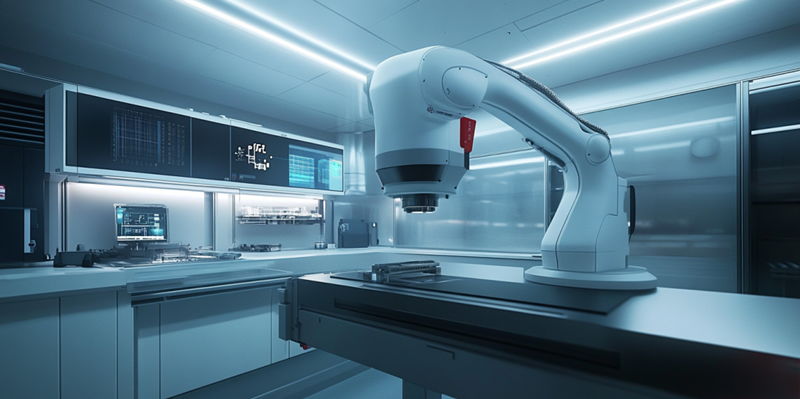
The landscape of industrial automation is shifting rapidly, with collaborative robots, or cobots, becoming central to this transformation. ABB, a global leader in robotics and automation, has made significant strides with its GoFa series. These recent enhancements are poised to revolutionize precision in industrial applications, catering to the exacting demands of sectors like consumer electronics and aerospace. By integrating advanced technologies, ABB’s GoFa cobots have set a new benchmark for accuracy and efficiency, allowing manufacturers to achieve unprecedented levels of precision in their production processes.
Unprecedented Path Accuracy
ABB claims a remarkable tenfold increase in path accuracy with its new Ultra Accuracy feature. This leap in precision is achieved through a combination of advanced components, refined algorithms, and sophisticated software technologies. The high-resolution sensors integrated into these cobots provide real-time feedback on their position and movements, enabling them to operate with minimal deviations from the set path. Improved actuators further ensure that every movement is executed precisely, pushing the boundaries of what’s possible in automated tasks requiring meticulous positioning.
These enhancements are not merely incremental improvements; they represent a fundamental shift in how precise tasks can be handled by cobots. The Ultra Accuracy feature ensures that the GoFa cobots can perform tasks such as gluing and sealing in electronics manufacturing with a level of precision previously unattainable. In aerospace, these cobots are capable of tasks like laser welding and layering composite materials with exceptional accuracy. By achieving this high level of precision, ABB’s GoFa cobots have opened up new possibilities for automation in industries where tiny errors can have significant consequences.
Technological Advancements Driving Precision
The technological innovations incorporated into the GoFa series cobots are multi-faceted. Enhanced calibration techniques reduce errors and ensure consistent accuracy across varied tasks. Among these innovations, high-resolution sensors stand out, offering real-time data on the robot’s movements and positions. This feedback loop is crucial for tasks necessitating fine-tuned accuracy like gluing and sealing in electronics manufacturing or laser welding.
In addition, powerful software advancements contribute to these gains. ABB’s improved algorithms allow the cobots to process data faster and more accurately, translating into enhanced operational efficiency. These software improvements also make the cobots more adaptive to different tasks, ensuring they can handle anything from simple pick-and-place operations to more complex assembly lines. The combination of hardware and software advancements ensures that ABB’s GoFa cobots are not just precise but also incredibly versatile.
Versatility Across Industry Applications
The enhanced GoFa series cobots are designed for applications requiring extreme precision. They are particularly suited for consumer electronics production, where tasks like gluing, sealing, and laser welding demand impeccable accuracy. In aerospace manufacturing, these cobots excel in layering composite materials and precision laser fabrication, showcasing their versatility and high adaptability.
Moreover, by enabling precise tasks that were previously beyond the scope of cobots, ABB has broadened the applicability of these machines. Their ability to handle detailed, minute operations makes them invaluable in complex industrial settings, making repetitive and labor-intensive tasks not only faster but also more accurate. This versatility allows manufacturers to deploy these cobots in a wide range of applications, from simple tasks to highly complex processes that require a high degree of precision.
Comparing to Traditional Systems
Compared to traditional 2D gantry systems, ABB’s GoFa cobots offer superior functionality with their 6D motion capabilities, including roll, pitch, and yaw. This makes them a more versatile and cost-effective solution for numerous industrial applications. The out-of-the-box functionality of these cobots significantly reduces setup times and costs associated with traditional systems, allowing businesses to integrate them into existing workflows with relative ease.
The flexibility of the GoFa cobots to move in six dimensions not only saves time but also expands the range of tasks they can perform. From intricate assembly processes to detailed material handling, the advantages are clear. This expanded capability means that these cobots are not limited to minimal-weight operations but can take on more complex, precision-demanding tasks. The ability to handle a variety of tasks with a single solution makes the GoFa cobots a valuable asset in any manufacturing setting.
Advanced Integration and Programming
A standout feature of ABB’s GoFa cobots is their integration with RobotStudio software. This software allows for offline programming, letting operators design and test their robotic processes in a virtual environment before deploying them on the factory floor. The simulations created with RobotStudio boast a 99% accuracy rate, ensuring that what is modeled virtually aligns closely with real-world performance.
Such high-fidelity simulation minimizes the need for post-deployment adjustments, saving time and effort. It also enables a smoother integration process, reducing downtime and improving overall efficiency. The ease of programming, combined with the ability to accurately simulate tasks, makes these cobots a practically foolproof choice for industries aiming to enhance precision and streamline operations. RobotStudio’s capabilities ensure that even complex tasks can be programmed and perfected offline, making the deployment process seamless and efficient.
Moving Towards a Precision-Driven Future
The industrial automation landscape is evolving quickly, with collaborative robots, or cobots, taking center stage. ABB, a global powerhouse in robotics and automation, has significantly advanced this field with its GoFa series. These latest innovations are set to transform precision in industrial sectors such as consumer electronics and aerospace. ABB’s GoFa cobots incorporate cutting-edge technologies, setting new standards for precision and efficiency. This has enabled manufacturers to achieve levels of accuracy in their production processes that were previously unimaginable.
The rising importance of cobots in various industries underscores the ongoing shift towards more sophisticated and flexible manufacturing setups. Cobots are designed to work alongside human employees, offering support in tasks that require high levels of precision and consistency. With features like easy programming and safe interaction capabilities, ABB’s GoFa cobots streamline operations, reduce errors, and enhance productivity. Companies now have the tools to not only meet but exceed the rigorous demands of modern production, ultimately leading to higher quality products and more efficient workflows.