

The long-held dependency on buried cables for enterprise-grade connectivity is rapidly eroding, replaced by the pervasive and powerful reach of next-generation wireless technology. For decades, the notion of running a business’s primary network over the air was a compromise, a solution reserved for temporary sites or failover scenarios. Now, the convergence of fifth-generation wireless (5G) and Software-Defined Wide Area Networking (SD-WAN) is not just challenging this paradigm but completely rewriting the rules of enterprise connectivity. This technological alliance is creating a new class of agile, resilient, and intelligent networks capable of supporting the explosive demands of cloud computing, the Internet of Things (IoT), and a permanently distributed workforce. The core of this transformation lies in how these two technologies synergize, with 5G providing the high-performance, low-latency transport and SD-WAN delivering the critical intelligence to manage and secure it effectively, making the wireless-first enterprise a practical and compelling reality.
Are Businesses Finally Ready to Cut the Cord on Their Networks?
The strategic shift toward wireless WAN is no longer a question of if, but when and how. Previously, cellular connections were relegated to a secondary role, a safety net for when the primary wired link failed. However, the advent of enterprise-grade 5G, particularly with the rollout of midband spectrum, has elevated its status from a mere backup to a formidable primary connectivity option. This newfound confidence is driven by 5G’s ability to deliver fiber-like speeds and low latency, making it a viable and often superior alternative for branch offices, retail locations, and remote worksites. Businesses are embracing this newfound freedom to deploy networks where they are needed most, unbound by the physical constraints and lengthy deployment timelines of traditional circuits.
This readiness to embrace a wireless-first model is fueled by tangible business imperatives. The modern enterprise demands unprecedented agility, needing to establish connectivity for new locations—be it a pop-up retail store, a temporary construction site, or a rapidly scaled remote office—in days, not months. 5G and SD-WAN answer this call, enabling zero-touch provisioning that dramatically accelerates network rollouts. Moreover, the inherent diversity of a wireless link provides a powerful layer of resilience. By operating independently of the local terrestrial infrastructure, a 5G connection can keep a business online even when physical events like fiber cuts or local outages sever traditional wired connections, ensuring a level of business continuity that was previously difficult and expensive to achieve.
The Tipping Point Why Traditional Wide Area Networks Are Facing an Existential Crisis
The architecture of traditional Wide Area Networks, built predominantly on Multiprotocol Label Switching (MPLS) technology, is struggling under the weight of modern digital demands. Designed for an era when applications resided in a central data center, the hub-and-spoke model of MPLS is ill-suited for the cloud-centric world. Today, traffic from branch offices often needs to access multiple public and private clouds directly. Routing this traffic back through a central data center before sending it to the cloud introduces significant latency, degrades application performance, and creates a costly bottleneck. This inefficiency, coupled with the high cost and rigid, long-term contracts associated with MPLS circuits, has rendered the traditional WAN an impediment to innovation rather than an enabler of it.
The crisis for these legacy networks is further deepened by the rise of the distributed enterprise and the explosion of connected devices at the network edge. The shift to hybrid work models means the network perimeter is no longer a physical location but extends to every remote employee’s home. Simultaneously, the proliferation of IoT devices in environments from manufacturing floors to agricultural fields generates immense volumes of data that require real-time processing. A centralized, rigid WAN cannot efficiently or securely manage this decentralized and dynamic flow of traffic. This fundamental mismatch between the old architecture and new requirements has created a critical need for a more flexible, intelligent, and application-aware networking fabric, setting the stage for the disruptive potential of 5G and SD-WAN.
The New Power Couple Unpacking the Symbiotic Partnership of 5G and SD-WAN
The relationship between 5G and SD-WAN has evolved into a deeply integrated and symbiotic partnership where each technology amplifies the other’s strengths. Initially viewed as just another transport link for an SD-WAN appliance, 5G has matured into a primary connectivity powerhouse. Its wire-like performance characteristics—high bandwidth, minimal latency, and massive connection density—make it a powerful engine for the modern WAN. It is no longer just a failover option; for many locations, 5G now serves as the primary, high-performance connection, offering rapid deployment and robust throughput that rivals or exceeds traditional broadband and even some dedicated circuits. This maturation allows organizations to rethink their entire network strategy, building a WAN fabric that is faster, more flexible, and less dependent on physical infrastructure.
At the heart of this partnership, SD-WAN functions as the intelligent orchestration layer, the “brains” that directs the entire operation. Its core function is to manage multiple network transports simultaneously, but its true power is realized when paired with 5G. SD-WAN can dynamically steer application traffic across 5G, MPLS, and broadband links based on real-time network conditions and predefined business policies. It can prioritize a critical video conference over the low-latency 5G link while directing bulk data backups over a less expensive broadband connection. This intelligent path selection ensures optimal application performance, enhances resilience through seamless failover, and maximizes the return on investment for all available network resources.
The integrated benefits of this unified platform are transformative. When combined, these technologies provide dynamic and resilient link management, enabling instantaneous failover that protects against outages without manual intervention. A crucial advancement comes with 5G Standalone (5G SA) network slicing, where “5G-aware” SD-WAN platforms can steer mission-critical applications onto dedicated, end-to-end virtual networks that guarantee specific Quality of Service (QoS) levels. This capability is foundational to the Secure Access Service Edge (SASE) framework, which unifies high-speed networking with cloud-native security services like Zero Trust Network Access (ZTNA) to protect the expanded attack surface of a distributed enterprise. Furthermore, this combination is the essential fuel for edge computing and industrial IoT, enabling the real-time data processing required for connected vehicles, smart factories, and other next-generation applications.
From Theory to Practice Real-World Applications Transforming Industries
The transformative impact of the 5G and SD-WAN pairing is most evident in the real-world applications it enables across various industries. In the smart factory, for instance, this combination provides the reliable, ultra-low-latency connectivity essential for industrial automation and robotics. An SD-WAN can be configured to route critical operational technology (OT) traffic—such as real-time commands to robotic arms or data from assembly line sensors—onto a guaranteed 5G network slice. This ensures that time-sensitive operations are never compromised by network congestion, enhancing productivity, enabling predictive maintenance, and creating a safer, more efficient manufacturing environment.
For the modern unchained workforce, this technology delivers high-performance and secure networking to hybrid and remote teams, effectively extending the corporate network to any location. An SD-WAN appliance in a home office can utilize 5G as a primary, high-speed connection, ensuring that business-critical applications like VoIP and video conferencing receive priority and perform flawlessly. Integrated with ZTNA principles, this setup ensures that all access to corporate resources is authenticated and authorized, securing the connection regardless of the user’s location. This allows organizations to support a truly flexible work model without sacrificing performance or security.
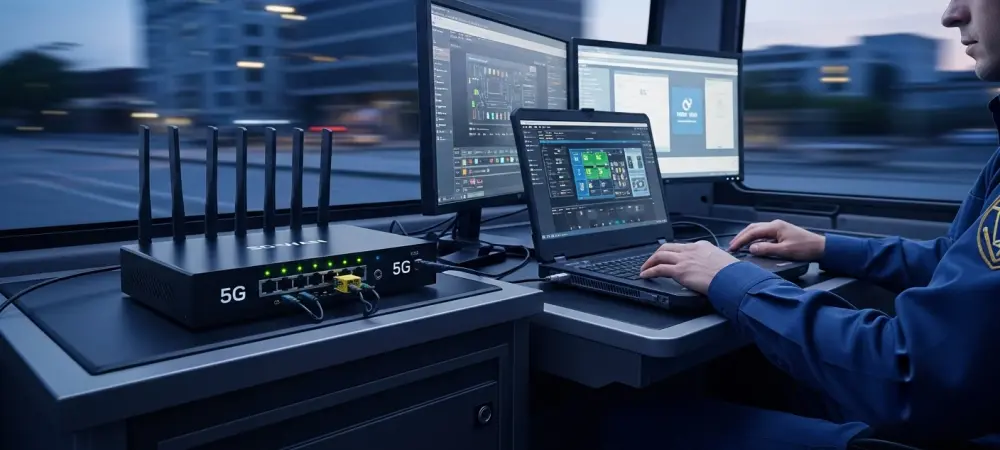
This powerful duo is also revolutionizing mobile operations by creating a “network on wheels.” Ruggedized SD-WAN appliances equipped with multi-SIM 5G modems are being deployed in fleet vehicles, public transit, and emergency response units. This technology provides uninterrupted, high-bandwidth connectivity on the move, with the SD-WAN intelligently and automatically switching between different cellular carriers to maintain the strongest possible signal. This continuous connection is critical for applications like real-time vehicle telematics, mobile point-of-sale systems, and streaming video feeds from first responders, turning vehicles into fully connected mobile offices and operational hubs.
A Practical Guide for IT Leaders Navigating the Transition to a Wireless-First WAN
Despite the immense potential, the transition to a 5G-powered WAN is not without its challenges, and IT leaders must navigate this landscape with a clear-eyed strategy. A significant hurdle remains the reality of network rollouts, as carrier deployments of robust, enterprise-grade 5G can be inconsistent, with performance varying significantly by location. The promise of high-speed 5G can be diminished by signal penetration issues within buildings, often requiring investments in external antennas or signal boosters that add complexity and cost. Furthermore, the initial cost of enterprise 5G data plans can be substantial, and organizations must carefully evaluate the total cost of ownership against the benefits of agility and resilience. The vendor landscape also presents a maze of options, and finding a truly unified solution that seamlessly integrates 5G management within a single SD-WAN and SASE platform is critical to avoiding operational complexity down the line.
To successfully navigate this transition, a strategic and phased roadmap is essential for implementation. The journey should begin with smart, controlled pilot programs. IT leaders can deploy 5G in specific, well-defined use cases—such as for a new pop-up retail location or as the primary link for a small branch office—to measure real-world performance, reliability, and return on investment. This data-driven approach allows the organization to understand the technology’s capabilities and limitations within its specific operational context before committing to a broad-scale deployment.
Following successful pilots, the next step is to optimize and integrate. This involves using the SD-WAN platform to intelligently steer traffic, leveraging 5G’s low-latency strengths for real-time applications while offloading less sensitive traffic to other links. The ultimate goal should be to consolidate the technology stack by evolving toward a unified SASE architecture. This approach simplifies management, reduces complexity, and ensures that consistent security policies are enforced across the entire network, from the data center to the cloud and the furthest edge. The path toward a wireless-first WAN was thus illuminated by a strategy that balanced ambitious innovation with pragmatic, step-by-step execution. This careful navigation allowed enterprises to harness the combined power of 5G and SD-WAN, ultimately building a network that was not only faster and more resilient but fundamentally more aligned with the dynamic demands of the digital age.