

A mysterious shipment containing a piece of forgotten semiconductor history recently arrived on a customer’s doorstep, sparking a frenzy among hardware enthusiasts who recognized a ghost from the past. The unexpected delivery of an Intel Arctic Sound GPU instead of a modern Ponte Vecchio accelerator highlighted a fascinating break in the standard logistics chain of a silicon giant. This rare occurrence provides a physical look at a pivotal, albeit abandoned, chapter in high-performance graphics history that most assumed was lost to the recycler.
The Administrative Error That Resurrected a Technological Relic
A massive logistical blunder turned a routine order for modern hardware into a high-profile investigation when a customer unboxed an Intel Arctic Sound 2T. This unit was never meant for public consumption, representing a canceled lineage of graphics chips that the company scrubbed from its official roadmaps years ago. The discovery of a fully functional engineering sample in the wild suggests a rare breach in the decommissioning process for legacy hardware that should have remained within secure laboratory doors.
Identifying the Arctic Sound 2T was relatively straightforward for seasoned observers, as the hardware sample prominently displayed identifying markers on its shroud. The card bears the unmistakable “Intel Confidential” engraving alongside a “QVS8 1.00 GHz” identifier, confirming its status as a pre-production asset. This specific model serves as a functional relic of a project that once carried the weight of enterprise ambitions, yet eventually found itself relegated to the scrap heap of technological development.
Understanding the Stakes of Intel’s Abandoned GPU Ambitions
The Arctic Sound project emerged in 2018 under the high-profile leadership of Raja Koduri, marking a bold attempt to break the iron grip held by the NVIDIA and AMD data center duopoly. At its core, the Xe-HP architecture was designed as a modular, scalable solution that could theoretically adapt to various workloads by stacking compute tiles. This ambition was critical for the company as it sought to prove its relevance in the burgeoning fields of artificial intelligence and high-performance computing.
However, the project became a symbol of the development hurdles that plagued the graphics division for several years. Frequent delays and shifting priorities meant that by the time the silicon was ready, the market had already moved toward more specialized AI accelerators. The failure to bring Arctic Sound to fruition highlighted the difficulties of entering a mature market while simultaneously managing internal manufacturing transitions, leaving a vacuum that competitors were eager to fill.
Under the Shroud: Technical Specifications of the Arctic Sound 2T
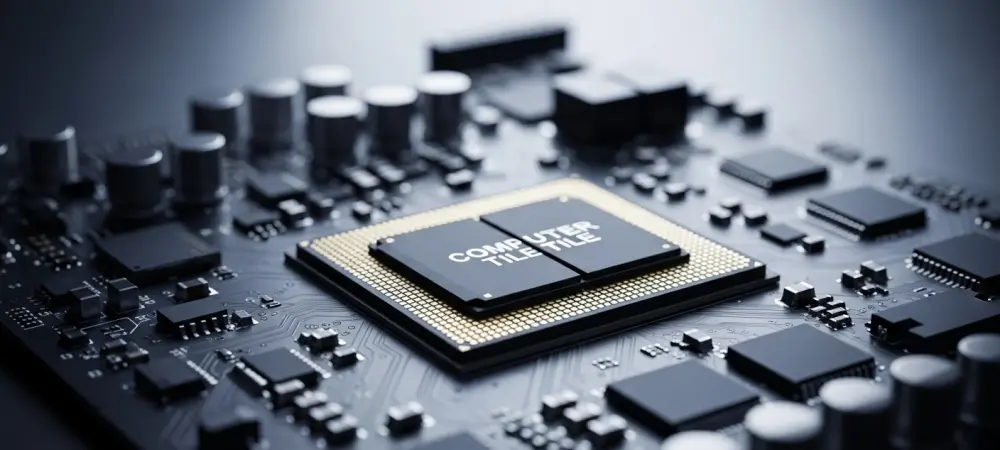
Technical deep dives into the salvaged Arctic Sound 2T reveal a sophisticated multi-chiplet design that featured two distinct compute tiles. To feed these processing cores, the design integrated four HBM2E memory sites directly onto the package, providing the massive bandwidth necessary for data-heavy workloads. This memory architecture was a hallmark of high-end data center hardware, signaling an intent to compete at the very top of the performance stack before the design was eventually sidelined. The performance metrics of this specific 2-tile variant were calculated to offer 1024 Execution Units, translating to roughly 8,192 cores. This configuration was expected to produce a theoretical output of 20.48 TFLOPs while operating within a 300W power envelope, positioning it as a balanced mid-tier option between entry-level single-tile units and the four-tile flagship. Despite its impressive paper specs, the complexity of maintaining such a power-hungry architecture contributed to its eventual replacement by more efficient designs.
Analyzing the Legacy of Roadmap Instability and Strategic Shifts
The cancellation of the Arctic Sound line served as a harbinger for a period of extreme volatility in the corporate graphics roadmap. As the “AI train” began to accelerate, the focus pivoted away from Xe-HP toward the Ponte Vecchio architecture and the subsequent Falcon Shores platform. Each pivot required significant restructuring of resources and engineering focus, which inadvertently gave rivals the time needed to solidify their market leads during a critical growth phase.
Moreover, the strategic shift from HBM-intensive designs toward more traditional GDDR and LPDDR5X solutions indicated a fundamental re-evaluation of market needs. This instability created a high cost for the organization, not just in terms of research and development expenses, but also in lost momentum. The frequent changes in architecture made it difficult for software developers to optimize for the ecosystem, a hurdle that the company is still working to overcome with its current workstation offerings.
Navigating Future High-Performance Hardware Cycles
Navigating these volatile cycles required a nuanced understanding of how semiconductor roadmaps shifted amidst broader corporate restructuring. While industry analysts evaluated the transition from HBM-heavy designs to the more versatile GDDR and LPDDR5X solutions, the emergence of the Jaguar Shores platform became the new focal point for long-term planning. Strategizing for the 2027 hardware landscape demanded that organizations balance immediate workstation needs with the looming arrival of more specialized AI hardware. Lessons learned from the “ghost” of Arctic Sound influenced how future investments in high-end computing were structured. Practical frameworks for evaluating hardware focused on architecture stability rather than just raw peak performance metrics. By the time the industry moved fully toward integrated AI accelerators, the path taken by the Arctic Sound project served as a definitive guide on the consequences of frequent strategic pivots.