
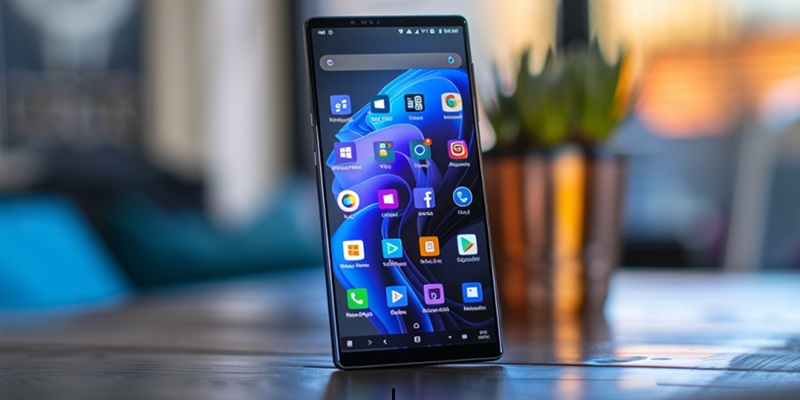
How Can You Easily Manage Android Phone Files on Windows 11 Now?

Microsoft has recently introduced a game-changing feature in the latest Windows 11 Insider update, enabling users to effortlessly manage files on their Android smartphones directly through File Explorer. This feature, still in its testing phase, aims to streamline the process of managing phone storage by eliminating the need for a USB cable connection between your PC and smartphone. To utilize this feature, certain requirements must be met, and specific steps should be followed to grant your Windows 11 PC the necessary permissions for accessing your phone’s files seamlessly.

Requirements to Enable File Access

Before diving into the steps to enable this new feature, make sure that your devices meet the necessary prerequisites. First and foremost, you need to have the latest build of the Windows 11 Insider program installed on your PC. Secondly, your Android smartphone must be running at least Android 11 or a later version. Additionally, the smartphone should have the beta version 1.24071 or higher of the Link to Windows app installed. These requirements are essential to ensure compatibility and unlock the full potential of this feature.

If all these conditions are met, you can move forward with enabling file access. The process begins by heading over to the Settings menu on your Windows 11 PC. From there, navigate to Bluetooth & Devices, where you will find an option labeled Mobile Devices. Click on this option to proceed. Next, you need to select Manage Device, which will give you further options for configuring device management settings. Look for a toggle labeled “Access in File Explorer.” If this toggle is available, simply turn it on to grant your PC the necessary permissions to access and manage files on your Android smartphone.

Step-by-Step Instructions for Enabling File Access

First, ensure your Windows 11 PC is updated to the latest Insider build. Secondly, both your Android device and PC must be connected to the same Wi-Fi network. Users will need to grant the necessary permissions for your Windows 11 system to access your Android phone’s files seamlessly. Once done, File Explorer will show your phone as a storage device, allowing you to navigate and manage files just as you would with other storage media. This advancement promises to streamline file management, boosting productivity and user satisfaction.

Explore more

Agentic AI Redefines the Software Development Lifecycle

The quiet hum of servers executing tasks once performed by entire teams of developers now underpins the modern software engineering landscape, signaling a fundamental and irreversible shift in how digital products are conceived and built. The emergence of Agentic AI Workflows represents a significant advancement in the software development sector, moving far beyond the simple code-completion tools of the past.

Is AI Creating a Hidden DevOps Crisis?

The sophisticated artificial intelligence that powers real-time recommendations and autonomous systems is placing an unprecedented strain on the very DevOps foundations built to support it, revealing a silent but escalating crisis. As organizations race to deploy increasingly complex AI and machine learning models, they are discovering that the conventional, component-focused practices that served them well in the past are fundamentally

Agentic AI in Banking – Review

The vast majority of a bank’s operational costs are hidden within complex, multi-step workflows that have long resisted traditional automation efforts, a challenge now being met by a new generation of intelligent systems. Agentic and multiagent Artificial Intelligence represent a significant advancement in the banking sector, poised to fundamentally reshape operations. This review will explore the evolution of this technology,

Cooling Job Market Requires a New Talent Strategy

The once-frenzied rhythm of the American job market has slowed to a quiet, steady hum, signaling a profound and lasting transformation that demands an entirely new approach to organizational leadership and talent management. For human resources leaders accustomed to the high-stakes war for talent, the current landscape presents a different, more subtle challenge. The cooldown is not a momentary pause

What If You Hired for Potential, Not Pedigree?

In an increasingly dynamic business landscape, the long-standing practice of using traditional credentials like university degrees and linear career histories as primary hiring benchmarks is proving to be a fundamentally flawed predictor of job success. A more powerful and predictive model is rapidly gaining momentum, one that shifts the focus from a candidate’s past pedigree to their present capabilities and