

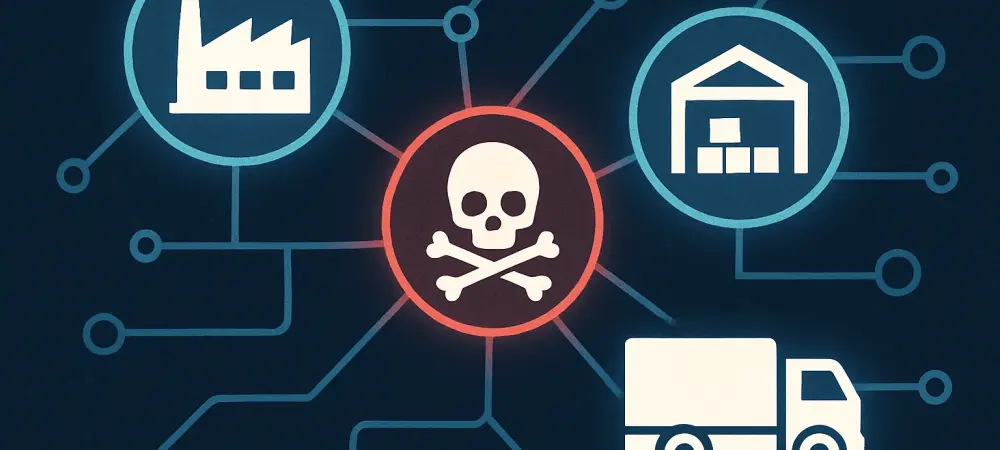
Introduction to Supply Chain Cybersecurity Risks
Imagine a single breach in a seemingly minor supplier’s system cascading into a full-blown crisis, exposing millions of customer records across an entire industry, a scenario that is no longer a distant fear but a stark reality. Supply chain cyberattacks have surged by over 37% in the last two years alone, according to recent reports from leading cybersecurity firms. In today’s interconnected digital economy, supply chains form the backbone of global trade, yet they also represent a critical vulnerability where a single weak link can jeopardize entire networks, leading to financial losses and eroded trust. The impact ripples beyond immediate victims, affecting partners, customers, and even national security.
This analysis delves into the escalating threat of supply chain cybersecurity risks, spotlighting real-world incidents like the recent LNER breach in the UK. It explores current trends backed by hard data, incorporates expert insights on emerging challenges, and examines the future trajectory of these risks. By dissecting both the vulnerabilities and potential solutions, this discussion aims to equip organizations and individuals with the knowledge needed to navigate an increasingly perilous digital landscape.
Rising Threat of Supply Chain Cyberattacks
Statistics and Growth of Supply Chain Breaches
Recent studies by prominent cybersecurity organizations reveal a troubling rise in supply chain attacks, with over 60% of global businesses reporting at least one such incident in the past year. Reports indicate that nearly 40% of these breaches originate from third-party vendors, often exploiting gaps in less-secure systems to infiltrate larger networks. The financial toll is staggering, with average losses per incident exceeding $4 million, not to mention the reputational damage that can take years to rebuild.
Digital transformation has accelerated this trend, as companies increasingly rely on external suppliers for cloud services, logistics, and software solutions. This growing interdependence, while boosting efficiency, expands the attack surface for cybercriminals who target smaller, less-protected vendors as entry points. From 2025 onward, projections suggest a continued upward trajectory in these incidents unless proactive measures are widely adopted.
The urgency to address this issue is compounded by the evolving tactics of attackers, who now leverage sophisticated methods like ransomware and social engineering to exploit supply chain weaknesses. This persistent escalation underscores the need for comprehensive strategies that go beyond traditional cybersecurity frameworks to encompass every link in the chain.
Real-World Impact: The LNER Data Breach Case Study
A striking example of supply chain vulnerability unfolded with the LNER breach, where a UK rail operator disclosed that an unauthorized third party accessed customer data through a supplier’s compromised system. The exposed information included contact details and past journey histories, though fortunately, no financial data or passwords were affected. This incident highlights how even non-critical data can become a liability when in the wrong hands.
Security experts and LNER itself have warned of potential follow-on attacks, particularly phishing scams tailored with the stolen information to trick customers into revealing more sensitive details. Such secondary threats amplify the initial breach’s impact, turning a contained incident into a broader risk for thousands of individuals. The case serves as a stark reminder of the cascading consequences that can emerge from a single point of failure.
What makes this breach particularly illustrative is how it exposes the limitations of internal security measures when external partners are not held to the same standards. Despite robust defenses within LNER, the supplier’s vulnerability became the gateway for attackers, emphasizing that no organization is immune if its supply chain remains unsecured. This real-world scenario drives home the critical need for end-to-end vigilance.
Expert Perspectives on Supply Chain Security Challenges
Insights from cybersecurity professionals shed light on the nuanced dangers posed by supply chain breaches. Michael Tigges from Huntress has pointed out that even seemingly innocuous data, such as contact information, can be weaponized for identity theft or highly targeted attacks. His perspective underlines the reality that no piece of information is too trivial to be exploited in the hands of determined cybercriminals. To counter these risks, Tigges and other experts advocate for practical measures like conducting regular tabletop exercises to simulate breach scenarios and identify weaknesses. Additionally, they recommend thorough data discovery and mapping of sensitive information flows to ensure every potential exposure point is safeguarded. These proactive steps are seen as essential for building resilience against increasingly sophisticated threats.
A broader consensus within the cybersecurity community emphasizes shared responsibility between organizations and their vendors. Closing security gaps requires collaborative efforts, including stricter vetting processes and continuous monitoring of third-party systems. This collective approach is vital, as isolated defenses are no match for attackers who exploit interconnected vulnerabilities with precision.
Future Outlook: Evolving Risks and Responses in Supply Chain Cybersecurity
Looking ahead, supply chain cyberattacks are expected to grow in complexity, fueled by emerging technologies like AI-driven phishing campaigns and advanced ransomware variants. These tools enable attackers to craft more convincing scams and hold critical systems hostage with unprecedented efficiency. As supply chains integrate more digital innovations, the potential for exploitation will likely expand if security measures fail to keep pace.
On a more hopeful note, positive developments are on the horizon through stronger public-private partnerships and legislative initiatives. For instance, UK Security Minister Dan Jarvis has championed measures to empower law enforcement in suspending malicious IP addresses and combating ransomware through new laws. Such governmental actions signal a growing commitment to fortifying national cybersecurity frameworks, which could set a precedent for global standards.
Nevertheless, significant challenges persist, particularly in enforcing uniform security protocols across diverse and fragmented supply chains. Balancing rapid innovation with risk mitigation remains a delicate task, as overly stringent regulations might stifle progress while lax oversight invites breaches. Navigating this tension will be crucial for shaping a secure yet dynamic future for global supply chains.
Key Takeaways and Call to Action
Reflecting on the discussions above, it is clear that supply chain cyberattacks have emerged as a pervasive threat, with incidents like the LNER breach serving as cautionary tales of third-party vulnerabilities. Data reveals the alarming frequency and cost of these attacks, while expert input from professionals like Michael Tigges highlights the insidious potential of even minor data leaks. The exploration of future risks and responses underscores the dual nature of technological advancement as both a benefit and a challenge. Moving forward, organizations are urged to prioritize third-party risk assessments and adopt rigorous monitoring to fortify their supply chains against evolving threats. Collaborative frameworks, supported by legislative efforts, offer a pathway to systemic improvement, ensuring that vulnerabilities are addressed at every level. Individuals, too, have a role to play by remaining vigilant against phishing and other social engineering tactics that exploit stolen data.
Ultimately, the lessons learned point toward a multifaceted strategy encompassing technology, policy, and awareness as the cornerstone of resilience. By investing in proactive defenses and fostering a culture of shared responsibility, businesses and consumers alike can better navigate the complex landscape of digital risks. This forward-looking approach aims to transform past challenges into actionable safeguards for a more secure tomorrow.