

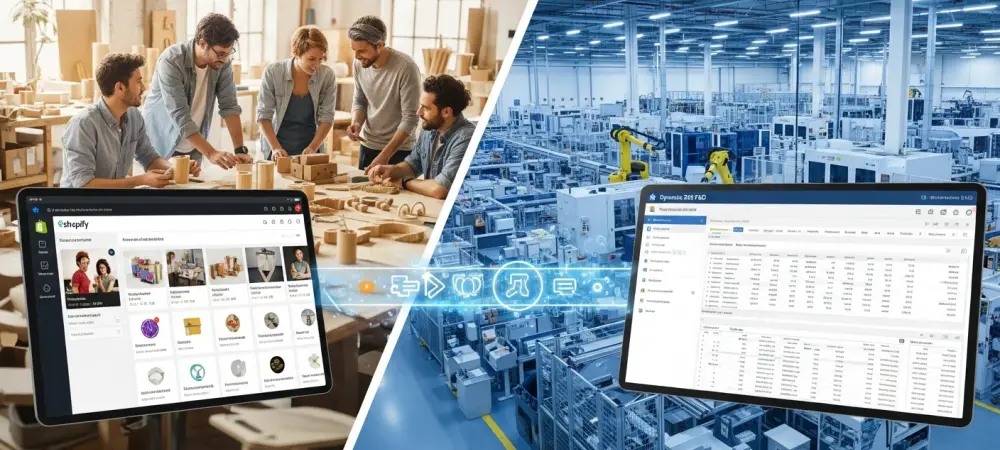
The modern industrial landscape no longer treats digital storefronts as experimental side projects but as the central nervous system for global production and distribution networks. This transformation marks a departure from traditional wholesale-only models, where manufacturers remained insulated from their end users by layers of distributors and retailers. In the current market, the ability to sell directly to the customer is not merely an advantage; it is a prerequisite for long-term survival. Enterprise manufacturers are now tasked with managing complex industrial processes while providing a seamless, retail-like purchasing experience. This requires a sophisticated technological marriage between a high-performance commerce engine and a robust enterprise resource planning system. By leveraging Shopify for customer engagement and Microsoft Dynamics 365 Finance & Operations for backend discipline, companies are successfully navigating this complexity.
The contemporary manufacturing environment is defined by a profound shift in buyer expectations, where the lines between consumer and professional purchasing behaviors have largely blurred. B2B clients now demand the same level of transparency, speed, and intuitive design they experience in their personal lives, making the digital storefront a critical touchpoint for brand loyalty. Consequently, ecommerce has graduated from a peripheral sales channel to a primary strategic pillar that informs every level of the organization. This shift allows manufacturers to capture higher margins through direct-to-consumer sales while simultaneously strengthening their relationships with traditional wholesale partners through better digital tools. The pivot toward a digital-first strategy ensures that the business remains resilient in the face of supply chain volatility and changing market dynamics.
Why Industry Leaders Move Away From Viewing Ecommerce as a Side Project: Making It a Core Strategic Pillar
Manufacturers have historically viewed online sales as a secondary concern, often leaving digital initiatives to smaller teams with limited budgets. However, the realization that digital commerce provides a wealth of first-party data has fundamentally changed this perspective. By owning the storefront, manufacturers gain direct insight into customer preferences, buying patterns, and emerging trends, allowing them to adjust production schedules with unprecedented precision. This data-driven approach replaces guesswork with actionable intelligence, turning the ecommerce platform into a vital source of market research. Moreover, the ability to launch new products quickly and gather immediate feedback has accelerated innovation cycles across the industry.
The transition to making ecommerce a core pillar is also driven by the necessity of operational agility. Traditional sales models often rely on manual order processing, which is slow, prone to error, and difficult to scale. In contrast, a modern digital strategy automates these workflows, allowing a manufacturer to handle a significant increase in order volume without a corresponding increase in headcount. This scalability is essential for businesses looking to expand into new geographic regions or diversify their product lines. Leading organizations now view their digital infrastructure as a competitive weapon that enables them to outmaneuver slower, more traditional competitors who are still tethered to legacy processes.
Furthermore, the integration of digital commerce into the core business strategy facilitates a more holistic approach to customer service. When the storefront is no longer a silo, customer support teams gain access to real-time information regarding order status, shipping updates, and technical specifications. This transparency builds trust and reduces the friction that often characterizes industrial transactions. By placing the customer experience at the heart of the digital strategy, manufacturers are not just selling products; they are building a comprehensive service ecosystem that adds value far beyond the initial sale. This strategic alignment ensures that every digital interaction reinforces the company’s reputation for reliability and innovation.
The High Cost: Operating With Disconnected Data Silos in a Direct-to-Consumer World
The decision to operate with disconnected systems often results in a hidden tax on the business, manifesting as operational inefficiencies and lost revenue. When the ecommerce platform and the ERP system do not communicate, the organization is essentially flying blind, with different departments relying on conflicting sets of data. For instance, a marketing team might run a promotion on a specific product while the production team is simultaneously scaling back manufacturing due to a perceived lack of demand. This misalignment leads to missed opportunities and wasted resources, as the company fails to capitalize on market interest or overproduces items that are not selling.
In a direct-to-consumer environment, the consequences of data silos are particularly severe when it comes to inventory management. If the Shopify storefront does not have real-time visibility into the stock levels recorded in Dynamics 365 Finance & Operations, the risk of overselling becomes a constant threat. Customers who purchase an item only to receive a backorder notification days later are unlikely to return, and the brand’s reputation suffers immediate damage. Conversely, a lack of visibility might lead the system to show an item as out of stock even when inventory is available in a regional warehouse, resulting in lost sales that could have been easily fulfilled.
Beyond inventory, the financial toll of manual data entry cannot be overstated. When orders must be manually transcribed from the commerce platform into the ERP, human error is inevitable. Incorrect SKUs, shipping addresses, or pricing tiers lead to shipping delays, returns, and administrative nightmares that drain the productivity of the finance and logistics teams. These errors are not just minor inconveniences; they represent a significant drain on the bottom line. The labor cost associated with fixing these mistakes, combined with the cost of expedited shipping to correct errors, quickly erodes the profit margins that the direct-to-consumer model was intended to capture.
Bridging the Gap: High-Performance Storefronts and the Complex Physical Realities of the Factory Floor
The primary challenge for any manufacturer is reconciling the fast-paced, digital world of Shopify with the heavy, physical realities of the production line. Shopify is designed for speed and elegance, providing a frictionless interface that encourages conversion and brand engagement. However, it is not built to manage the intricacies of raw material procurement, labor scheduling, or multi-stage assembly. To scale effectively, a manufacturer must ensure that a click on the “buy” button initiates a chain reaction that reaches all the way to the factory floor. This is where the integration with Microsoft Dynamics 365 Finance & Operations becomes indispensable, serving as the connective tissue between the virtual and physical worlds. This connection allows the shop floor to become more responsive to actual market demand rather than relying on outdated forecasts. When Shopify and the ERP are synchronized, the production team receives immediate notification of sales trends, allowing them to adjust material requirements planning in real time. For businesses utilizing a make-to-order or configure-to-order model, this integration is the only way to manage the complexity of custom specifications without slowing down the fulfillment process. The system ensures that every customized order is automatically translated into a precise bill of materials and a corresponding production job, eliminating the need for manual intervention and reducing lead times.
Moreover, bridging this gap enables a more sophisticated approach to global logistics and multi-warehouse management. Dynamics 365 Finance & Operations provides the intelligence required to determine the most efficient fulfillment path for every order, considering factors like shipping costs, tax jurisdictions, and warehouse proximity. Shopify then communicates this information to the customer, providing accurate delivery estimates and tracking details. This synergy ensures that the front-end promise of a fast, reliable delivery is backed by a back-end operation that is optimized for efficiency and cost control. The result is a unified system that handles the complexities of global manufacturing with the grace of a modern retail experience.
Key Insights: How Bi-directional Data Flow Eliminates Human Error and Operational Friction
The true power of integrating Shopify with Dynamics 365 Finance & Operations lies in the bi-directional flow of data, which creates a single source of truth for the entire organization. When data moves freely in both directions, the ecommerce storefront is no longer a static brochure but a dynamic reflection of the company’s operational capacity. Product information, including technical specifications and pricing, is maintained in the ERP and automatically pushed to Shopify, ensuring that the customer always sees the most accurate and up-to-date information. This automation eliminates the need for redundant data entry and ensures that the brand message remains consistent across all digital touchpoints. Order automation is another critical area where bi-directional flow significantly reduces operational friction. When a customer completes a transaction on Shopify, the order details, including customer data and payment status, are instantly transmitted to Dynamics 365 Finance & Operations. This triggers the immediate allocation of inventory and the generation of pick lists for the warehouse team. As the order progresses through the fulfillment stages, the ERP sends status updates back to Shopify, which then notifies the customer. This closed-loop communication system keeps everyone informed without requiring a single phone call or manual status check, freeing up customer service representatives to handle more complex inquiries.
Furthermore, the integration handles the nuanced pricing structures that are common in the manufacturing sector. Many businesses operate with complex price lists that vary by customer tier, region, or contract terms. By housing this logic in Dynamics 365 Finance & Operations and reflecting it accurately on the Shopify storefront, manufacturers can offer a personalized shopping experience to their B2B clients. This capability ensures that negotiated rates are automatically applied during the checkout process, maintaining the integrity of the sales agreement and preventing pricing disputes. The seamless flow of financial data also simplifies the reconciliation process, as every sale is correctly recorded and categorized within the ERP’s general ledger.
Strategic Frameworks: Aligning Custom ERP Workflows With Modern Commerce Platforms
Successfully scaling a manufacturing business requires more than just a technical connection between two platforms; it requires a strategic framework that aligns the integration with the unique workflows of the organization. Most manufacturers have spent years customizing their Dynamics 365 Finance & Operations environment to fit their specific production processes and compliance requirements. A generic, “out-of-the-box” integration often fails because it forces the business to change its proven workflows to match the limitations of the software. A more effective approach involves building a flexible integration layer that respects these customizations while still providing the benefits of automation and real-time data exchange.
Strategic alignment also involves planning for the diverse ways in which products are manufactured and fulfilled. For instance, a company that primarily focuses on make-to-stock items will require a different data flow than one that specializes in engineer-to-order products. The integration framework must be robust enough to handle these variations, ensuring that the commerce platform can accommodate different lead times and inventory requirements. By mapping out these processes before the integration begins, a manufacturer can avoid the bottlenecks and technical debt that often plague poorly planned digital initiatives. This foresight ensures that the technology supports the business objectives rather than dictating them.
Finally, the framework must be designed with future growth in mind, covering the planned expansion from 2026 to 2030 and beyond. As the business enters new markets, adds more warehouses, or launches additional sales channels, the integration must be able to scale without requiring a complete overhaul. This involves utilizing modern API-driven architectures that allow for modular updates and the easy addition of new features. By prioritizing scalability and flexibility, manufacturers can build a digital ecosystem that not only meets their current needs but also provides the foundation for future innovation. Aligning the ERP’s deep operational capabilities with Shopify’s agile commerce engine creates a powerful platform that is ready for whatever challenges the market may present.
The transition to a unified architecture proved that the separation between sales and production was a relic of a less connected era. Manufacturers recognized that growth required a symbiotic relationship between customer-facing agility and industrial-grade discipline. The integration of Shopify and Microsoft Dynamics 365 Finance & Operations emerged as the definitive solution for manufacturers seeking to bridge the gap between digital demand and physical execution. Organizations that adopted this unified approach moved beyond the limitations of legacy systems, achieving a level of agility that was previously unattainable in the industrial sector. The successful synchronization of these platforms resulted in a more responsive supply chain and a significantly improved customer journey.
Actionable progress in this field now requires a dedicated focus on data governance and the refinement of business processes. Manufacturers should prioritize the mapping of their unique workflows to ensure that the integration supports specialized production styles like make-to-order. It is essential to partner with experts who understand both the nuances of Shopify’s liquid templating and the complexities of the Dynamics 365 F&O data schema. Moving forward, the most successful enterprises will be those that continue to treat their digital infrastructure as a living system, constantly optimizing the data flow to reflect changing market conditions. Investing in a robust, bi-directional integration layer is no longer a luxury but the foundation for a truly modern, scalable manufacturing business.