

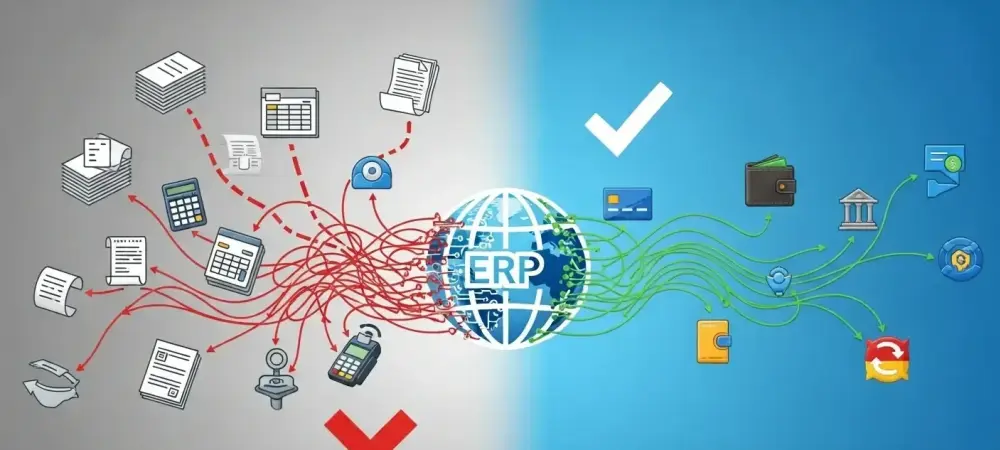
The sophisticated allure of a modern cloud-based enterprise resource planning system often masks a chaotic undercurrent of manual data entry that quietly erodes organizational profitability. While the promise of digital transformation suggests a seamless flow of information, many companies discover a persistent manual gap between their financial software and their payment gateways. This discrepancy forces accounting teams to perform repetitive, low-value tasks that hinder the very agility the new system was designed to provide. Bridging this specific divide is not merely a technical necessity; it is a fundamental strategic shift that allows financial data to move with the same velocity as the rest of the enterprise.
Modernizing the Financial Core: The Shift Toward Payment Integration
Digital transformation is frequently discussed through the lens of outward-facing applications, yet the true test of organizational efficiency is found within the back office. As businesses migrate to advanced platforms like Microsoft Dynamics 365 Business Central, they often inadvertently leave legacy payment processes intact, creating a bottleneck that drains internal resources. By shifting toward integrated payments, an organization can ensure that every transaction is captured and reflected in the ledger without delay, transforming the financial department into a more responsive entity.
This modernization effort is about more than just speed; it is about creating a cohesive environment where information is centralized. When payments are disconnected from the core ERP, the organization operates with a fragmented view of its own liquidity. Integration fixes this by aligning the payment lifecycle with the general ledger, ensuring that the financial core remains accurate and up to date. This alignment is critical for companies looking to maintain a competitive edge in a market where real-time visibility is no longer a luxury but a requirement.
From Manual Labor to Automation: The Context of ERP Payment Workflows
The history of Enterprise Resource Planning has always been defined by the search for a single source of truth, yet payment processing has often remained an outsider to this ideal. For years, organizations like pc/nametag operated on legacy systems where finance teams were required to act as the human bridge between bank portals and accounting software. Even after upgrading to modern cloud environments, many teams find themselves stuck in a cycle of exporting CSV files and manually entering cash receipts, which establishes a baseline of inefficiency that integrated solutions are specifically designed to dismantle.
These manual workflows do more than just waste time; they introduce significant opportunities for error that can complicate month-end closures and financial reporting. Toggling between multiple screens to verify transaction statuses or reconcile accounts manually creates a cognitive burden on employees. By moving from these fragmented tools to an automated workflow, an organization can eliminate the “extra steps” that define traditional payment processing. This transition marks the end of manual labor as a primary requirement for financial reconciliation, allowing the workforce to focus on high-level analysis.
Critical Solutions Provided by Integrated Payment Systems
Integrated Electronic Payment Processing solves these systemic issues by embedding financial tools directly into the native environment of the ERP. This replacement of manual handling with automated cycles drastically improves both the accuracy and the speed of the entire accounting department.
Real-Time Authorization and Accelerated Cash Flow
Moving from batch-based verification to immediate authorization within the ERP allows a business to confirm the availability of funds the moment a transaction occurs. This immediate feedback loop eliminates the traditional waiting period for payment verification, which in turn allows the fulfillment process to begin much sooner. By accelerating the recognition of liquidity, companies can improve their overall cash flow and ensure that their financial statements accurately reflect the most current state of the business.
Seamless Data Flow and Automated Reconciliation
This seamless transition reclaims thousands of work hours annually for the finance team by removing the need for daily file imports and manual reconciliation. Moreover, this automation virtually eliminates the risk of human error, providing a level of data integrity that is impossible to achieve through manual processes.
Enhanced Security and Reduced PCI Scope
Modern integrated payments utilize secure online portals and encrypted tokens to keep sensitive credit card data away from internal servers. This architecture significantly reduces the scope of PCI compliance, simplifying the administrative burden associated with security audits. Additionally, it provides customers with a professional and secure self-service experience, reinforcing trust while maintaining the highest standards of data protection within the digital ecosystem.
The Unique Advantage of Embedded Payment Architecture
The primary differentiator for integrated payments is the philosophy of being “embedded” rather than being a separate, sidecar application. When a solution like Blue Moon’s Electronic Payment Processing is utilized, it functions as a native part of the Business Central interface rather than a disjointed third-party tool. Users do not have to leave their primary workspace to process a refund or apply a payment, which significantly reduces the cognitive load on the staff and ensures a unified user experience.
This level of cohesion transforms the software from a collection of tools into a singular, unified ecosystem. Because the payment logic is built into the ERP, the system can handle complex financial tasks with greater consistency. This architectural advantage ensures that the finance team can manage the entire transaction lifecycle from a single screen, which streamlines training and minimizes the friction typically associated with multi-vendor software environments.
The Current Landscape of Unified Financial Ecosystems
The industry is currently moving rapidly toward a model of “Invisible Payments,” where the act of paying is a seamless byproduct of the transaction itself. Many mid-sized enterprises are shifting away from legacy providers in favor of integrated gateways like Versapay and Braintree that offer deeper connectivity with their core business systems. This shift is driven by a need for scalability and the rising expectations of B2B customers who now demand the same ease of use they find in consumer e-commerce environments.
In this landscape, integrated payments are no longer viewed as an optional upgrade but as a fundamental requirement for growth. Organizations are leveraging these unified ecosystems to support higher transaction volumes without needing to increase their administrative headcount. The focus has shifted from merely processing payments to creating a frictionless financial environment that supports long-term strategic goals and enhances the overall customer journey.
Reflection and Broader Impacts
The primary strength of integrated payments lies in the significant return on investment generated by reclaimed time and the preservation of data integrity. When an organization can save thousands of hours each year, the decision to transition becomes a clear strategic advantage. However, the challenge often lies in the initial alignment of stakeholders across IT and finance to ensure the integration fits the specific needs of the company.
This shift signals the final stage of digital transformation for many businesses. As payments become automated and essentially invisible, the role of the finance professional continues to evolve from data entry toward strategic analysis. This evolution will likely lead to a standard where real-time financial visibility is expected, allowing organizations to pivot more quickly in response to shifting market conditions.
Final Thoughts: Transforming Finance into a Strategic Asset
The transition from manual reconciliation to integrated payment processing represented a vital step for businesses seeking to maximize their ERP investments. By eliminating the friction between gateways and the ledger, organizations successfully turned their finance departments into proactive drivers of growth. This journey proved that true efficiency was found in the removal of unnecessary steps, and future-ready companies were those that prioritized automated, embedded solutions to streamline their financial infrastructure. Those who adopted these systems moved beyond the limitations of legacy workflows to embrace a more agile and secure financial future.