

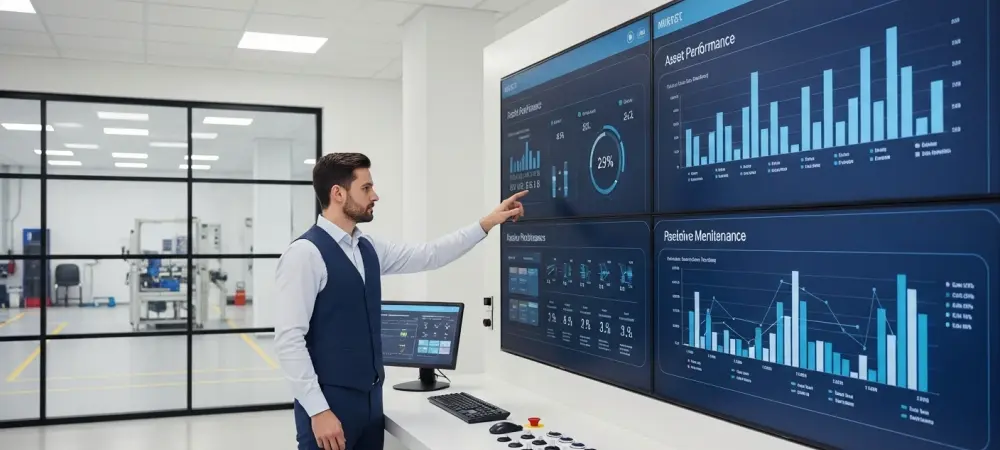
A single recurring mechanical failure does not just stall a production line; it creates a silent, compounding drain on an organization’s financial health and operational reputation. For many maintenance teams, the daily routine feels like an endless cycle of firefighting where the same conveyor belts seize or the same motors overheat with frustrating regularity. This constant state of emergency is rarely due to a lack of effort from the technicians but rather a fundamental disconnect between the work being performed on the floor and the data being captured in the corporate office. Mean Time Between Failures, or MTBF, acts as a primary heartbeat for equipment health, yet without a sophisticated digital architecture, it remains a number that is merely observed rather than actively managed. By embedding Enterprise Asset Management software directly into the Microsoft Dynamics 365 ecosystem, companies can finally transition from merely patching leaks to rebuilding the integrity of their entire operation.
The core of this transformation lies in moving away from a culture that celebrates the “heroic repair” toward one that prioritizes the “invisible success” of equipment that never stops running. When an organization runs its business logic through a powerful ERP like Dynamics 365, the maintenance department must speak the same language as the finance and supply chain teams. A standalone CMMS or a series of disconnected spreadsheets creates an information silo that keeps the root causes of low MTBF hidden. Integrating specialized EAM tools allows a business to see the full narrative of an asset, from the initial procurement of parts to the specific environmental conditions that led to its most recent downtime. This visibility is what changes the fundamental question from “When will this break again?” to “Why did it break in the first place?”
The Shift from “When” to “Why” in Asset Failure
Repairing a machine once is a standard operational task, but repairing the same machine for the same recurring reason every few weeks is a clear indication of a strategic failure. In many industrial environments, the pressure to resume production is so intense that the focus remains entirely on the speed of the fix rather than the quality of the resolution. This reactive mindset treats the symptom but ignores the underlying disease, leading to a stagnant MTBF that never seems to improve regardless of how many new parts are thrown at the problem. To break this cycle, organizations must look past the immediate mechanical failure to the rich layers of data that exist beneath the surface of every work order. EAM software provides the lens necessary to perform this deep-dive analysis by aggregating historical data that would otherwise be lost in paper logs or the memories of senior technicians. When every repair event is documented with precision, patterns begin to emerge that were previously invisible to the naked eye. Perhaps a certain bearing fails every time a specific shift operates the machine at a higher-than-recommended speed, or maybe a component consistently breaks down after a particular batch of raw materials is processed. By identifying these correlations, maintenance leaders can shift their focus away from the calendar and toward the actual stressors that cause assets to fail, effectively lengthening the time between breakdowns through targeted interventions.
Furthermore, this shift in perspective empowers the maintenance workforce to act as reliability engineers rather than just mechanics. When technicians have access to the full history of an asset via a mobile EAM interface, they are equipped to make better decisions at the point of repair. They can see if a current issue is a repeat occurrence and investigate the previous fix to determine if a different approach is required. This cultural pivot toward inquisitive maintenance is the cornerstone of a high MTBF strategy, ensuring that every hour spent on an asset contributes to its long-term stability rather than just a temporary reprieve from downtime.
Why Asset Reliability: A Business-Wide Priority
Mean Time Between Failures is far more than a technical metric relegated to the maintenance shop; it is a vital indicator of organizational health that influences every department within a modern enterprise. When an asset fails unexpectedly, the shockwaves are felt immediately in the supply chain through the sudden need for expedited parts and in the sales department through missed delivery deadlines. In a Microsoft Dynamics 365 environment, where business processes are tightly wound together, a failure on the factory floor can disrupt inventory levels, throw off labor scheduling, and lead to significant budget variances. For asset-intensive companies, the gap between high-level executive planning and the reality of machine performance is often the result of fragmented data systems.
Bridging this gap requires a realization that reliability is a financial strategy as much as a technical one. A high MTBF translates directly to predictable production cycles and lower operational costs, which in turn allows the finance team to provide more accurate forecasts. When maintenance data flows seamlessly into the ERP, the business can see the true total cost of ownership for every piece of equipment. This transparency allows for more informed decisions regarding whether to continue maintaining an aging asset or to invest in a replacement. Without this integrated view, a company might unknowingly spend more on recurring repairs over two years than the cost of a brand-new, more reliable machine.
Moreover, operational stability is a key driver of employee morale and safety. A facility plagued by low MTBF is often a high-stress environment where technicians are constantly in “crisis mode,” which increases the likelihood of human error and workplace accidents. By prioritizing reliability through EAM integration, leadership signals that they value a controlled, safe, and efficient workplace. This alignment between reliability goals and broader corporate objectives ensures that maintenance is no longer seen as a cost center to be minimized, but as a strategic asset that protects the company’s bottom line and its people.
Core Drivers: Low MTBF and How EAM Solves Them
One of the most persistent obstacles to improving MTBF is the trap of isolated repair events, where failures are treated as individual incidents rather than part of a larger trend. When repair records are scattered across different platforms or reside only in the minds of the staff, it is nearly impossible to spot systemic issues that affect multiple sites or asset classes. EAM software solves this by centralizing failure history into a single source of truth, allowing teams to run cross-functional reports that highlight “bad actor” components. If a specific brand of sensor is failing prematurely across three different production lines, the EAM system will flag that trend, enabling the procurement team to switch to a more reliable supplier within the Dynamics 365 purchasing module.
Another significant driver of low MTBF is the reliance on rigid, time-based maintenance schedules that do not account for actual equipment usage or condition. Many companies still follow OEM-recommended intervals that suggest a machine be serviced every six months, regardless of whether it ran for 100 hours or 1,000 hours in that period. This often leads to over-maintenance, which can ironically introduce new failures through human error, or under-maintenance during periods of heavy production. Integrated EAM tools allow for a transition to condition-based maintenance, where real-time sensors monitor vibration, temperature, or flow rates. When these metrics deviate from the norm, the system automatically triggers a work order before the asset reaches a point of failure, significantly extending the MTBF.
Finally, the disconnect between reliability insights and actual execution often renders even the best data useless. A sophisticated report showing a decline in MTBF does nothing to help the business if it does not lead to a change in the maintenance schedule or the spare parts inventory. Integrated EAM software ensures that these insights are actionable by connecting them directly to ERP execution. If the data suggests that a critical motor is likely to fail within the next 200 hours, the system can automatically check the inventory in Dynamics 365, order the necessary parts if they are missing, and schedule the labor for the next planned production pause. This synchronization ensures that the resources to fix a problem are always in motion the moment a reliability gap is identified.
Evidence-Based Benefits: The Data of Reliability
Industry research and real-world field data provide a compelling case for the measurable gains in uptime that follow the implementation of a mature EAM strategy. Organizations that move away from reactive models and embrace preventive programs through integrated systems often witness MTBF rates that are 40 to 60 percent higher than their less digital counterparts. This is not merely a result of more frequent oil changes; it is the outcome of having the right information to perform the right maintenance at the precisely right time. The shift toward predictive and condition-based monitoring further amplifies these results, with some facilities reporting a reduction in unplanned failures by as much as 70 percent.
The value of this “Reliability Architecture” is particularly evident in how it optimizes the use of human capital and physical inventory. When MTBF increases, the maintenance team spends less time on emergency repairs and more time on high-value optimization tasks. Expert consensus among Dynamics 365 users suggests that the real power of an integrated EAM lies in its ability to synchronize mobile execution with high-level business intelligence. For instance, by utilizing mobile tools to capture data at the point of repair, companies can ensure that their failure codes and root cause analyses are 100 percent accurate. This high-quality data feeds into the ERP’s analytics engine, providing a clear roadmap for where to invest capital to achieve the highest possible return on reliability.
Furthermore, the financial implications of these reliability gains are staggering when viewed through the lens of total cost of ownership. A 50 percent increase in MTBF does not just mean fewer breakdowns; it means longer equipment life, reduced overtime pay for emergency crews, and the elimination of “rush” shipping costs for spare parts. In many cases, the savings realized from a single year of improved reliability can fully offset the initial investment in the EAM software. By creating a feedback loop between machine performance and financial reporting, organizations can move toward a state of continuous improvement where every data point is used to harden the facility against the next potential failure.
Strategic Framework: Improving MTBF in Dynamics 365
Improving reliability within a Dynamics 365 environment requires a disciplined approach to data capture and process synchronization. The first critical step is the standardization of failure data across the entire organization. Every technician, regardless of their location, must log failure events using a consistent set of codes and descriptions. By utilizing mobile EAM tools that integrate with the ERP, companies can ensure that the “what, when, and why” of every breakdown are captured before a work order is ever closed. This high-fidelity data is the fuel for any subsequent reliability analysis, as it eliminates the ambiguity that often plagues manual or paper-based systems.
Once the data is standardized, the focus shifts to analyzing patterns through integrated reliability and OEE dashboards. Rather than attempting to overhaul the entire facility at once, maintenance leaders should use these tools to identify the “bad actors” in their asset portfolio—those few machines that account for a disproportionate amount of downtime and maintenance spend. By focusing resources on improving the MTBF of these specific assets, the organization can achieve quick wins that build momentum for the broader reliability program. This targeted approach ensures that the maintenance team is always working on the tasks that will have the greatest impact on overall facility availability.
The final stage of the framework involves the total synchronization of maintenance with the broader supply chain and finance departments. As MTBF trends fluctuate, the organization must be agile enough to adjust its inventory levels and procurement strategies accordingly. If a reliability initiative successfully doubles the MTBF of a specific fleet of pumps, the need for spare impellers will drop, allowing the finance team to reallocate that capital elsewhere. Conversely, if the system identifies a downward trend in reliability for a critical asset class, the supply chain team can proactively secure long-lead-time parts to prevent a low MTBF from being compounded by a lengthy repair time. This continuous review cycle ensures that the reliability strategy remains a living part of the business, documented and monitored within the same ERP environment used by the company’s leadership.
The transition toward a reliability-centered culture was completed when the organization integrated its maintenance records directly into the core business planning systems. This alignment allowed for a level of transparency that was previously impossible, as every stakeholder gained a clear understanding of how equipment health influenced the bottom line. By the time the new digital framework was fully operational, the maintenance department had successfully moved away from the chaotic rhythm of unplanned repairs. The focus shifted to a future where data-driven insights informed every decision, and the metrics reflected a significant increase in the operational life of every critical asset. The organization recognized that true reliability was not a destination to be reached but a continuous journey supported by the synergy between human expertise and advanced software. This strategic evolution ensured that the facility remained resilient in the face of changing production demands and economic shifts. Teams throughout the company looked back on the implementation as the turning point that redefined their approach to asset management and long-term sustainability. The commitment to maintaining high standards of data integrity and interdepartmental collaboration provided a solid foundation for all future growth initiatives. Through this comprehensive effort, the business secured its place as a leader in operational excellence and reliability within its industry.