

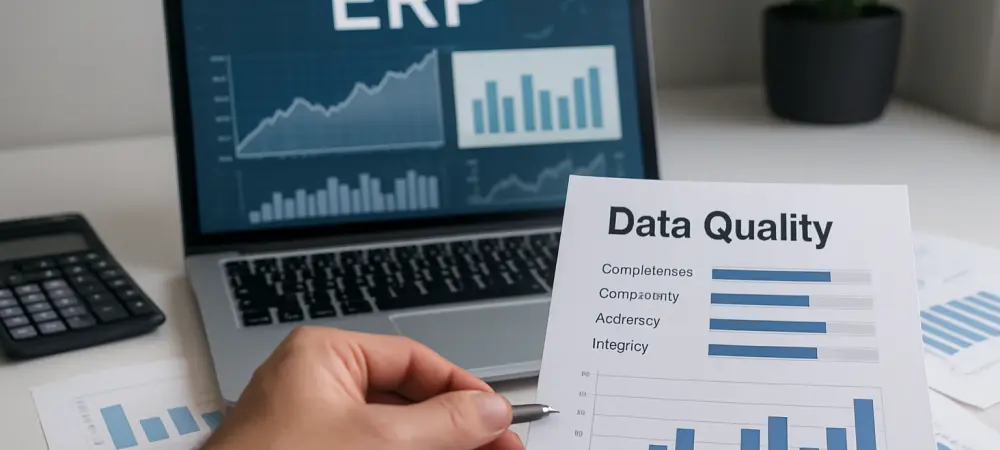
I’m thrilled to sit down with Dominic Jainy, a seasoned IT professional whose expertise in artificial intelligence, machine learning, and blockchain has revolutionized how industries approach technology integration. With a keen focus on ERP systems, Dominic has invaluable insights into ensuring data quality and navigating the complexities of implementation. Today, we’ll dive into the critical role of data integrity, strategies to avoid operational chaos, and the innovative tools that can transform ERP projects into long-term successes.
How does treating data quality as a core pillar impact the success of an ERP implementation, and why do you think it’s often neglected?
Treating data quality as a core pillar is absolutely fundamental to ERP success because everything hinges on the reliability of your data. If the data is flawed from the start, every process, report, and decision built on top of it will be compromised. Unfortunately, it’s often neglected because many organizations focus on functionality or timelines, seeing data as a secondary concern that can be “fixed later.” In my experience, this mindset leads to costly rework and operational inefficiencies. Prioritizing data quality upfront—through dedicated leadership and clear milestones—sets a strong foundation for the entire system.
Can you unpack the idea of a single-digit success rate for clean data at go-live, and how prevalent is this issue based on your observations?
The single-digit success rate refers to the alarming statistic that fewer than 10% of ERP implementations achieve truly clean data at the go-live stage. This isn’t just a number—it reflects real challenges like inconsistent legacy data, poor migration planning, or lack of validation. I’ve seen this issue across industries, from manufacturing to finance, where teams underestimate the effort needed to cleanse and standardize data before launch. The result is often a scramble post-go-live to fix errors, which disrupts operations and erodes trust in the system.
What role does a dedicated data lead play in maintaining data quality throughout an ERP project, and why is this position so critical?
A dedicated data lead acts as the guardian of data integrity from start to finish. Their role involves defining standards, overseeing data cleansing, coordinating migration, and ensuring validation processes are in place. They’re also the bridge between technical teams and business stakeholders, aligning everyone on data priorities. This position is critical because without a single point of accountability, data efforts get fragmented—different teams might interpret rules differently or skip steps under pressure. I’ve seen projects falter without this role, as no one owns the end-to-end quality.
How can AI tools enhance data quality efforts like duplicate detection, and why do you believe human validation remains essential?
AI tools are game-changers for tasks like duplicate detection and data mapping. They can analyze massive datasets quickly, spotting redundancies or inconsistencies that humans might miss—think of fuzzy logic algorithms identifying near-matches in vendor names or part numbers. However, human validation is still essential because AI isn’t foolproof. It might flag false positives or miss contextual nuances, like when two similar entries are actually distinct. I’ve found that combining AI’s efficiency with human judgment ensures both speed and accuracy, especially in complex ERP environments.
What are some effective strategies for maintaining data integrity after an ERP system goes live?
Post-go-live, data integrity requires proactive measures. First, implement real-time validation rules—like mandatory fields or logic checks that prevent incorrect entries at the source. Second, set up dashboards to monitor data violations, so issues are caught early. Third, schedule regular data health reviews to audit and cleanse records periodically. I’ve worked with organizations that treated data maintenance as a one-time task and saw quality degrade within months due to user errors or integrations. Ongoing vigilance is key to keeping the system reliable.
Can you share an example of a real-time validation rule and explain how it helps preserve data quality in practice?
Absolutely. A common real-time validation rule is cross-field logic, like ensuring that if a purchase order is marked as “urgent,” a delivery date within a specific timeframe must be entered. If the date falls outside that range, the system flags it or blocks submission until corrected. I’ve seen this applied in logistics firms where such rules prevented scheduling errors that could delay shipments. It’s a simple but powerful way to enforce consistency right at the point of data entry, reducing downstream issues.
Why do duplicates often slip through in ERP systems, and what operational challenges do they create?
Duplicates often go unnoticed because they hide in subtle variations—like vendor-coded items or parts labeled differently across departments. Engineers or procurement teams might even argue they’re unique due to minor differences, but in reality, they’re redundant. Operationally, this causes havoc: inflated inventory counts, inaccurate financial reporting, and inefficient processes. I’ve seen companies struggle with overstocking because duplicate part numbers masked the true stock levels. Addressing duplicates isn’t just about cleanup—it’s about streamlining the entire operation.
What is the “fog of war” in the context of ERP implementations, and how does it contribute to project chaos?
The “fog of war” is a term I use to describe the confusion and uncertainty that often engulfs ERP implementations. It stems from unclear requirements, misaligned teams, or unresolved data issues that pile up as the project progresses. For example, I recall a project where vague initial specs led to constant scope creep, with teams configuring features that didn’t match business needs. This chaos delays timelines, spikes costs, and frustrates everyone involved. Clarity and early planning are the only ways to cut through this fog.
How does maintaining team continuity throughout an ERP project help mitigate implementation challenges?
Team continuity—keeping the same core group from requirements gathering through to configuration—is a lifesaver. When the same people are involved, they carry forward the original vision and context, reducing miscommunication. I’ve seen projects where new team members joined mid-way and misinterpreted earlier decisions, leading to costly rework. Continuity ensures accountability and a shared understanding, especially when unexpected issues arise. It’s about building trust and momentum within the team.
What’s your forecast for the role of data quality in the future of ERP systems, especially with emerging technologies like AI and blockchain?
I believe data quality will become even more central to ERP systems as technologies like AI and blockchain evolve. AI will drive smarter, predictive data cleansing and anomaly detection, making systems more proactive in maintaining integrity. Blockchain, on the other hand, could revolutionize data trust by creating immutable records for transactions, reducing disputes over data accuracy. However, the human element—strategic oversight and cultural commitment to quality—will remain irreplaceable. We’re heading toward a future where clean data isn’t just a goal; it’s the default expectation for any competitive organization.