

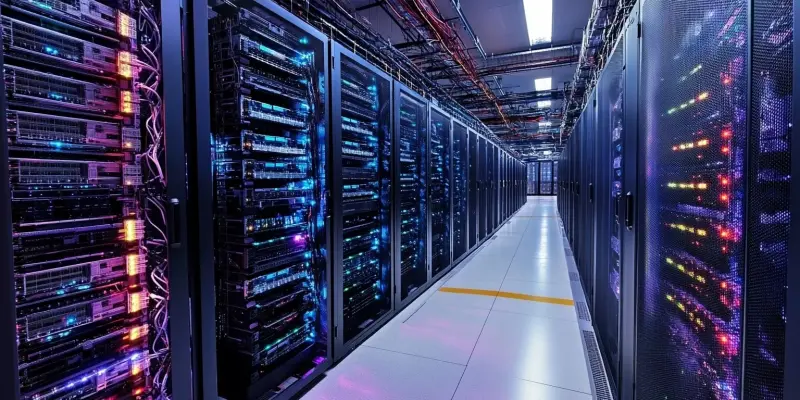
Australia’s data center industry is experiencing rapid growth, driven by the increasing demand for reliable data access fueled by advances in artificial intelligence (AI) and the Internet of Things (IoT). As data centers are essential for supporting the digital economy, it is crucial to balance this growth with sustainability. This article explores the challenges and opportunities in developing sustainable data centers in Australia.
The Energy Consumption Challenge
Immense Energy Requirements
Data centers consume vast amounts of energy to power servers, cooling systems, and networking equipment. Despite increasing investments in renewable energy, many data centers still rely on grid electricity sourced from fossil fuels, contributing significantly to carbon emissions. This dependency represents a major environmental challenge, with the global data center industry projected to emit 2.5 billion tonnes of carbon dioxide-equivalent emissions by 2030. For Australia, these emissions highlight the crucial need to address the sustainability of the country’s expanding data center footprint.
There is a pronounced interconnection between energy consumption in data centers and climate change, demanding immediate and innovative approaches to mitigate environmental impacts. Addressing the immense energy needs involves both rethinking current practices and embracing emerging technologies that drive efficiency.
Global Responses to Energy Challenges
In response to these energy challenges, several countries have taken bold steps by temporarily halting the development of new data centers. Nations such as Singapore, Ireland, and the Netherlands implemented moratoriums to curb excessive energy use, striving to pivot towards more sustainable options.
Australia’s unique position and abundant renewable energy resources offer a significant opportunity to lead in sustainable data center development. By leveraging solar and wind power, the nation can reduce its reliance on fossil fuels and move toward a greener digital future. However, achieving this vision also requires bridging existing infrastructure gaps and addressing market-specific challenges.
Integrating Renewable Energy
Strategic Site Selection and Colocation
One effective strategy for enhancing sustainability in data centers is integrating them with renewable energy sources through strategic site selection, known as colocation. By locating data centers near renewable energy zones, operators can bypass energy transmission delays and directly integrate renewable energy into their operations. This approach not only reduces reliance on urban infrastructure but also accelerates deployment timelines, making it a critical component in the pursuit of sustainable growth.
Renewable Energy Zones
Australia’s vast renewable energy resources, including solar and wind power, provide an excellent opportunity for data centers to operate sustainably. By strategically selecting sites near these renewable energy zones, data centers can significantly reduce their carbon footprint and contribute to the country’s renewable energy goals.
Advanced Cooling Techniques
Liquid Immersion Cooling
Cooling is one of the largest energy expenses for data centers, second only to powering the servers themselves. Innovative cooling methods, such as liquid immersion cooling, are being explored to address this issue. Liquid immersion cooling involves submerging servers in a non-conductive liquid that efficiently absorbs and dissipates heat, reducing the need for energy-intensive fans and air conditioning. This technique presents a game-changing approach to cooling, promoting substantial energy savings and improved operational efficiency.
Air-Side Economization
Another advanced cooling technique is air-side economization, which utilizes external cool air to lower temperatures inside data centers. This method minimizes dependency on traditional cooling systems and can significantly reduce energy consumption, contributing to the overall sustainability of data centers.
Waste Heat Recovery
Circular Economy Principles
In line with circular economy principles, waste heat recovery can play a crucial role in reducing the carbon footprint of data centers. Instead of discharging heat into the atmosphere, it can be recycled and used to heat adjacent buildings or stored in the ground for future use, especially when integrated with geothermal systems.
Practical Applications
Implementing waste heat recovery systems in data centers can provide additional benefits, such as reducing heating costs for nearby facilities and contributing to the overall energy efficiency of the data center.
Addressing Infrastructure Gaps
Planning Approvals and Connectivity
Australia faces challenges such as planning approvals, infrastructure, and connectivity that must be addressed to capitalize on its potential in the data center sector. Without timely action, Australia risks losing opportunities to neighboring countries, as seen in Singapore, where infrastructure constraints temporarily halted data center development, pushing projects to Malaysia and Indonesia.
Role of Arcadis
Arcadis, a global design, engineering, and management consulting company, plays a crucial role in assisting data center operators in developing sustainable and resilient facilities tailored to Australia’s market conditions. Arcadis provides comprehensive support across the data center lifecycle, from market entry strategies and site selection to design, engineering, and delivery.
Innovative Solutions for Sustainable Growth
Modular Data Center Design
With electricity consumption in data centers projected to rise significantly, from 400 terawatt-hours in 2023 to 1000 terawatt-hours by 2030, innovative solutions are imperative. Arcadis is exploring technologies like modular data center design to overcome grid limitations and ensure sustainable growth.
Australia’s data center industry is witnessing significant expansion, driven by the heightened demand for dependable data access propelled by advancements in artificial intelligence (AI) and the Internet of Things (IoT). As these technologies continue to evolve, the need for robust and reliable data centers becomes increasingly critical, underscoring their importance in supporting the modern digital economy. However, this rapid growth brings with it a set of challenges, especially concerning sustainability.
Efforts to develop sustainable data centers in Australia are crucial, not only to support the booming digital landscape but also to ensure environmental responsibility. The industry is exploring various approaches to achieve sustainability, including the use of renewable energy sources, improving energy efficiency, and implementing advanced cooling systems to reduce carbon footprints. Balancing growth with sustainability is essential, as it will dictate the future viability of data centers in Australia.