

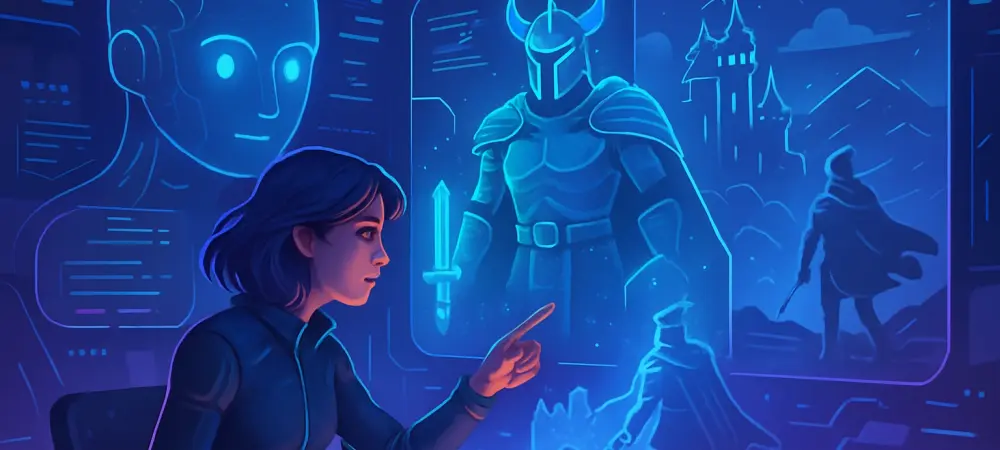
What if a game’s story could twist and turn with every choice a player makes, creating a unique adventure each time, all without a developer needing to write complex code? This isn’t a distant dream but a reality unfolding in the gaming world today. AI-driven storytelling tools are tearing down the barriers that once kept dynamic narratives out of reach for many creators, allowing anyone with a vision to craft deeply personal and interactive stories. This transformation is reshaping how games are made, opening doors for indie developers and storytellers who lack technical expertise.
Why Dynamic Storytelling Is a Game-Changer
The gaming industry has seen a seismic shift as players demand experiences that feel tailored to their actions. Static narratives, while still powerful, often fail to meet the growing appetite for personalization and replayability. AI storytelling steps in as a vital solution, enabling creators to build narratives that adapt in real-time to player decisions. Research indicates that games with interactive stories can increase player engagement by as much as 75%, a statistic that underscores the importance of this technology in keeping players invested.
Beyond engagement, the significance of AI lies in its ability to level the playing field. Large studios with vast resources have long dominated the realm of complex storytelling due to their access to skilled coders and big budgets. Now, with AI tools, solo developers and small teams can compete by crafting intricate, choice-driven plots without needing to master programming, fundamentally changing who gets to tell stories in games.
The Tech Behind Code-Free Narrative Magic
At the heart of AI storytelling are technologies that simplify the creation of dynamic game worlds. Natural Language Processing (NLP) allows AI to interpret player inputs and generate dialogue that feels natural and responsive. This means non-player characters (NPCs) can engage in conversations that seem less like prewritten scripts and more like genuine interactions, enhancing the immersive quality of the game.
Machine Learning (ML) takes this a step further by analyzing patterns from extensive storytelling data to predict and craft logical story branches based on player choices. Meanwhile, procedural generation creates content on the fly, from unique quests to detailed character histories, ensuring that the game world feels expansive and ever-changing. Tools like AI Dungeon exemplify this, producing unexpected narratives that evolve with each decision, proving that AI can deliver truly personalized experiences.
These innovations collectively remove the need for coding expertise. Platforms integrating these technologies provide user-friendly interfaces where creators can focus on story ideas rather than technical implementation, making the process accessible to writers, artists, and dreamers alike.
Voices of Change in the Gaming Scene
Developers already leveraging AI storytelling tools are witnessing remarkable results. A small-scale creator using Sudowrite noted, “Entire story arcs for my fantasy game came together in a weekend, a task that would have taken months of manual writing.” Such testimonials highlight how AI accelerates the creative process, allowing focus on vision rather than logistics. Data backs up these personal accounts. Studies show that games with adaptive narratives can boost player retention by up to 30%, as the lure of exploring different outcomes keeps players coming back. Industry experts also point out that AI is not just a time-saver but a bridge between raw creativity and execution, empowering those without technical backgrounds to bring ambitious projects to life.
The impact is evident in the growing community of non-coders entering game development. From hobbyists to professional writers pivoting to games, AI tools are fostering a diverse wave of storytellers who are redefining what interactive narratives can be.
Steps to Craft an AI-Driven Game Story
For those eager to dive into AI-powered storytelling, a clear path exists to start creating without coding knowledge. First, choose an accessible platform like Astrocade, which offers an intuitive design and a supportive user base. This ensures a smooth entry point for beginners looking to experiment with narrative tools.
Next, establish the foundation of the story by defining key elements like the protagonist’s identity, their central goal, and the primary conflict. This core framework gives AI tools something to build upon. From there, design an opening scene with a critical decision point, using AI writing assistants to brainstorm varied consequences for each player choice, adding depth to the narrative early on.
Finally, introduce dynamic variables, such as a “loyalty” score with NPCs that shifts based on player actions, unlocking unique story paths. Test the story repeatedly, refining based on how choices flow and impact the experience, while letting AI suggest additional content to enrich the world. This iterative approach ensures a polished, responsive narrative that captivates players.
Overcoming Hurdles in AI Storytelling
Despite its potential, AI storytelling isn’t without challenges. Ensuring the quality and coherence of generated content remains a concern, as automated outputs can sometimes feel disjointed or off-tone. Developers must often step in to tweak AI suggestions, blending human creativity with machine efficiency to maintain a consistent story vibe.
Another hurdle is balancing player freedom with narrative structure. Too much adaptability can lead to stories that feel aimless, while too little can stifle the sense of agency AI promises. Striking this balance requires thoughtful design, often guided by testing and player feedback, to ensure the story remains engaging and meaningful.
Yet, as AI technology advances, solutions to these issues are emerging. Improved algorithms and better integration with game systems are already enhancing output quality, suggesting that over the next few years, from 2025 onward, these tools will become even more seamless for creators to use effectively.
Reflecting on a Narrative Revolution
Looking back, the journey of AI in game storytelling marked a turning point for countless creators who once saw technical barriers as insurmountable. It empowered a diverse array of voices to weave intricate, player-driven tales that captivated audiences in ways static scripts never could. The democratization of narrative design stood as a testament to technology’s role in amplifying human creativity.
For those inspired to join this movement, the next step was clear: explore the array of AI tools available, from Astrocade to Sudowrite, and start experimenting with a story idea. By taking small, actionable steps—defining a core concept, building choices, and refining through playtesting—anyone could contribute to the evolving landscape of interactive games. The opportunity to shape the future of storytelling awaited, ready for new ideas to take root and flourish.