

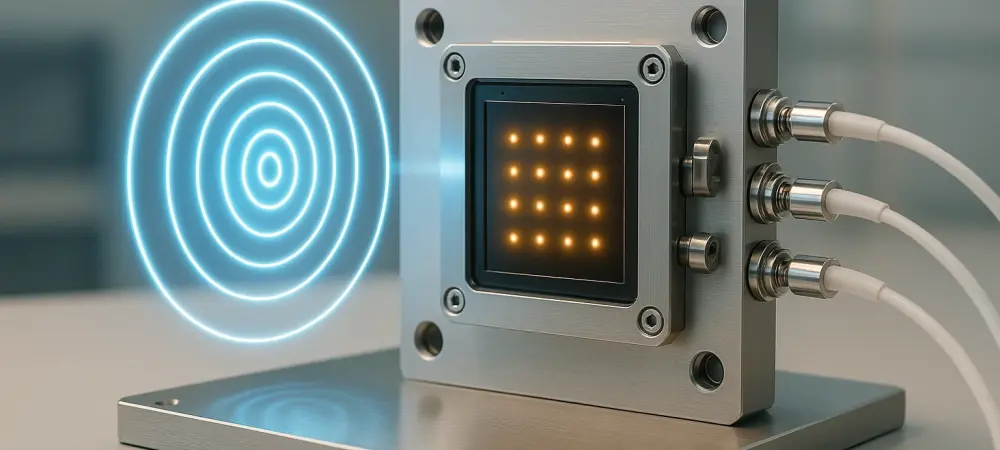
The necessity of using spatial light modulators for state projection often discards the spatial richness of photons, creating a need for more holistic imaging techniques in quantum optics. In the fast-moving landscape of quantum information science, the ability to rapidly and accurately characterize light has become the primary hurdle in moving from experimental setups to scalable communication networks. Researchers in Mexico have recently unveiled a breakthrough that addresses this bottleneck by merging classical optical principles with sophisticated artificial intelligence to decode the “quantum twist” of light. This achievement marks a significant departure from traditional measurement techniques that are often too slow or physically cumbersome for practical, real-world deployment. By focusing on the spatial properties of single photons, the team has managed to extract complex data with unprecedented efficiency, potentially paving the way for the next generation of secure, high-speed quantum links. This research highlights a growing trend where machine learning is no longer just a post-processing tool but an integral part of the measurement process itself, allowing scientists to see features that were previously hidden in the noise of single-photon detection.
The High-Dimensional Potential: Orbital Angular Momentum
Orbital angular momentum, or OAM, represents a fundamental property of light that allows for a much denser encoding of data than traditional methods like polarization. While standard properties usually limit a photon to just two states of information, OAM provides a theoretically infinite Hilbert space, where each unique “twist” of the light’s phase can represent a different piece of data. This helical structure forms what is known as an optical vortex, where the phase of the light winds around its central axis. This winding is defined by its topological charge, which specifies both the magnitude and the direction of the rotation. Because each integer value of this charge can be used as a distinct communication channel, OAM is the ideal candidate for high-capacity information transfer. However, the complexity of reading these twists at the single-photon level has remained a significant barrier to the commercialization of this technology.
The primary difficulty in utilizing OAM for quantum communication lies in the visual ambiguity of the photons when they reach a detector. To a standard camera, a photon carrying OAM often looks like a simple, luminous ring, frequently referred to as a “donut” shape. While the diameter of the ring might give a hint about the magnitude of the twist, it offers no information about its “handedness,” or whether the light is rotating clockwise or counter-clockwise. Distinguishing between a positive and negative topological charge is essential for doubling the available data states, but doing so traditionally requires complex interferometric setups that are sensitive to vibration and alignment. To move toward a functional quantum internet, researchers needed a way to extract this hidden phase information without relying on slow, labor-intensive manual calibrations that fail to keep pace with modern data rates.
Optical Engineering: Converting Phase into Geometry
The research team in Mexico addressed the problem of invisible phase information by utilizing a surprisingly simple optical trick involving a tilted biconvex lens. By placing the lens at a specific angle relative to the incoming light, they introduced a controlled amount of astigmatism into the system. This controlled distortion effectively “unfolds” the photon’s helical phase, transforming the symmetrical ring into a distinct geometric pattern consisting of several bright lobes. This transformation is pivotal because it maps an abstract quantum property—the phase twist—onto a clear, physical shape that can be captured in a single frame by a high-speed camera. Instead of needing to perform multiple measurements to determine the direction of the twist, the researchers can now rely on the spatial distribution of these lobes to identify the photon’s state in one go.
The resulting lobe patterns act as a unique visual fingerprint for each photon. The number of bright spots or lobes in the image directly corresponds to the magnitude of the topological charge, while the specific diagonal orientation of the entire pattern reveals the direction of the rotation. If the pattern tilts to the right, it indicates a positive charge; a tilt to the left indicates a negative one. This geometric mapping essentially makes the “handedness” of the light visible to the naked eye—or more importantly, to an automated vision system. By converting the complex phase information into a spatial arrangement, the researchers bypassed the need for the sensitive phase-shifting interferometry that has long slowed down quantum optics research. This approach provides a robust and reliable way to identify high-dimensional states without discarding the spatial complexity that makes photons so useful for data transmission.
Machine Learning: The Engine of Quantum Recognition
While the tilted lens makes the quantum twist visible, the images produced at the single-photon level are rarely clear. Because they are dealing with individual particles of light, the captured patterns are often extremely faint and obscured by significant environmental noise and sensor grain. To interpret these noisy geometric fingerprints, the team turned to a Convolutional Neural Network, a type of artificial intelligence specifically optimized for pattern recognition. This CNN was trained to look past the static and identify the underlying structural features of the lobe patterns. The researchers built an experimental pipeline where entangled photon pairs were generated, with one photon acting as a timing trigger while the “idler” photon carried the OAM information through the tilted lens to a camera. This setup allowed the AI to learn from thousands of real-world examples, becoming increasingly adept at recognizing subtle visual cues that would be impossible for a human or a simple algorithm to process.
The neural network was designed with multiple layers to extract spatial features and stabilize the learning process, ensuring it could generalize its knowledge across different experimental conditions. By training the model on a dataset of over 8,000 images, the AI learned to distinguish between 20 different types of topological charges with remarkable speed. The training process itself was highly efficient, taking less than a minute on modern hardware, yet it produced a model capable of processing data at a staggering speed of over 3,200 images per second. This high throughput is critical for future quantum networks where information must be read and routed almost instantaneously. By delegating the task of pattern recognition to a specialized AI, the researchers successfully removed the computational bottleneck that previously made high-dimensional quantum communication a laboratory curiosity rather than a practical reality.
Performance and Resilience: Speed and Reliability
The results of the AI integration were impressive, with the system achieving an identification accuracy of nearly 98%. This high level of precision held steady even when the AI was tasked with distinguishing between very similar topological charges. The performance of the CNN significantly outperformed traditional algorithmic methods, which often struggle with the low signal-to-noise ratios found in single-photon experiments. Beyond just accuracy, the speed of the system ensures that the measurement process does not become a point of delay in a high-speed communication network. Being able to classify thousands of states per second allows the analysis to keep pace with the raw data flow, a requirement that must be met if we are to transition from 2026-era laboratory prototypes to commercial-grade quantum hardware that can handle the demands of a global infrastructure.
One of the most significant findings of the study was the system’s resilience against environmental interference. In real-world quantum communication, signals are frequently degraded by atmospheric turbulence or low photon counts, making clear detection a constant challenge. The researchers tested the CNN at very low power levels where the lobe patterns were almost entirely swallowed by background static. Despite these hostile conditions, the AI maintained its high classification accuracy, demonstrating that it was not just looking for bright pixels but was understanding the underlying symmetry of the lens transformation. This ability to function in “noisy” environments is what sets this AI-driven approach apart from earlier methods. It suggests that the technology is robust enough to be deployed in the field, where conditions are rarely as perfect as they are in a controlled optics laboratory.
Strategic Implications: Building the Quantum Infrastructure
Despite the undeniable success of the AI model, the researchers also identified the physical boundaries that will dictate future hardware development. As the amount of twist in the light increases, the lobes in the transformed pattern become progressively smaller and more crowded. Eventually, these features become smaller than the individual pixels on the camera sensor, leading to occasional confusion between very high, adjacent charge values. The team noted that this limitation is a product of telescope and camera resolution rather than a failure of the machine learning model itself. This insight is valuable because it provides a clear roadmap for future improvements; by utilizing higher-resolution sensors or more sophisticated magnification optics, the capacity of the system can be expanded even further to accommodate even higher-dimensional data states.
The successful integration of these technologies signaled a shift in how researchers approached the problem of quantum state characterization. Rather than relying on static filters or slow manual adjustments, the community began to look toward dynamic, AI-enhanced systems that could adapt to changing environmental conditions. This study demonstrated that the bridge between classical optical engineering and modern data science was strong enough to support the next generation of communication protocols. By embedding machine learning into the very fabric of quantum measurement, scientists ensured that the transition from laboratory experiments to real-world technology was as seamless as possible. The era of high-speed, AI-driven quantum discovery arrived not as a single moment of clarity, but as a series of deliberate steps toward automating the measurement of light’s most complex properties. This methodology provided a clear blueprint for future quantum interfaces, suggesting that the path forward for the global quantum internet would be built on the back of automated, intelligent recognition systems.