

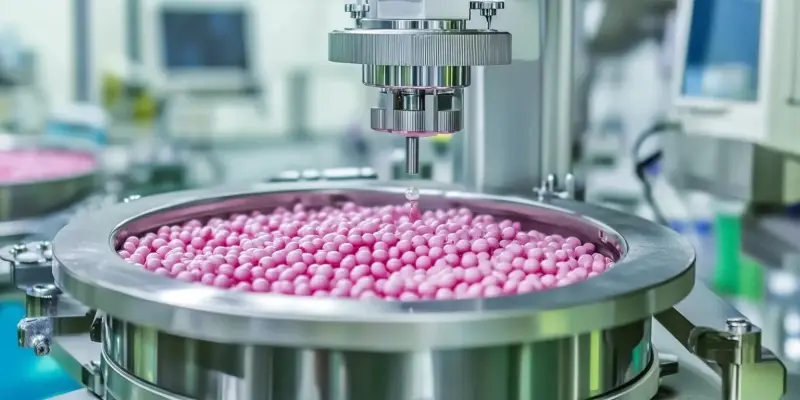
The pharmaceutical industry has always been a sector driven by meticulous processes and demanding high standards of accuracy and safety. However, with the advent of automation and robotics, the landscape of pharmaceutical operations is undergoing a significant transformation. Robots are playing a crucial role in enhancing efficiency, precision, and safety in pharmaceutical tasks, mitigating human error, and guaranteeing compliance with stringent regulations. Automation is particularly pivotal in streamlining processes, which helps to reduce the risks associated with human involvement, such as the misplacement, contamination, or spoilage of pharmaceutical products.
One notable example of this transformation can be observed at a UPS Healthcare facility. Before the introduction of autonomous robots, employees had to endure physical strains by walking long distances and pushing heavy carts under challenging conditions. The implementation of robotics technology has not only lightened their physical workload but has also improved accuracy to over 98%. This shift has seen a significant increase in throughput, with production rates doubling or even tripling. Robots’ ability to function in extreme environments like freezers and coolers showcases their versatility and importance in operational efficiency.
Enhancing Accuracy and Security
The pharmaceutical industry requires extreme precision in everything from drug formulation to packaging. With automation and robotics, the need for human intervention has significantly decreased, thereby minimizing risks of errors and inaccuracies. Robots are uniquely designed to handle repetitive tasks with unfaltering consistency, ensuring accuracy in every step. For instance, the precision of robots in dispensing medication means that each dose is exactly as it needs to be, preventing under or over-medication scenarios. This kind of precision is virtually impossible to achieve with human labor alone.
In addition to accuracy, robots enhance security within pharmaceutical operations. The strict regulatory requirements governing the industry necessitate immaculate handling of pharmaceutical products to avoid contamination and spoilage. Automated systems can operate within sterile environments, reducing the risk of contaminants. For example, robots used in aseptic processing can perform their tasks without direct human contact, minimizing the chances of introducing pathogens. Consequently, robotic systems ensure that the integrity of pharmaceutical products is maintained, helping companies comply with healthcare regulations.
The Role of Cybersecurity
While robots bring a plethora of advantages to the pharmaceutical industry, the rise of automation also poses cybersecurity challenges. Robotic systems, often reliant on interconnected networks and data exchange platforms, must be safeguarded against potential data breaches. Robust encryption, timely software updates, and adherence to industry best practices are indispensable in shielding these automated systems from cyber threats. Conducting comprehensive risk assessments aids in identifying vulnerabilities that could be exploited by cybercriminals.
Incorporating stringent data protection measures is crucial in maintaining the security of sensitive information within robotic systems. Adapting security requirements to align with those of vendors and partners ensures a unified front against cyber risks. By undertaking these precautions, pharmaceutical companies can defend their automated operations against intrusions and maintain the confidentiality and integrity of proprietary and patient-related data. Failure to do so could result in substantial financial losses and legal implications, underscoring the importance of bolstering cybersecurity defenses within the industry.
Improving Workplace Conditions
Robotic automation has significantly transformed the workplace environment in the pharmaceutical industry, reducing the physical demands placed on employees. By taking over strenuous and repetitive tasks, robots have allowed workers to focus on more complex and high-value activities. This shift has led to an increase in job satisfaction and safety for employees. At certain facilities, it has been documented that robotic intervention has resulted in a 54% increase in the number of lines picked, enhancing operational efficiency.
The integration of robots into the workplace has also fostered a culture of innovation and engagement with advanced technologies. Employees are no longer confined to monotonous tasks; instead, they are given opportunities to learn and interact with state-of-the-art robotic systems. This has improved morale and allowed workers to hone new skills, contributing to personal and professional growth. Furthermore, the reduction in physical strain helps prevent work-related injuries, making the pharmaceutical workplace safer and more conducive to a healthy working environment.
Future of Robotic Automation in Pharmaceuticals
The pharmaceutical industry, long known for its high standards of accuracy and safety, is embracing a new era marked by automation and robotics. This innovation is revolutionizing the way pharmaceutical operations are conducted. Robots are significantly boosting efficiency and precision while ensuring stringent compliance and reducing human error. Automation plays a crucial role in streamlining processes, thus minimizing risks like misplacement, contamination, and spoilage of pharmaceutical products.
A striking example is seen at a UPS Healthcare facility, where autonomous robots have transformed the workload. Before their arrival, employees faced physical strain from walking long distances and pushing heavy carts under tough conditions. The adoption of robotic technology has not only eased these physical demands but also enhanced accuracy to over 98%. Throughput has significantly increased, with production rates doubling or even tripling. Robots’ capability to operate in extreme environments, such as freezers and coolers, underscores their versatility and crucial role in improving operational efficiency.