

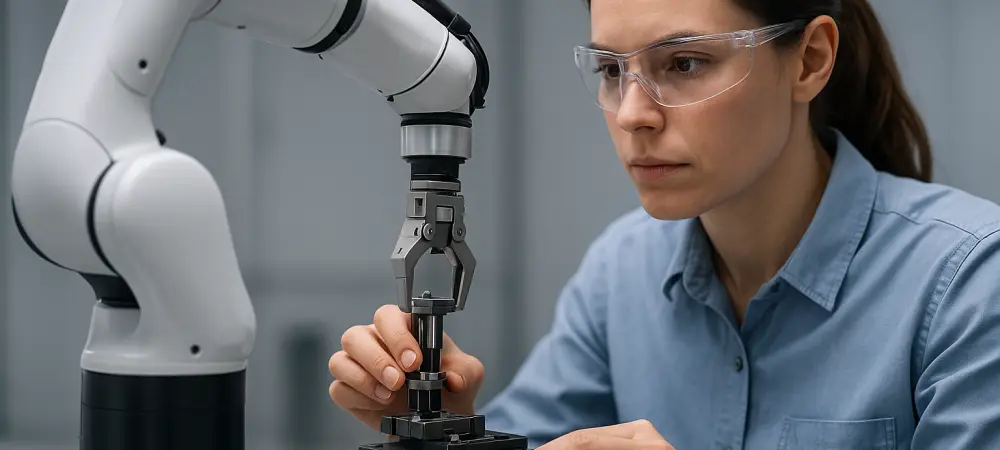
The rhythmic, synchronized movement of robotic arms no longer occurs behind thick plexiglass or steel mesh, as the walls once defining the factory floor have begun to disappear in favor of seamless interaction. This transition represents a $16.7 billion pivot toward collaborative intelligence, where machines are no longer isolated assets but active partners. As the industry moves into a more integrated era, the focus has shifted from high-speed, rigid production to a flexible paradigm of technological synergy.
Manufacturers today face a dual challenge: a persistent labor shortage and an urgent need for extreme production agility. Traditional automation served high-volume, low-mix production well, but the current market demands custom solutions and rapid reconfigurations. By dismantling physical barriers, businesses are unlocking a workspace where machines and humans operate in a unified, intuitive environment that leverages the strengths of both parties.
Beyond the Safety Cage: The Dawn of Collaborative Innovation
The era of isolated, high-speed machinery is giving way to a $16.7 billion shift toward collaborative intelligence. Traditional industrial robots once operated in silos, separated from humans by physical barriers to ensure safety. This separation was necessary when machines lacked the sensors to detect human presence, but modern advancements have rendered these cages obsolete. Today, a new generation of technology is dismantling those barriers, creating a workspace where machines and humans operate in a unified, intuitive environment.
This transition marks a fundamental change in the industrial landscape, moving from rigid automation to a paradigm of shared labor. Unlike the dangerous, heavy-duty machines of the past, contemporary robots are designed with force-sensing capabilities that allow them to halt immediately upon contact. This shift facilitates a more dynamic floor plan where human workers provide the intuition and problem-solving skills while robots handle the repetitive, physically taxing elements of production.
The Catalysts for a New Industrial Revolution
Understanding the surge in cobot adoption requires looking at the convergence of labor shortages and the need for extreme production agility. Manufacturers are no longer just looking for speed; they are looking for systems that can adapt to fluctuating market demands without requiring a total overhaul of the factory floor. The ability to pivot production lines quickly has become the primary metric of success for modern enterprises. As digital platforms become more sophisticated, the barrier to entry for robotics is plummeting, making advanced automation accessible to smaller firms.
This evolution is driven by the necessity to transform real-time operational data into a competitive advantage. In the period from 2026 to 2028, the industry expects a heightened focus on data transparency. Digital integration allows for a level of transparency that was previously impossible, enabling small and medium enterprises to compete on a global scale. By adopting these flexible systems, organizations can maintain steady output even when traditional labor pools are constrained or consumer preferences shift overnight.
Core Drivers of the AI and Cobot Transformation
The integration of generative training and autonomous intelligence is turning robots into cognitive partners. Unlike their predecessors, AI-driven cobots utilize predictive maintenance to anticipate mechanical failures before they cause downtime. By analyzing vibration and temperature data in real-time, these systems identify wear and tear that escapes the human eye. Furthermore, they employ adaptive path planning to navigate complex environments, allowing them to work around obstacles without human intervention or manual reprogramming.
The rise of industrial humanoids and system versatility allows a single robot to be redeployed for multiple tasks across a facility. Enhanced safety governance and sophisticated force-sensing technologies ensure that these machines react to human presence instantly, prioritizing worker well-being while maintaining high productivity levels. This cognitive shift means that robots no longer follow a fixed set of coordinates but instead understand the context of their environment, making them far more resilient to the unexpected variables common in complex manufacturing.
Validating Performance through Virtual Twin Technology
The synthesis of artificial intelligence and physical hardware is reinforced by the use of virtual twins—digital frameworks that simulate robotic systems before they hit the shop floor. Industry experts emphasize that this digital-first approach removes the “element of surprise” from physical production. By creating a high-fidelity replica of the manufacturing environment, engineers can test various “what-if” scenarios, ensuring that the robotic logic aligns perfectly with the physical constraints of the workspace. By validating workflows in a risk-free digital environment, engineers identify potential collisions and optimize cycle times with surgical precision. This layer of simulation ensures that when a cobot is finally deployed, it operates at peak efficiency from day one, significantly reducing material waste and implementation risks. The virtual twin serves as a living document that evolves alongside the physical equipment, providing a continuous reference point for performance tuning and future process updates.
Strategies for Integrating Collaborative Intelligence
To successfully transition to a collaborative automation model, organizations adopted a framework focused on scalability and human-centric design. The first step involved identifying high-risk or repetitive tasks that benefited most from force-sensing technology and AI assistance. By focusing on the “dull, dirty, and dangerous” aspects of the job, companies were able to secure buy-in from their workforce and demonstrate immediate value. Implementing no-code programming interfaces proved essential, as it allowed existing staff to teach and refine robotic tasks without needing deep software expertise.
Businesses leveraged the data generated by these systems to create a continuous feedback loop, ensuring that the redistribution of labor consistently moved human workers into higher-value, creative roles. This strategy shifted the workforce’s focus toward quality control, process improvement, and strategic oversight rather than manual assembly. Managers looked toward the integration of cross-functional teams where maintenance, operations, and IT worked in concert to manage the fleet. Ultimately, successful integration relied on viewing automation not as a replacement for human talent, but as a sophisticated tool designed to amplify human capability.