

Navigating the Intersection of Industrial Growth and Community Preservation
As the quiet streets of Hopkinsville, Kentucky, transform into a focal point for the booming global data infrastructure industry, local residents find themselves caught between the promise of economic revitalization and the preservation of their peaceful community. This debate underscores a broader national tension between the urgent demand for technological infrastructure—specifically for artificial intelligence and high-performance computing—and the protection of local quality of life. As North Campbell Land Co. seeks to transition from cryptocurrency mining to more robust computing operations, the community is weighing the promise of economic stability against the potential for environmental degradation and noise pollution.
The purpose of this timeline is to trace the evolution of this industrial shift, highlighting the key events that have moved the discussion from simple utility management to a complex legislative battle. By examining the progression of these events, we can better understand how local governments are forced to redefine land-use classifications in the face of emerging technologies. This topic is particularly relevant today as small towns across the American South become primary targets for energy-intensive industries due to available power capacity and favorable land costs.
Milestones in the Evolution of Hopkinsville’s Technological Landscape
Early Operations: Establishment of the Holland Substation Facility
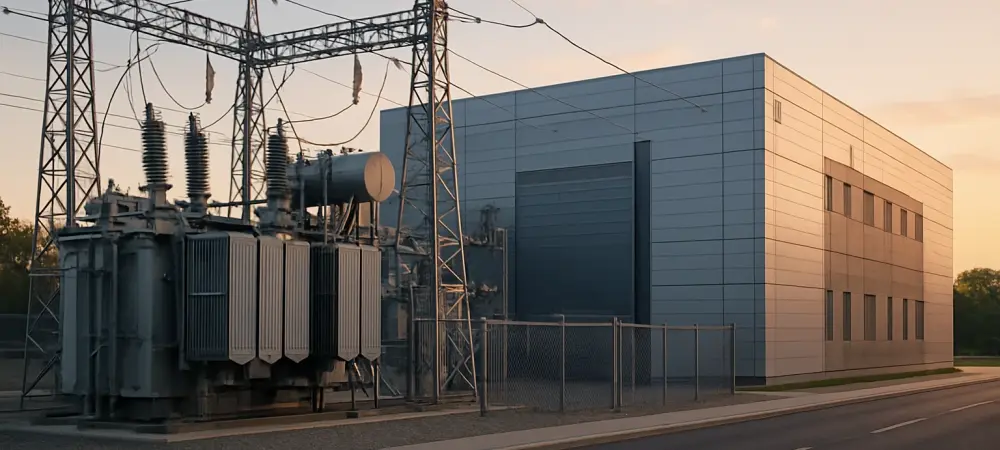
The initial phase of data center activity in Hopkinsville centered on the Hopkinsville Electric System Holland Substation. Here, North Campbell Land Co. established a 15-megawatt modular Bitcoin mining operation designed to utilize surplus power capacity. During this period, the facility operated with relatively little public scrutiny, as the modular setup was viewed largely as a consumer of excess electricity that helped stabilize the local utility’s revenue stream. This phase set the stage for the infrastructure-heavy investments that would follow.
Recent Acquisition: North Campbell Land Co. Joins Sphere 3D
A significant shift in the project’s scope occurred when North Campbell Land Co. became a subsidiary of Sphere 3D. This corporate transition signaled a move away from the volatile world of cryptocurrency and toward the burgeoning fields of artificial intelligence and high-performance computing. With the backing of a larger entity, the local operation gained the resources to propose a significant upgrade of the existing 15-megawatt site, transforming it into a hub for modern digital processing and cloud-based services.
Expansion Proposal: The Fifty Megawatt Data Center Initiative
Following its acquisition, North Campbell Land Co. announced an ambitious plan to develop a second, entirely separate 50-megawatt data center elsewhere in Hopkinsville. This proposal represented a massive increase in the local industrial footprint. Unlike the modular crypto-mining site, this facility was envisioned as a permanent fixture of the city’s industrial landscape. The announcement immediately drew the attention of local stakeholders, marking the point where corporate expansion goals began to clash with residential expectations for land use.
Public Hearing Phase: Community Mobilization and Environmental Concerns
As the details of the 50-megawatt expansion became public, residents organized to voice their opposition during a series of heated public hearings. Community members raised alarms regarding the potential for continuous noise pollution from cooling fans and the emissions produced by industrial backup generators. A primary point of contention was the impact on local water resources, specifically the Little River and Lake Barkley. Residents demanded the city mandate closed-loop cooling systems and established setbacks to keep these massive operations away from residential neighborhoods and public parks.
Legislative Drafting: Proposing the One Thousand Foot Buffer and Capacity Caps
In response to the public outcry, Hopkinsville officials began drafting specific land-use classifications to regulate large-scale and hyperscale data centers. The proposed regulations included a strict 1,000-foot buffer between such facilities and any residential or public property. Furthermore, the draft legislation suggested a total ban on any single facility exceeding a 75-megawatt capacity. This regulatory move represented a significant attempt by the city council to reclaim control over the pace and scale of technological development in the region.
Evaluating Core Themes and Turning Points in Local Data Regulation
The most significant turning point in this narrative was the transition from flexible cryptocurrency mining to fixed artificial intelligence and high-performance computing. While the former could theoretically be scaled back or moved, the latter requires permanent, high-investment infrastructure that fundamentally changes the nature of the land it occupies. This shift forced the community to move beyond viewing these facilities as mere utility customers and instead see them as permanent neighbors with long-term environmental footprints. A recurring theme throughout this process was the friction between economic subsidization and environmental stewardship. The Hopkinsville Electric System and the Tennessee Valley Authority remained supportive of the expansion, noting that large-scale users helped keep residential rates low. However, the pattern of public resistance suggested that financial incentives may no longer be enough to gain community consent for heavy industrial projects. A notable gap in the discourse was the lack of long-term data on how these facilities would impact local property values or the regional water table over several decades.
Nuances of Industrial Zoning and the Future of High Performance Computing
Beyond the immediate legislative fight, several nuances complicated the situation in Hopkinsville. One such factor was the role of flexible-load programs, which allowed the utility to curtail a data center’s power usage during peak demand. This capability remained highly valued by grid operators for maintaining reliability. Additionally, the company’s assertion that the existing facility had not triggered formal complaints served as a counter-argument to the perceived threat of noise pollution, suggesting a possible disconnect between documented grievances and community anxiety.
Expert opinions on the matter remained divided. While some economic developers saw the proposed 1,000-foot setbacks as a death knell for the industry in Kentucky, environmental advocates viewed them as a necessary baseline for modern urban planning. Emerging innovations in water-recycling technology and sound-dampening architecture offered a potential middle ground for future deployments from 2026 to 2030, but the legal frameworks initially struggled to keep pace with the speed of hardware installation. The final resolution in Hopkinsville served as a critical precedent for other municipalities facing similar choices between high-tech growth and the preservation of the local landscape.