

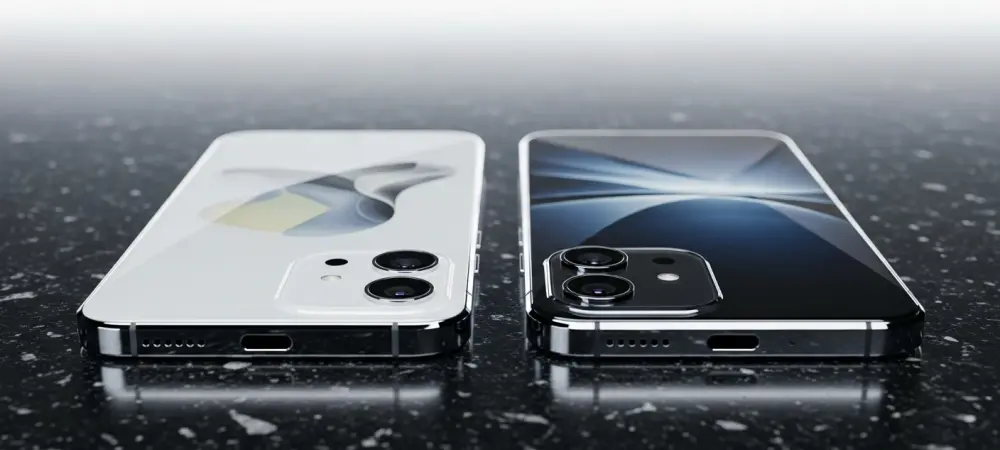
The search for a smartphone that can confidently last multiple days on a single charge has long been the holy grail for users, a quest Honor now aims to conclude with its latest formidable offerings. The recent launch of the Honor Win and Honor Win RT in China introduced a new paradigm centered on extreme endurance. By building two distinct devices around the same colossal power source, Honor presents a compelling choice between all-out flagship luxury and pragmatic, value-driven performance. This analysis dissects their similarities and differences to determine which device truly wins for different types of users.
Introducing the Endurance-Focused Smartphone Duo
Honor has made a bold statement in the Chinese market with the introduction of the Win and Win RT, two smartphones engineered from the ground up to eliminate battery anxiety. The cornerstone of this series is an unprecedented 10,000mAh battery, a capacity that dwarfs nearly every competitor and promises multi-day usage without compromise. This shared focus on longevity is the defining characteristic that unites both models, positioning them as the ultimate solution for users who demand unwavering stamina from their devices.
Beyond their monumental battery, the two phones share a premium foundation that ensures a high-end user experience across the board. Both devices are built around a vibrant 6.83-inch full-HD+ OLED display, featuring a buttery-smooth 185Hz refresh rate and an astonishing 6,000 nits of peak brightness for exceptional clarity even in direct sunlight. They run on MagicOS 10, based on the latest Android 16, and feature the same 50-megapixel front-facing camera. With configurations scaling up to 16GB of RAM and 1TB of storage, neither phone skimps on the core components that define a modern flagship.
Core Specifications: A Feature-by-Feature Breakdown
Processing Power and Performance Tiers
The most significant internal distinction between the Honor Win and its RT counterpart lies within their silicon hearts. The premium Honor Win is equipped with the top-of-the-line Snapdragon 8 Elite Gen 5 chipset, representing the pinnacle of mobile processing power. This positions it to handle the most graphically intensive games, complex multitasking, and demanding applications with effortless speed and efficiency. In contrast, the Honor Win RT utilizes the Snapdragon 8 Elite chipset, a slight step down but still a formidable processor that delivers flagship-level performance. For the majority of users, this chipset provides more than enough power for smooth daily operation, streaming, and mainstream gaming. The performance gap will primarily be noticeable to power users and hardcore mobile gamers who demand the absolute highest frame rates and fastest processing times, making the Honor Win the clear choice for the performance-obsessed, while the Win RT offers a more balanced and efficient engine for everyone else.
Rear Camera System Capabilities
Photography is another key area where the two models diverge, catering to different creative priorities. The Honor Win boasts a versatile triple-camera array designed for the serious shutterbug. It pairs a 50-megapixel main sensor with a dedicated 50-megapixel telephoto lens for high-quality optical zoom and a 12-megapixel ultrawide camera that doubles for macro shots. This setup provides comprehensive creative control, from expansive landscapes to detailed close-ups and crisp, distant subjects. The Honor Win RT streamlines its camera system to a dual-lens setup, retaining the excellent 50-megapixel main sensor and the 12-megapixel ultrawide macro lens but omitting the telephoto camera. While its primary and wide-angle photography remains on par with its premium sibling, the absence of a dedicated zoom lens is a significant trade-off. For casual photographers, this system is perfectly adept, but for enthusiasts who rely on optical zoom for portraits and capturing faraway details, the Honor Win’s superior hardware is a compelling reason to invest more.
Charging Technology and Durability
While both devices support blazing-fast 100W wired charging to quickly replenish their massive batteries, the Honor Win extends its convenience with more versatile power options. It features 80W wireless charging for cable-free ease and 27W wired reverse charging, allowing it to act as a power bank for other devices. The Honor Win RT, in a move to manage costs, forgoes these features and relies solely on its 100W wired capability.
Moreover, the premium Honor Win is built to a higher standard of resilience. It carries IP68, IP69, and IP69K ratings, signifying robust protection against dust and high-pressure, high-temperature water jets. This level of durability provides superior peace of mind for users in demanding environments. The Win RT, while well-constructed, does not boast this same level of certified protection, making the standard Win the more rugged and dependable choice for an adventurous lifestyle.
Price Point and Market Positioning
The pricing strategy clearly defines the target audience for each device. The Honor Win RT enters the market at an aggressive starting price of CNY 2,699 for its 12GB/256GB configuration, making its 10,000mAh battery and flagship display accessible to a wider audience. Even its top-tier 16GB/1TB model, at CNY 3,999, is priced competitively, offering an incredible value proposition for those prioritizing endurance over all else. Conversely, the Honor Win positions itself as the uncompromising flagship, with its base model starting at CNY 3,999 and climbing to CNY 5,299 for the maxed-out version. This premium reflects its superior chipset, more capable camera system, wireless charging, and enhanced durability. The price difference between the base models underscores a clear choice: the Win RT offers the core experience for less, while the Win is for those willing to pay a premium for a complete, feature-rich package with no compromises.
Final Verdict: Which Honor Win Is Right for You
Ultimately, the decision between the Honor Win and the Honor Win RT hinges on a user’s personal priorities and budget. The two devices represent a fork in the road, branching from a common philosophy of unparalleled battery life. One path leads to an all-encompassing flagship experience where no feature is left behind, while the other leads to a more focused and value-conscious device that still excels at its primary mission. For power users, mobile photographers, and technology enthusiasts who demand the best, the Honor Win is the unequivocal choice. Its superior Snapdragon 8 Elite Gen 5 processor, versatile triple-camera system with a dedicated telephoto lens, and the convenience of wireless charging justify its premium cost. In contrast, the Honor Win RT is the champion for the practical consumer. It delivers the series’ headline feature—the colossal 10,000mAh battery—along with a stunning display and excellent core performance at a significantly more accessible price point, making it the ideal choice for anyone whose primary goal is to conquer battery anxiety without breaking the bank.