

The persistent dread of a dying phone battery has become a universal modern anxiety, a challenge that Honor is boldly confronting with its latest premium mid-range offering. This review explores the Honor Power 2, a device engineered around the singular goal of extreme endurance. It examines the phone’s key features, performance metrics, and the significant impact its standout battery may have on user expectations and the broader smartphone market. The purpose is to provide a thorough understanding of this new device, its current capabilities, and its unique position in a highly competitive field.
An Introduction to the Endurance Champion
The Honor Power 2 arrives in the premium mid-range segment not merely as an iterative update but as a statement piece defined by its ambitious focus on battery longevity. It builds upon the foundation of its predecessor by radically pushing the boundaries of what users can expect from a phone’s power source. The device’s primary objective is to completely eliminate battery anxiety, even for the most demanding power users who are constantly on the move.
Its relevance in the current market stems from this direct challenge to industry norms. At a time when many manufacturers chase incremental gains in camera quality or processing speed, Honor has chosen to prioritize endurance above all else. This strategic focus carves out a distinct niche for the Power 2, positioning it as a specialized tool rather than a jack-of-all-trades.
A Closer Look at the Core Hardware
Unprecedented Battery and Charging
The signature feature of the Honor Power 2 is its colossal 10,080mAh battery, the largest ever integrated into an Honor smartphone. This massive power cell is the foundation of the device’s identity, with the company claiming it can deliver up to 20.3 hours of continuous screen time. In practical terms, this translates to multi-day usage for the average user, fundamentally changing the relationship between a person and their charger.
Complementing this immense capacity is an 80W wired fast charging system, ensuring the device can be refueled relatively quickly despite its battery size. More uniquely, the phone supports 27W reverse charging, effectively transforming it into a high-speed power bank. This utility allows it to share its vast energy reserve with other gadgets, such as earbuds, smartwatches, or even another phone, making it a central hub for a personal tech ecosystem.
Performance and Processing
At the heart of the phone is the MediaTek Dimensity 8500 Elite chipset, a processor designed to offer a balanced blend of efficiency and power. In daily operation, this chip provides a smooth and responsive experience, handling multitasking, social media, and streaming with ease. While not intended to compete with flagship-tier processors in raw benchmarks, it is more than capable of delivering a satisfying gaming experience for most modern titles.
The user experience is further defined by the Android 16-based MagicOS 10, which offers a clean interface and a suite of software optimizations. This combination of capable hardware and modern software ensures that the device’s performance remains consistent and reliable, allowing the user to take full advantage of its extraordinary battery life without being hindered by lag or stutter.
Display and Visuals
The Honor Power 2 features a large 6.79-inch LTPS display that serves as a vibrant window into its capabilities. The panel’s 1.5K resolution provides sharp, detailed visuals, while the 120Hz refresh rate ensures that scrolling and animations are fluid and seamless. These specifications meet the high standards expected in the premium mid-range category, offering an immersive experience for both media consumption and general use. However, the display’s most remarkable specification is its exceptionally high 8,000 nits peak brightness. This feature is engineered to provide unparalleled clarity and legibility in direct sunlight, a common pain point for many smartphones. This extreme brightness ensures the screen remains perfectly visible outdoors, reinforcing the phone’s identity as a device built for use anywhere, anytime.
Design and Ergonomics
Housing a 10,080mAh battery inevitably impacts a phone’s physical design, and Honor has navigated this challenge with a thoughtful approach. The device measures 7.98mm in thickness and weighs 216 grams, figures that are surprisingly manageable given its internal capacity. The design successfully balances the need for a large power source with the importance of user comfort, preventing the phone from feeling overly cumbersome.
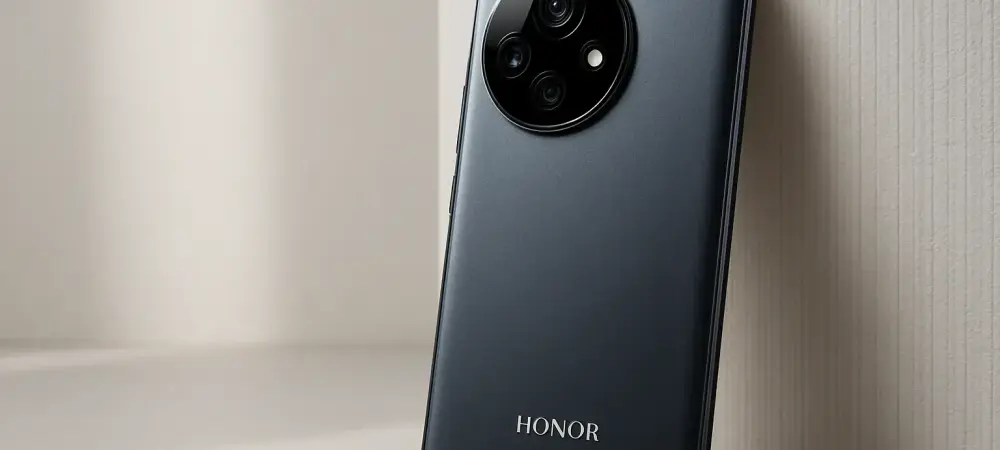
Available in Black, Orange, and White, the Honor Power 2 features a large, distinctive multi-camera island on its rear that adds a touch of modern aesthetic. The overall build quality feels solid, creating a device that is not only a powerhouse of endurance but also a well-crafted piece of hardware that is comfortable to hold and use.
Camera and Imaging
The imaging system on the Honor Power 2 consists of a 50-megapixel primary rear camera and a 16-megapixel front-facing camera. This setup is designed to be a reliable and competent performer for everyday photography, capturing clear and vibrant images in good lighting conditions. It provides the essential tools for social media posts, video calls, and casual snapshots.
While the camera system is perfectly serviceable, it is not the device’s main selling point. In a market segment where some competitors prioritize complex, multi-lens camera arrays, Honor’s choice of a simpler setup reflects its overarching design philosophy. The focus remains squarely on providing unmatched battery life, with the camera serving as a capable, rather than a category-leading, feature.
Evolution From the Original
The Honor Power 2 represents a significant leap forward from its predecessor. The most notable upgrade is the battery capacity, which has increased from an already impressive 8,000mAh to a massive 10,080mAh. This enhancement solidifies the series’ reputation for endurance.
This evolution extends to its charging capabilities, with the new model boasting 80W fast charging compared to the original’s 66W. Another key change is the shift from a Snapdragon 7 Gen 3 processor to the new MediaTek Dimensity 8500 Elite, signaling a strategic move in its component sourcing that aims to optimize both performance and power efficiency for its target use case.
Target Audience and Applications
The ideal user for the Honor Power 2 is someone for whom battery life is the single most important feature in a smartphone. This includes power users who are constantly on their devices, frequent travelers who may not have consistent access to power outlets, and avid mobile gamers who require long, uninterrupted play sessions.
Its unique capabilities open up new real-world applications. The extreme endurance makes it an excellent companion for multi-day outdoor trips, festivals, or conferences where charging is inconvenient. Furthermore, its powerful 27W reverse charging feature allows it to act as a lifeline for friends or colleagues, turning one person’s foresight into a shared benefit for a group.
Challenges and Considerations
The primary trade-off associated with the Honor Power 2’s design is its physical footprint. While Honor has managed the ergonomics well, its 216-gram weight and 7.98mm thickness make it a more substantial device than many of its competitors. This is a deliberate compromise, and potential buyers must be willing to accept a heavier phone in exchange for its unprecedented battery life.
Against its rivals, the device’s camera system and processor may not always come out on top. Competing phones in the premium mid-range segment may offer more versatile photography options or higher raw performance benchmarks. The decision to purchase the Honor Power 2 therefore hinges on a clear prioritization of endurance over all other metrics.
Future Outlook and Market Impact
The Honor Power 2 occupies a compelling space in the broader smartphone market by posing a direct question: how much are consumers willing to trade for ultimate battery freedom? Its success could influence future design trends, potentially encouraging other manufacturers to explore larger battery capacities and make similar design compromises.
For the Honor Power 2 to succeed against established competitors, it must effectively communicate its unique value proposition. Its market impact will be determined by its ability to convince a significant portion of consumers that the peace of mind offered by a multi-day battery is more valuable than having the absolute best camera or the fastest processor in its class.
Final Verdict and Summary
The Honor Power 2 stands as a bold and specialized device that successfully achieves its primary mission. It redefines what is possible for smartphone battery life in the premium mid-range segment, offering a level of endurance that was previously unimaginable. Its massive 10,080mAh battery, combined with fast charging and a useful reverse charging feature, makes it a uniquely powerful tool.
While it makes calculated compromises in areas like weight and camera complexity, these trade-offs feel justified by its core strength. For anyone whose lifestyle demands absolute freedom from the charger, the Honor Power 2 is not just a compelling option; it is a game-changer. It delivers on its promise of eliminating battery anxiety, establishing a new benchmark for endurance that will challenge the industry for years to come.