

The constant search for a power outlet has become a defining characteristic of the modern smartphone experience, with users often sacrificing performance or features for a device that can simply last through the day. In this competitive landscape, a new leak suggests that Honor is preparing to redefine the standards of mobile endurance with its upcoming Power 2 smartphone. Details emerging from a prominent leaker paint a picture of a mid-range device not built to compete on every specification but engineered with a singular, uncompromising focus: to deliver unprecedented battery life. The successor to the Honor Power appears to be making a significant leap in this department, targeting a segment of the market that prioritizes longevity above all else. While other aspects of the device are poised for more modest updates, the sheer scale of its rumored power cell is enough to capture the attention of anyone who has ever seen their battery percentage dip into the red at an inconvenient moment. This strategic focus on a single, crucial feature could position the Honor Power 2 as a unique and highly desirable option in a crowded field.
A New Benchmark in Endurance
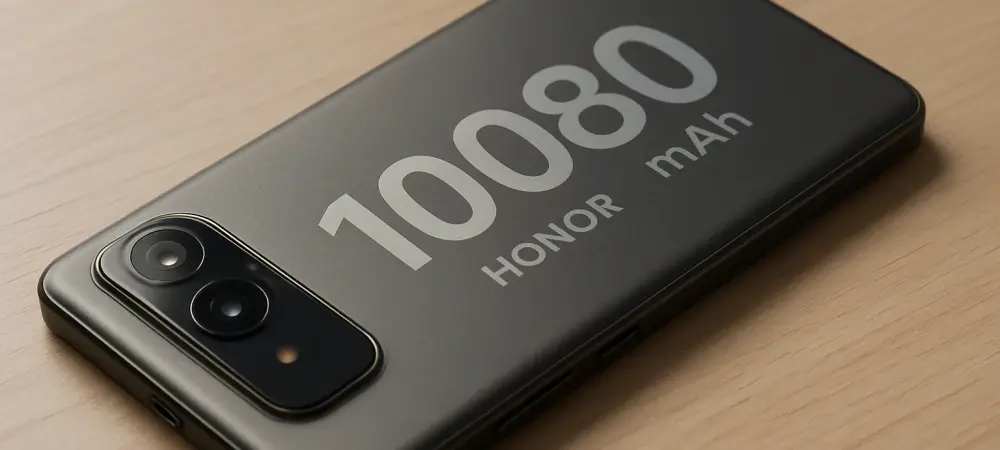
The cornerstone of the Honor Power 2’s rumored specifications is undoubtedly its colossal 10,080 mAh battery, a figure that dwarfs not only its predecessor’s already impressive 8,000 mAh capacity but also the batteries found in virtually all mainstream smartphones. This substantial increase in power is reportedly complemented by an upgrade to 80-watt fast charging, representing a 21% improvement that should help mitigate the longer charging times associated with such a large cell. Internally, the device is tipped to feature the yet-to-be-announced MediaTek Dimensity 8500 chipset, marking a switch from the Snapdragon 7 Gen 3 used in the first-generation model. This change suggests a continued focus on mid-range efficiency and performance. The visual experience is expected to be delivered by a 6.79-inch OLED display with a crisp 2,640 x 1,200 resolution. However, reports indicate it will use LTPS technology, which could mean the panel will not support a dynamic or adaptive refresh rate. This is a common trade-off in devices designed for maximum power efficiency, as a fixed refresh rate consumes less energy than a high-refresh-rate screen that constantly adjusts itself.
Refinements and Release Expectations
While the battery and processor represent key areas of evolution, other aspects of the Honor Power 2, codenamed “Sabre,” appear to be more iterative. The camera system, for instance, is expected to remain consistent with the previous model, featuring a capable 50 MP main sensor and a 16 MP front-facing camera for selfies. Details regarding any potential upgrades to secondary lenses, such as ultrawide or telephoto cameras, remain unconfirmed, as does the inclusion of features like wireless charging, which would be a significant convenience for a device with such a large battery. These unconfirmed elements highlighted the strategic choices that were likely made to keep the device within its target mid-range price point. Leaked information pointed toward an official launch in the spring of 2026, with the device expected to be available in three distinct colorways: Midnight Black, Sunrise Orange, and Snow White. Ultimately, the market’s reception of this device depended on whether consumers were willing to embrace its specialized design, which prioritized marathon-like endurance over a spec-for-spec battle with other flagship contenders.