

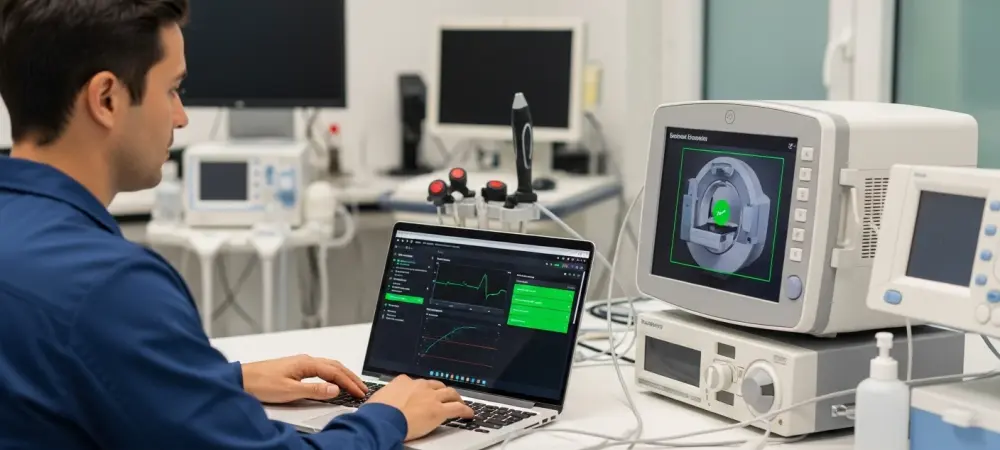
The digital transformation of healthcare has created an ecosystem where the lifeblood of the organization—sensitive patient data—is both more accessible for care and more vulnerable to attack than ever before, making the architecture of its digital defenses a matter of institutional survival and patient safety. Network security solutions represent a critical advancement in this high-stakes environment. This review will explore the evolution of these solutions, their key features, common defensive strategies, and their impact on protecting sensitive patient data and ensuring regulatory compliance. The purpose of this review is to provide a thorough understanding of the current cybersecurity landscape in healthcare, its core challenges, and the capabilities of leading security providers who are defining the standards for a resilient and secure clinical future.
This analysis navigates the intricate world of healthcare cybersecurity, a domain where the stakes are uniquely high. As the industry’s reliance on Electronic Health Records (EHRs), telemedicine platforms, and a vast network of interconnected medical devices grows, so does the attack surface available to malicious actors. The solutions under review are not just technological tools; they are foundational components of trust between patient and provider. By examining the essential defensive measures and evaluating the top-tier providers shaping the market, this review aims to illuminate the path toward a more secure healthcare system, where technology serves as a guardian of patient privacy and a facilitator of excellent care, rather than a point of vulnerability.
The Critical Need for Specialized Healthcare Security
The modern healthcare ecosystem is characterized by a unique and profound set of vulnerabilities, born from its rapid digital evolution. The proliferation of the Internet of Medical Things (IoMT)—from patient monitoring devices to sophisticated diagnostic equipment—has vastly expanded the network perimeter, introducing countless new endpoints that are often ill-equipped to defend themselves. Compounding this issue is the immense value of Protected Health Information (PHI) on the black market, where complete patient records command prices far exceeding that of stolen financial data. This combination of a broadened attack surface and a highly valuable target makes healthcare a uniquely attractive prize for cybercriminals, ranging from ransomware gangs to nation-state actors.
Consequently, generic, off-the-shelf IT security solutions are fundamentally insufficient for the challenges of the clinical environment. Healthcare organizations operate under the stringent compliance mandates of regulations like the Health Insurance Portability and Accountability Act (HIPAA), which dictate specific controls for data privacy and security. Furthermore, clinical workflows demand a delicate balance between security and accessibility; a security measure that inpedes a clinician’s ability to access critical patient information in an emergency can have life-threatening consequences. This context demands specialized security solutions that are not only powerful but also context-aware, capable of protecting sensitive data and critical medical devices without disrupting the delivery of care. For healthcare organizations, investing in such compliant, specialized security is not an option but a non-negotiable imperative for maintaining patient safety, ensuring regulatory compliance, and preserving institutional integrity.
A Multi Layered Defense Framework
Perimeter Security and Traffic Monitoring
The foundational layer of any robust healthcare security strategy begins at the network perimeter, which is no longer a simple, static boundary but a dynamic and distributed edge encompassing data centers, cloud environments, and remote users. Next-generation firewalls (NGFWs) serve as the primary gatekeepers of this modern perimeter. Unlike their predecessors, which relied on basic port and protocol filtering, NGFWs provide application-level visibility and control, allowing administrators to enforce granular policies based on specific applications and user identities. They integrate advanced threat intelligence feeds, enabling them to identify and block known malicious traffic before it can penetrate the network, serving as an essential first line of defense.
Complementing the firewall’s role as a barrier are Intrusion Detection and Prevention Systems (IDS/IPS), which function as the network’s active surveillance system. These systems continuously monitor network traffic, analyzing data packets for signatures of known attacks, suspicious anomalies, or policy violations. While an IDS is designed to alert security personnel to a potential threat, an IPS can take automated, real-time action to block the malicious activity, effectively neutralizing threats as they are detected. This proactive capability is critical in healthcare, where the speed of an attack can quickly overwhelm manual response efforts. Together, NGFWs and IDS/IPS create a formidable defensive posture, establishing a strong barrier and actively policing the traffic that flows across it.
Data Protection Through Encryption
Within a multi-layered security framework, encryption serves as a crucial fail-safe, protecting the intrinsic value of patient data itself. The principle applies to data in two states: “at rest” and “in transit.” Data at rest—information stored on servers, within EHR databases, on laptops, or on backup media—remains a primary target for attackers who manage to breach perimeter defenses. By implementing strong encryption for stored data, healthcare organizations can render PHI unreadable and unusable to any unauthorized party, even if a physical device is stolen or a database is exfiltrated. This measure is a fundamental component of breach mitigation and is explicitly encouraged under HIPAA’s Breach Notification Rule, as the proper encryption of data can provide a “safe harbor,” potentially exempting an organization from costly and reputation-damaging public notifications.
Equally important is the encryption of data “in transit,” which refers to any data moving across the network. This includes information traveling between a clinician’s workstation and an EHR server, data transmitted during a telehealth consultation, or PHI being shared between different healthcare facilities. Without robust encryption, this data can be intercepted and read by attackers through man-in-the-middle attacks. Utilizing strong cryptographic protocols like Transport Layer Security (TLS) ensures that a secure, private channel is established for all data communications. In an environment where remote access and inter-facility data sharing are routine, end-to-end encryption is an absolute necessity for protecting patient privacy and maintaining the integrity of clinical information as it moves throughout the healthcare ecosystem.
Advanced Identity and Access Control
The traditional reliance on simple username and password combinations for authentication has proven to be a significant weak point in cybersecurity. In response, modern healthcare security frameworks have shifted toward more robust strategies for identity verification, chief among them being Multi-Factor Authentication (MFA). MFA strengthens the login process by requiring users to provide two or more distinct verification factors—such as something they know (a password), something they have (a security token or a code from a mobile app), and something they are (a fingerprint or facial scan). This layered approach dramatically reduces the risk of unauthorized access stemming from compromised credentials, which remain a primary vector for data breaches.
Beyond initial authentication, the principles of least privilege and Zero Trust Architecture (ZTA) govern ongoing access to network resources. Role-Based Access Controls (RBAC) are the practical implementation of the principle of least privilege, ensuring that users are granted access only to the specific information and systems required to perform their designated job functions. This minimizes the potential damage an attacker can inflict with a compromised account. ZTA takes this concept a step further by operating on a “never trust, always verify” paradigm. In a Zero Trust model, no user or device is trusted by default, regardless of its location. Every access request is rigorously authenticated and authorized before being granted, and access is limited to the specific resource requested. This granular, continuously verified approach is essential for securing complex healthcare environments where clinicians, third-party vendors, and countless devices constantly seek access to sensitive data.
Network Segmentation and Breach Containment
A critical strategic practice for bolstering cybersecurity resilience in healthcare is network segmentation, which involves dividing a large, monolithic network into smaller, isolated subnetworks or segments. This approach is analogous to constructing fireproof bulkheads within a ship; if one compartment is breached, the damage is contained and prevented from spreading throughout the vessel. In a healthcare network, this means an attacker who compromises a device on the guest Wi-Fi network, for example, is blocked from accessing the segment containing the critical EHR database or the network of life-sustaining infusion pumps. The primary benefit of network segmentation is its ability to drastically reduce the “blast radius” of a cyberattack. By limiting an intruder’s ability to move laterally across the network, segmentation protects an organization’s most valuable assets. This is particularly vital for securing the vast and growing array of IoMT devices, many of which lack robust embedded security features and cannot be easily patched. Placing these vulnerable devices in their own isolated segments ensures that even if one is compromised, it cannot be used as a pivot point to launch a wider attack on the entire clinical network. This containment strategy is a cornerstone of modern defensive architecture, transforming the network from an open field into a series of defensible, compartmentalized zones.
Securing the Endpoint and Internet of Medical Things
The definition of an “endpoint” in healthcare has expanded dramatically, now encompassing everything from traditional clinician workstations and administrative laptops to a vast ecosystem of connected medical devices. Securing this diverse array of endpoints requires a sophisticated approach, led by Endpoint Detection and Response (EDR) solutions. Unlike traditional antivirus software that relies on known malware signatures, EDR tools provide deep visibility into endpoint activity, continuously monitoring for suspicious behaviors and attack patterns. This allows security teams to detect advanced threats, investigate their origins, and rapidly contain and remediate compromised devices, providing a critical layer of defense on the devices where users and data interact most.
The Internet of Medical Things (IoMT) presents a unique and formidable security challenge. Many medical devices were designed for clinical function with little consideration for cybersecurity, often running on outdated operating systems that cannot be patched and lacking basic security controls. Securing these devices requires a multi-pronged strategy that begins with strong device policies and inventory management. By leveraging network segmentation to isolate IoMT devices and implementing specialized security solutions that can discover, profile, and monitor their behavior, healthcare organizations can protect these critical assets from exploitation. This approach effectively wraps a protective security layer around vulnerable devices, ensuring they can perform their clinical functions without becoming a gateway for attackers.
Proactive Vulnerability Management
A truly resilient security posture is not reactive but proactive, focusing on identifying and remediating weaknesses before they can be exploited by adversaries. This proactive stance is rooted in a continuous cycle of vulnerability management. It begins with comprehensive vulnerability assessments and scanning, which systematically probe the network, servers, and applications for known security flaws, misconfigurations, and outdated software. The goal is to create an ongoing, up-to-date inventory of potential risks, allowing IT teams to prioritize and apply patches and fixes in a structured and efficient manner.
To supplement automated scanning, organizations employ more aggressive testing methods like penetration testing, where ethical hackers simulate a real-world cyberattack to test the effectiveness of existing defenses. This provides invaluable insight into how an actual attacker might breach the network and identifies weaknesses that automated tools might miss. This entire process is powered by threat intelligence, which provides crucial context on the latest attacker tactics, techniques, and procedures (TTPs). By understanding the current threat landscape, healthcare organizations can focus their defensive efforts on the most probable and impactful risks, shifting their security paradigm from one of passive defense to one of active, intelligence-driven preparedness.
Current Trends and Technological Shifts
The cybersecurity landscape in healthcare is undergoing a significant architectural transformation, marked by a decisive move away from fragmented, disparate point solutions. In the past, organizations would assemble their security stack by purchasing separate tools from various vendors—a firewall from one, a web gateway from another, and remote access VPN from a third. This approach often resulted in a complex, costly, and inefficient security infrastructure riddled with policy gaps and blind spots, making holistic management and threat correlation nearly impossible. The prevailing trend is a powerful consolidation toward unified, integrated security platforms that provide a single, cohesive ecosystem for managing security across the entire organization.
This trend is epitomized by the rapid rise of cloud-delivered service models, particularly the Secure Access Service Edge (SASE). SASE represents the convergence of networking and security functions into a single, cloud-native service. It combines network capabilities like Software-Defined Wide Area Networking (SD-WAN) with a full suite of security services, including Firewall as a Service (FWaaS), Zero Trust Network Access (ZTNA), Secure Web Gateway (SWG), and Cloud Access Security Broker (CASB). For the modern healthcare organization—with its distributed workforce, reliance on cloud-based applications, and need to secure data accessed from anywhere—the SASE model offers a compelling solution. It simplifies management, reduces complexity, provides consistent security policy enforcement for all users and devices, and is inherently more scalable and flexible than traditional on-premises security architectures.
Analysis of Leading Security Providers
Perimeter 81 Cloud Native SASE Platform
Perimeter 81 has established itself as a prominent force in the healthcare security market through its cloud-native SASE platform, which is purpose-built for the modern, distributed nature of clinical work. Its core philosophy centers on unifying networking and security into a single, cohesive service that simplifies management while enforcing a stringent security posture. This model is exceptionally well-suited for healthcare organizations grappling with securing a diverse workforce that includes on-site staff, remote clinicians, and third-party partners, all of whom require secure access to sensitive applications and data from various locations.
The platform’s strength lies in its comprehensive integration of key security functions under a Zero Trust framework. Its Zero Trust Network Access (ZTNA) capability ensures that users are granted secure, policy-based access only to the specific applications they are authorized to use, rather than the entire network. This is complemented by DNS filtering and a Secure Web Gateway to protect users from web-based threats, and Single Sign-On (SSO) to streamline access to clinical applications. For healthcare IT teams, the standout feature is the centralized management portal, which provides a single pane of glass for configuring policies, monitoring activity, and generating compliance reports, significantly simplifying the complex task of adhering to HIPAA regulations. Perimeter 81’s value proposition is its ability to deliver enterprise-grade, multi-layered security in a cost-effective and easy-to-manage package. However, organizations should consider that while it streamlines compliance, scaling costs for very large, complex networks could be a factor.
Palo Alto Networks Integrated High Performance Security
Palo Alto Networks offers a highly integrated and powerful cybersecurity platform designed to meet the demands of complex and large-scale healthcare environments. The company’s approach is to provide a comprehensive, unified solution that consolidates network security, cloud security, and security operations, thereby reducing the complexity and overhead associated with managing multiple disparate products. This makes it a strong contender for large hospital systems and research institutions that require high performance, granular control, and deep visibility across a sprawling digital infrastructure.
The platform is anchored by its industry-leading high-performance firewalls, which provide the foundation for robust security and granular network segmentation. This allows healthcare organizations to effectively isolate critical systems like EHR databases and IoMT devices, containing threats and preventing lateral movement. A core tenet of its strategy is the meticulous implementation of Zero Trust principles, which are applied consistently across the network, from the data center to the cloud to the remote workforce. By combining strong access controls through MFA with advanced endpoint protection, Palo Alto Networks enables healthcare providers to securely adopt modern technologies like AI and data analytics to improve patient outcomes. While the platform is exceptionally powerful, its primary drawbacks can be the complexity of its initial deployment and ongoing management, which may require specialized expertise, and a cost structure that could be prohibitive for smaller organizations.
Fortinet The Security Fabric Ecosystem
Fortinet’s primary offering is the Fortinet Security Fabric, a broad, integrated, and automated cybersecurity platform designed to provide seamless protection across the entire digital attack surface. The philosophy behind the Security Fabric is to create a cohesive ecosystem where different security solutions can communicate and collaborate, sharing threat intelligence and automating responses to provide a more effective and unified defense. This approach is particularly beneficial for healthcare organizations that need to secure a wide variety of environments, from traditional data centers and campus networks to distributed clinics and cloud instances.
Like its high-end competitors, the Security Fabric includes high-performance firewalls, robust network segmentation, and advanced endpoint security. However, Fortinet distinguishes itself with innovative features like FortiDeceptor, a deception technology tool that creates decoy assets to lure, detect, and neutralize attackers early in the attack lifecycle. Another unique strength is its ability to integrate cybersecurity with physical security systems, providing a more holistic view of organizational security. Its high-performance intrusion prevention system is particularly adept at inspecting encrypted traffic without creating performance bottlenecks, a critical capability for maintaining both security and operational efficiency. The Fortinet Security Fabric is a compelling choice for securing the expanding IoMT landscape and branch locations, though the total cost of ownership for a full deployment can be a significant investment.
Cisco Secure Networking for Clinical Collaboration
Cisco leverages its deep legacy in networking to offer a broad suite of security technologies focused on creating a secure and resilient infrastructure that enables effective clinical collaboration and care delivery. Its strategy is not just to sell security products but to act as a foundational partner for healthcare organizations undergoing digital transformation. The company’s portfolio is designed to secure everything from the underlying network infrastructure to the collaboration tools that facilitate telemedicine and remote work, all unified under a comprehensive security framework.
Key components of Cisco’s offering include Secure SD-Access for scalable network access control and segmentation, and robust Endpoint and Malware Protection to defend user devices. Its cloud-delivered firewall helps secure internet access for all users, regardless of their location, while its incident response services provide critical support in the event of a breach. The standout element of its approach is a comprehensive Zero Trust Framework that enforces stringent, context-aware access controls across all network resources. Cisco is highly recommended for its ability to securely connect patients, providers, and staff in hybrid work models, thereby helping to improve workflows and reduce clinician burnout. The primary considerations for potential customers are the complexity and cost associated with implementing its full suite of solutions, which requires a significant commitment of both financial and human resources.
Symantec Centralized Advanced Threat Protection
Symantec, now a division of Broadcom, provides a multi-faceted defense portfolio engineered to prevent data breaches by delivering layered security across endpoints, networks, email, and the cloud. The cornerstone of its strategy is the consolidation of threat detection and response into a single, manageable platform. This approach is designed to give security teams the visibility and tools they need to quickly identify, prioritize, and remediate advanced threats without having to pivot between multiple, disconnected consoles, which can slow down incident response times.
The core of its offering is its Advanced Threat Protection (ATP) platform, which correlates threat data from across the organization’s control points to uncover complex, stealthy attacks that might otherwise go unnoticed. This is complemented by Symantec Endpoint Protection, which leverages one of the world’s largest civilian threat intelligence networks to defend against malware and other endpoint-based threats. Its email security solutions are particularly strong, providing robust protection against phishing attacks and using content analysis and encryption to prevent the loss of sensitive data. Symantec’s value proposition lies in its ability to centralize and simplify the investigation of advanced threats, enabling a more rapid and effective response. However, the complexity of managing a comprehensive, multi-vector security strategy from a single platform can still present a challenge for smaller IT teams with limited resources.
Trend Micro Layered Defense for Hybrid Environments
Trend Micro offers a suite of security solutions specifically tailored to protect healthcare organizations from the escalating volume and sophistication of cyber threats. Its strategy is built on a foundation of layered defense, providing overlapping security controls for network defense, user protection, and hybrid cloud infrastructure. This approach ensures that there are multiple opportunities to detect and block an attack as it attempts to progress through the organization’s environment, providing a depth of defense that is essential for protecting high-value patient data.
The platform’s Network Defense solutions employ advanced malware detection, sandbox analysis, and network activity monitoring to uncover targeted attacks and attempts to exfiltrate ePHI. For user protection, its solutions secure endpoints, mobile devices, and IoT devices with integrated Data Loss Prevention (DLP) capabilities to prevent sensitive data from leaving the network without authorization. A key strength of Trend Micro is its forward-looking design, which allows for easy integration with other security tools and platforms. It is often recommended for its ability to help healthcare organizations of all sizes meet their compliance needs by offering flexible management options and advanced protection techniques. Potential drawbacks include a per-device licensing model that may not be ideal for smaller businesses and lower scores in some offline detection tests, which could be a concern for devices with intermittent connectivity.
Imprivata Healthcare Specific Digital Identity Management
Imprivata has carved out a unique and critical niche in the healthcare market by focusing exclusively on digital identity and access management solutions designed to streamline clinical workflows while simultaneously enhancing security. The company’s core philosophy recognizes that in healthcare, time is a critical resource, and security measures that create friction for clinicians can hinder patient care. Its platform is engineered to remove this friction by simplifying and automating authentication processes without compromising security.
Its primary solutions include robust Multifactor Authentication, Privileged Access Management (PAM) for securing administrator and other high-level accounts, and a market-leading Single Sign-On (SSO) solution that provides clinicians with fast, secure, no-click access to their applications and patient records. A key strength is its ability to automatically monitor and detect unauthorized access to patient data, providing a powerful tool for privacy and compliance audits. Imprivata is highly valued for its proven ability to improve clinical efficiency, saving providers significant time each day by eliminating repetitive login tasks. While it excels at workflow integration, potential drawbacks include a complex setup process and a potential for conflict with other software that has its own auto-login features. Additionally, some security controls, like automatic log-off, may require careful configuration to meet specific organizational policies.
CyberArk Securing Privileged Access and Identities
CyberArk provides a comprehensive Identity Security Platform that is laser-focused on securing privileged access, a vector that is consistently targeted by sophisticated attackers in ransomware and other advanced campaigns. The company operates on the principle that by controlling and monitoring privileged accounts—those with elevated permissions to critical systems—organizations can effectively disrupt the attack chain and prevent intruders from moving laterally across the network to reach their ultimate targets. This is a particularly critical strategy in healthcare, where the compromise of a single administrator account can lead to a catastrophic, system-wide breach of patient data.
The platform is designed to secure both human and machine identities across the complex care delivery network, including patient portals, virtual care systems, and the underlying cloud infrastructure. Its industry-leading privileged access management solution isolates and protects credentials for critical systems, preventing them from being stolen and used to escalate an attack. CyberArk also offers AI-driven identity solutions that enable a secure, passwordless experience for the workforce and customers. The platform is highly recommended for its proven effectiveness in stopping ransomware and helping healthcare organizations meet stringent compliance requirements. Its primary value is in providing auditable, secure access to the most sensitive data and applications, though its advanced capabilities come at a price point that may be a significant investment for smaller healthcare providers.
Zscaler The Zero Trust Exchange
Zscaler operates on a fundamentally different security model, delivering its services through a cloud-native platform called the Zero Trust Exchange. Built from the ground up on a Zero Trust Architecture (ZTA), its approach completely inverts the traditional network security model. Instead of connecting users to the network and then applying security policies, Zscaler securely connects users and devices directly to the applications they need, without ever placing them on the corporate network. This dramatically reduces the attack surface and eliminates the risk of lateral threat movement.
The platform’s strength lies in its strict enforcement of access control policies, which are based on the identity of the user, the context of the device, and the specific application being requested. The Zero Trust Exchange inspects all traffic, including encrypted SSL/TLS traffic, in real-time to protect against malware, ransomware, and other advanced threats. Because the platform is delivered entirely from the cloud, it eliminates the need for organizations to purchase and manage stacks of on-premises security appliances, saving time and money. Zscaler is an excellent choice for its HIPAA-compliant Zero Trust model, which significantly mitigates the risk of costly data breaches. Its ease of deployment and management makes it highly attractive, though its complete reliance on the cloud may present a challenge for organizations that are still early in their cloud adoption journey.
CrowdStrike AI Powered Endpoint and IoMT Protection
CrowdStrike offers the Falcon platform, a cloud-native security solution that has redefined endpoint protection through its powerful use of artificial intelligence, integrated threat intelligence, and managed threat hunting services. Its strategy focuses on stopping breaches at the endpoint, recognizing that this is where most attacks are ultimately executed. The platform is designed to be lightweight, easy to deploy, and highly effective against a wide variety of modern threats, from commodity malware to sophisticated, fileless attacks.
The Falcon platform protects a diverse range of endpoints, including Windows, macOS, and Linux systems, across any network. Its next-generation antivirus is powered by machine learning to detect both known and unknown threats, while its extensive threat intelligence provides context to proactively hunt for and respond to attacks. For healthcare, CrowdStrike offers significant value through its Falcon Discover for IoMT module, which provides critical visibility into the connected medical devices on the network. Furthermore, its managed security services, like Falcon Complete, offer 24/7 managed detection and response, providing expert monitoring for organizations that lack a dedicated security operations center. CrowdStrike is highly recommended for its ease of use and powerful AI-native protection, though realizing the full value of the rich data it provides may require staff with the skills to interpret and act on it effectively.
Prevailing Challenges and Market Obstacles
Despite the availability of advanced security technologies, healthcare organizations face significant hurdles in their implementation. One of the most pervasive challenges is the high cost associated with comprehensive security solutions. The initial investment in software and hardware, combined with ongoing subscription fees, support contracts, and the need for specialized personnel, can place a severe strain on the budgets of many healthcare institutions, particularly smaller clinics and rural hospitals that often operate on thin margins. This financial pressure can lead to difficult choices, where necessary security upgrades are delayed or foregone in favor of more immediate clinical needs.
Beyond the financial constraints, there is a critical shortage of specialized cybersecurity talent, especially professionals who understand the unique operational and regulatory nuances of the healthcare industry. This talent gap makes it difficult for organizations to effectively deploy, manage, and optimize sophisticated security platforms. Furthermore, the adoption of modern security paradigms like Zero Trust requires a significant cultural shift. Clinicians and staff, who are focused on patient care, can be resistant to new security protocols, such as MFA or stricter access controls, if they perceive them as burdensome or as impediments to their workflow. Overcoming this cultural inertia and creating a security-conscious mindset across the entire organization remains one of the most formidable, non-technical obstacles to achieving a truly resilient security posture.
The Future of Healthcare Network Security
The trajectory of healthcare network security is being shaped by the increasing integration of Artificial Intelligence and Machine Learning. These technologies are evolving from theoretical concepts into practical, indispensable tools for threat detection and response. AI-powered security platforms can analyze immense volumes of network traffic, endpoint logs, and user behavior data to identify subtle anomalies and predictive patterns that indicate a potential breach. This allows for the detection of sophisticated, previously unknown threats and enables automated responses that can contain an attack in seconds, far faster than any human security analyst could. As these systems become more advanced, they will provide a predictive and proactive defense layer that is essential for staying ahead of automated, AI-driven attacks.
Simultaneously, the relentless expansion of the IoMT ecosystem demands the development of more sophisticated and purpose-built security solutions. As everything from smart beds and infusion pumps to robotic surgical assistants becomes network-connected, security can no longer be an afterthought. The future will see a greater emphasis on building security directly into the design and lifecycle management of medical devices. This will be complemented by advanced network-based security platforms that specialize in IoMT visibility, behavioral analysis, and automated threat containment, creating a protective digital immune system for the clinical environment. This evolution will be driven by the continued maturation of unified, cloud-first platforms like SASE, which will continue to consolidate capabilities to provide seamless, intelligent, and adaptive security for the delivery of care, no matter where the patient, clinician, or data is located.
Concluding Assessment
The review of the healthcare network security landscape determined that the increasing digitization of care delivery and the corresponding rise in sophisticated cyber threats demanded a strategic shift away from outdated, siloed security architectures. An in-depth analysis of the market’s leading providers revealed a clear and accelerating trend toward integrated, cloud-native platforms. These modern solutions were built upon a foundational philosophy of Zero Trust, which proved essential for securing a distributed ecosystem of users, devices, and applications. Among the various emerging architectures, the Secure Access Service Edge (SASE) model was identified as a dominant and highly effective framework for its ability to unify networking and security into a single, cohesive service.
Ultimately, this assessment concluded that the most critical attributes for a successful healthcare security strategy were adaptability, intelligence, and operational simplicity. The solutions that demonstrated the greatest promise were those that combined powerful, proactive threat prevention with intuitive, centralized management, thereby empowering resource-constrained IT teams to defend their organizations effectively. The challenge for healthcare providers was not merely to purchase new technology, but to invest in a holistic and forward-looking security culture. Protecting patient data and ensuring regulatory compliance in a dynamic and hostile threat landscape required a commitment to forward-looking, adaptable solutions capable of securing the future of connected care.