

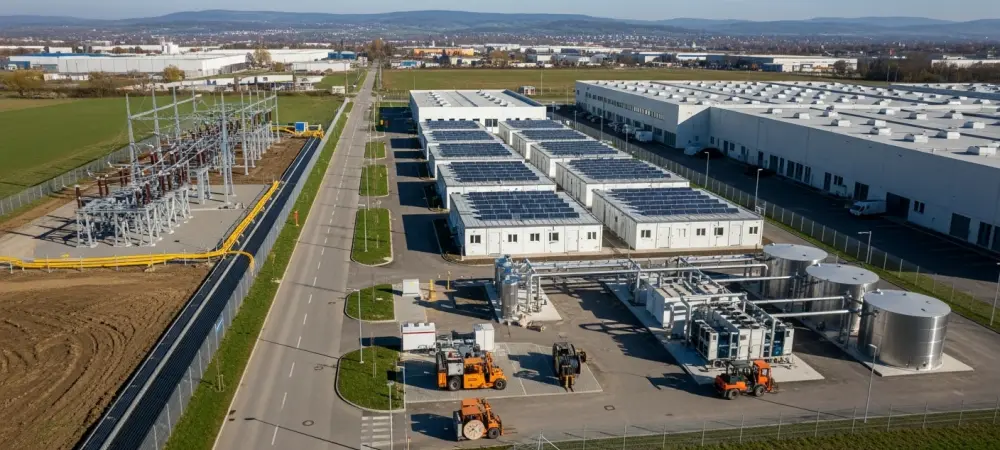
Rising demand for compute has collided with finite grid capacity in Lower Austria, where roughly 100 inbound data center inquiries equaled as much as 3.4GW—about twice the state’s annual energy use—and forced policymakers to clarify what can be built, where, and on what terms. The province responded with a strategic framework that nudges growth into power-ready, brownfield locations and ties permits to renewable integration and heat reuse. It is a bold proposition: speed up predictable projects while shutting the door on speculative sprawl that would overrun transformers, land, and neighborhoods. Critics see a thicket of approvals; backers see a gating function that keeps ambition tethered to megawatts and pipes. Both sides agree on one premise—without rules, the next wave of AI and cloud would outrun the grid.
The Framework and Its Stakes
What the Rules Actually Do
The policy, approved under Governor Johanna Mikl-Leitner, applies to projects announced after April 23 and creates a dedicated industrial zoning class for sites over 0.5 hectares, with a stricter “location ordinance” required beyond 3 hectares. That two-step sizing regime matters. Sub-3-hectare builds can proceed inside the new zone if they meet sustainability and siting tests, while larger campuses face a provincial go/no-go to align with high-voltage interconnects and urban plans. Every application must include a plan for external and on-site renewables—think PPAs with Alpine hydro or Austrian wind paired with on-campus PV—and a credible heat reuse design. The state steers applicants to “acceleration areas” on brownfields near existing grid and fiber, cutting lead times by leveraging substations and ducts already in the ground.
Why It Targets Power, Land, and Heat
The grid-first lens reflects simple math: megawatt-scale halls cluster load into narrow windows that traditional planning never contemplated. Concentrating builds near 110kV and 220kV nodes reduces line losses and avoids costly reinforcements, while brownfield preference trims permitting friction over soil, runoff, and traffic. Mandatory heat reuse flips a liability into an asset by pushing operators to connect to district systems or industrial loops; in Vienna’s orbit, that can mean feeding low-temperature networks serving mixed-use estates. The province already hosts a handful of sites—three Microsoft Azure Austria East facilities and eww ITandTEL’s Vösendorf build—so officials like parliamentary leader Kurt Hackl argue the framework codifies what worked: capacity-aware siting and utility coordination. The aim is not to shut the door, but to guarantee that megawatts added do not exceed what feeders and transformers can bear.
Market Reaction and Implementation Risks
Industry Pushback and Practical Friction
The Austrian Data Center Association, led by Martin Madlo, has blasted the thresholds as blunt instruments that add “regulatory control” without streamlining outcomes. Developers argue that a 0.5-hectare trigger captures even modest, high-density footprints, while the 3-hectare ordinance could route routine expansions into slow political processes. There is also skepticism that heat reuse can be engineered on every site, especially for latency-led edge nodes distant from viable off-takers. Still, the association left the door open, offering to co-design a roadmap that phases rules with grid upgrades and clarifies evidence standards for renewable procurement. The fight is less about objectives—no operator wants stranded load—and more about sequencing, documentation burden, and the risk of uneven municipal interpretation.
How Projects Could Succeed Under the New Regime
Concrete pathways exist. Developers can anchor in acceleration areas adjacent to substations, pair utility-scale PPAs from Austrian wind with guarantees of origin, and build roof-and-carport PV for behind-the-meter offsets that help during peak pricing. For heat, operators can adopt liquid-to-chip cooling to lift outlet temperatures, then integrate heat pumps sized to district loop specs—50–70°C—backed by seasonal thermal storage. Early coordination with grid operators to stage energization in 10–20MW tranches aligns build phases with transformer delivery cycles, mitigating supply chain risks. Even site design factors in: compact footprints under the 3-hectare line, modular electrical rooms, and trench-ready conduits for later capacity. With that stack, permitting files shift from aspiration to engineering detail, improving odds that ordinances, when required, land on affirmative votes.
What to Watch Next
The policy’s leverage point sits in its “predictable processes” promise. If the province publishes transparent heat-reuse feasibility criteria, standardized PPA templates for renewables, and a live map of eligible brownfields with indicative interconnection capacity, the market will adapt quickly. If not, capital will drift to looser jurisdictions around Vienna, and the grid will still shoulder unmanaged requests. Clarity on queue priority—does readiness beat size, do heat networks win tie-breaks—will shape bids. Likewise, harmonizing provincial rules with national energy law and EU metrics such as PUE and WUE could preempt duplicate filings. The next quarters will reveal whether these measures compress time-to-power or merely shift friction from municipal counters to provincial desks.
From Policy to Playbook
The most actionable path forward favored early, joint scoping between developers, utilities, and municipalities, codified heat-reuse tests with off-taker letters, and PPAs that blend firmed hydro with variable wind to stabilize hourly mismatches. Acceleration areas worked best when bundled with standardized design guides and pre-cleared cable routes. Sizing projects just under critical thresholds reduced ordinance delay but still demanded credible roadmaps for later scaling. Engagement with the association signaled a turn from confrontation to iterative refinement, and transparent capacity maps aligned investor expectations with physical limits. Taken together, this approach translated a controversial rulebook into a workable siting playbook, and the province’s strategy read as a grid-informed bid to grow data hubs without overrunning the wires.