

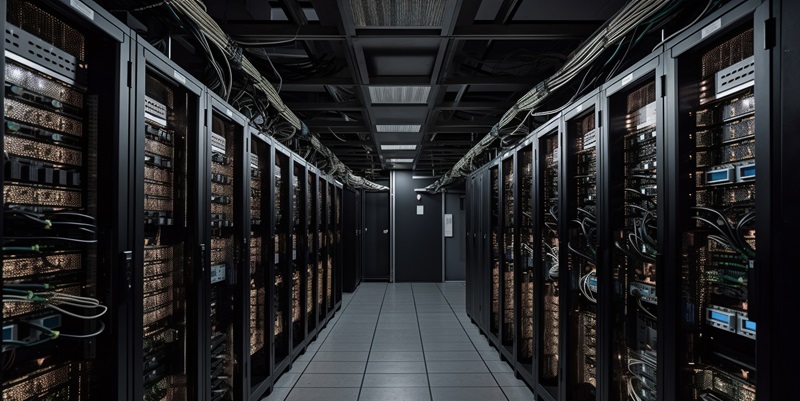
Green Mountain, a leading data center company, has announced plans for the development of a new state-of-the-art facility at its Enebakk campus, located just outside Oslo, Norway. The company has received approval to construct a three-story, 9,600 square meter (103,335 square feet) building, signaling its commitment to expanding its data center infrastructure and catering to growing demand in the region.
Details of the new building
The newly approved building at Green Mountain’s Enebakk campus will serve as a cutting-edge data center, boasting modern design and advanced technology to ensure exceptional performance and efficiency. The three-story facility will offer ample space for servers, networking equipment, and cooling systems, providing a scalable infrastructure to accommodate the growing demands of businesses.
Construction Timeline
Green Mountain aims to begin construction on the 10MW facility in the near future. With an anticipated completion date set for September 2024, the company is determined to meet the rising demands for data storage and management.
Customer reservation
In an exciting development, an international technology firm has already reserved a significant portion of the new data center’s capacity. The undisclosed company has secured close to 5MW of the facility, indicating the strong appeal and reliability of Green Mountain’s services. This partnership with a major client reinforces the company’s position as a trusted and preferred provider in the data center industry.
New client for Green Mountain
While the identity of the international technology firm remains undisclosed, Green Mountain has confirmed that this client is a new addition to its growing portfolio. The company’s ability to attract and secure new clients underscores its reputation for delivering high-quality and efficient data center solutions.
Expansion plans for OSL1-Enebakk Campus
The Enebakk campus holds vast potential for expansion. Once fully built out, the OSL1-Enebakk campus could cover an expansive 75,000 square meters (807,300 square feet) and provide a staggering capacity of up to 93MW. Green Mountain’s commitment to continuous growth and infrastructure development ensures its ability to meet the increasing demand for data management solutions in the region.
Previous and ongoing developments
Green Mountain has been actively expanding its presence in the region. In April 2023, construction began on another 10MW single-tenant facility, further reinforcing the company’s commitment to providing customized solutions to its clients. Moreover, in December 2022, Green Mountain successfully completed a new 13.5MW multi-tenant building, demonstrating its ability to deliver projects efficiently while adhering to the highest industry standards.
Recent achievements
Founded in 2009, Green Mountain has experienced significant growth and success. The company’s acquisition by the Azrieli Group in 2021 further fueled its expansion plans and solidified its position as a key player in the Nordic data center market. With a focus on sustainability and cutting-edge technology, Green Mountain has set a benchmark for environmentally friendly and energy-efficient data center operations.
Future plans
Green Mountain’s ambitions extend beyond its current projects. The company has set its sights on expanding into other locations, including Germany, to cater to the increasing demand for reliable and secure data center services. With its proven track record and commitment to innovation, Green Mountain is well-positioned to be at the forefront of the data center industry’s growth.
Green Mountain’s announcement of a new data center development at its Enebakk campus highlights the company’s dedication to meeting the escalating demand for data storage and management. The expansion project, coupled with securing a major client, signifies Green Mountain’s reputation as a leading provider of high-quality, reliable, and sustainable data center solutions. As the company continues to evolve and expand its operations, it is poised to play a pivotal role in meeting the technological demands of businesses across multiple industries, both domestically and internationally.